
The Southeast Asian Corridor: Mastering the Dual-Flow of Global Innovation
Techsauce was honored to join the panel discussion, “The Southeast Asian Corridor: Mastering the Dual-Flow of Global Innovation,” at BEYOND Expo in Macau, one of Asia’s most influential technology conferences. This year’s theme, “AI: From Digital to Physical,” explored how artificial intelligence is increasingly moving beyond the digital realm and into the physical world through robotics, autonomous systems, and real-world applications.
The panel brought together leading venture capitalists, investors, and ecosystem builders from across the region, including:
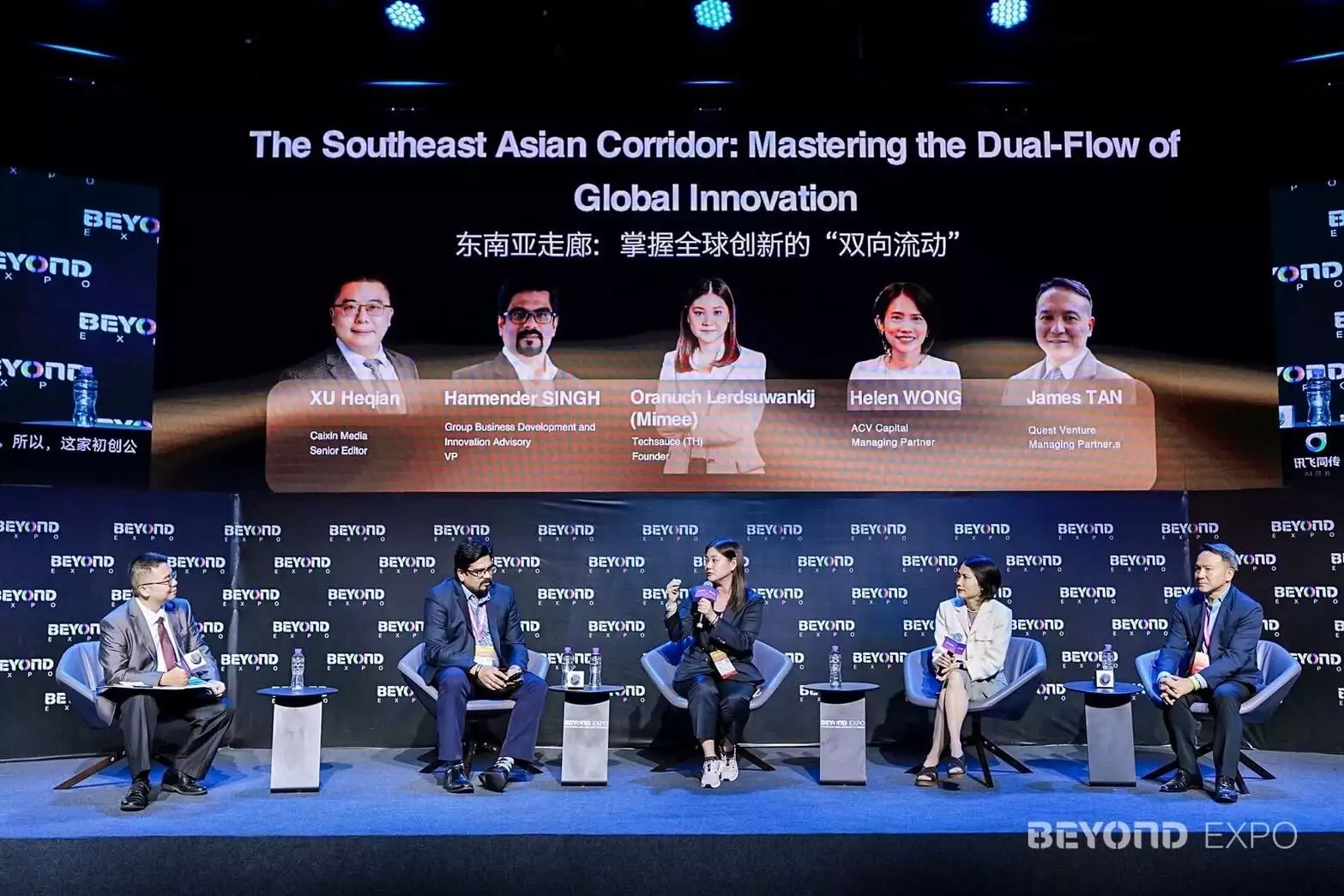 Moderator
Xu Heqian, Senior Editor, Caixin Media
Speakers
• Harmender Singh, VP, Group Business Development and Innovation Advisory
• Oranuch (mimee) Lerdsuwankij, Founder & CEO, Techsauce (Thailand)
• Helen Wong, Managing Partner, AC Ventures
• James Tan, Managing Partner, Quest Ventures
For many years, Southeast Asia was largely viewed as an emerging market or a low-cost manufacturing hub. The region experienced multiple waves of technological growth - from the rise of e-commerce and the startup boom that produced numerous unicorns, to the more recent funding winter.
 Today, however, Southeast Asia is entering a new phase with a far more strategic role in the global innovation landscape.
The region is increasingly becoming a critical innovation corridor - a bridge connecting the flow of capital, technology, talent, and ideas across different parts of the world. As companies and investors seek stable, neutral, and growth-oriented markets, Southeast Asia is emerging as a natural destination.
What makes this corridor particularly interesting is its diversity. Multiple languages, cultures, regulatory environments, and levels of economic development create complexity, but that complexity has become a competitive advantage. Entrepreneurs in Southeast Asia are often forced to think beyond national borders from day one.
Think Regional from Day One.
Companies that succeed across such diverse markets tend to develop resilience, adaptability, and the ability to navigate uncertainty - qualities that are becoming increasingly valuable in today’s rapidly changing world.
Another important lesson is the value of learning from faster-moving markets, particularly China. In many ways, China serves as one of the world’s largest innovation laboratories. New consumer behaviors, business models, and technologies often emerge there first before gradually spreading across Southeast Asia over the following four to five years.
Recognizing these signals early gives both businesses and policymakers a significant advantage in preparing for the future.
Looking ahead, AI will likely be the most important catalyst of transformation. The rise of open models is democratizing access to advanced technologies, allowing countries and organizations to fine-tune models and build solutions tailored to local needs without having to compete directly with global technology giants.
The challenge today is not merely about providing access to AI technologies or growing the number of AI users. It is about fostering the right environment where entrepreneurs, corporations, and innovators can turn real-world problems into scalable AI-powered businesses.
 Innovation thrives when there are real users, opportunities to experiment, and markets willing to adopt new solutions. Together, these elements create an Innovation Flywheel - a self-reinforcing cycle that continuously develops entrepreneurs, technologies, talent, and intellectual property.
At the center of this transformation is human capital development.
This starts with building AI literacy across society and extends to nurturing AI builders, entrepreneurs, researchers, and innovators who can transform knowledge into products, companies, and meaningful impact.
One of Southeast Asia’s most promising opportunities is to become a Smart Integrator - leveraging the flow of global innovation passing through this corridor and transforming it into tailored solutions for industries where the region already possesses strong competitive advantages.
Areas such as healthcare, tourism, food, and agriculture offer tremendous opportunities for AI-driven innovation.
The ultimate goal is not merely to adopt technology, but to become an ecosystem builder in these specialized sectors.
If successful, countries across the region will not only benefit from global technological shifts but also create their own tacit knowledge, generate new economic value, and build sustainable ecosystems that empower entrepreneurs, researchers, and technology builders for decades to come. To make this vision a reality, we need clear indicators of progress:
- The number of AI builders and innovators successfully creating products and businesses
- The ability to develop, attract, and retain world-class talent
- The quantity and quality of solutions and intellectual property addressing real economic challenges
- The ability of innovations to scale across Southeast Asia and beyond
The future of Southeast Asia may not lie in becoming the next global technology superpower. Instead, it may lie in becoming the world’s most effective innovation corridor - where talent, capital, technology, and ideas converge to create the next generation of economic growth and innovation.
ลงทะเบียนเข้าสู่ระบบ เพื่ออ่านบทความฟรีไม่จำกัด

Techsauce reports live from HUAWEI CONNECT 2026 as Huawei unveils Atlas 960E SuperPoD and Peerium Architecture. Discover how NPO optical interconnects enable one million processors...
 0
0
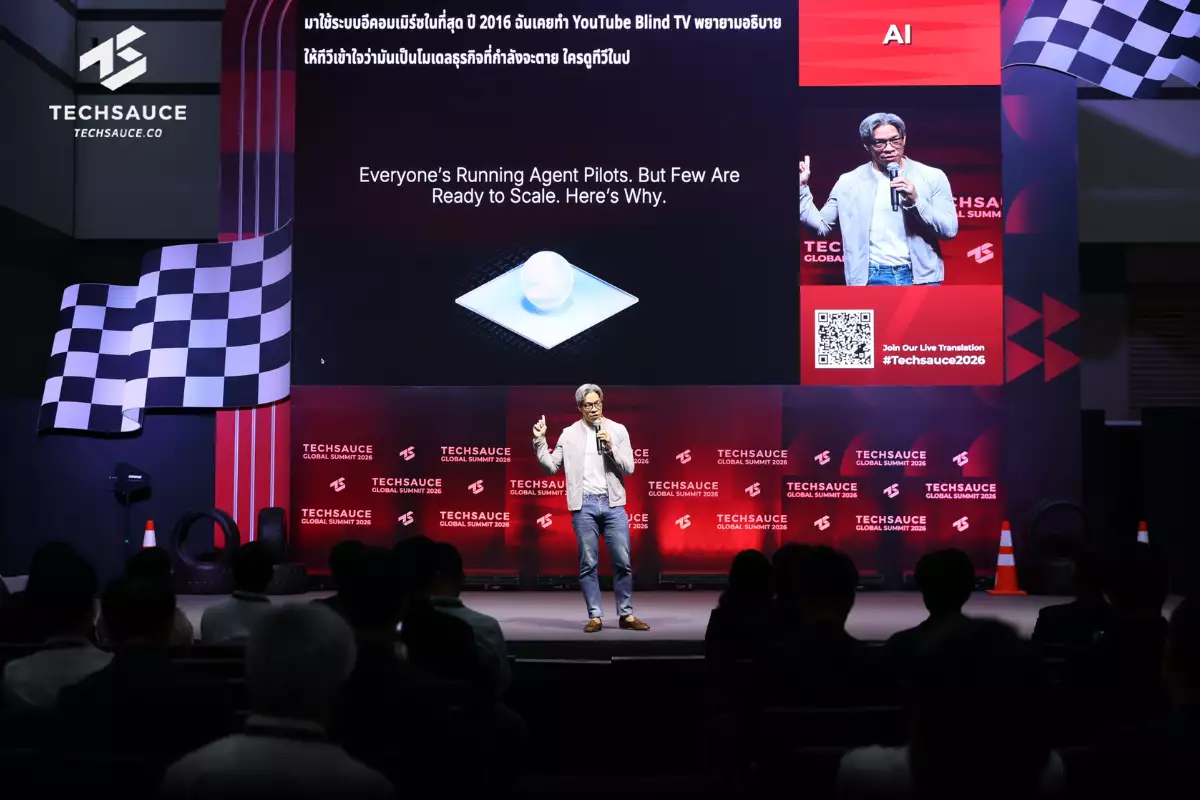
Beyond the Pilot: What It Takes to Move AI Agents into Production
At Techsauce Global Summit 2026, Ariya Banomyong of Wonderful Thailand outlined what separates AI pilots that scale from those that stall: cross-functional design, production-scale...
0

SCBX’s 3-Layer AI Roadmap: A Blueprint for Scaling AI in Big Companies
How to make AI not only a pitch project? Summarizing the AI-First strategy from SCBX and how to develop your company and measure that the ROI is happening....
0