Thai-Founded Vision Lab Raises $6M to Build the Data Layer That Teaches Robots How Factories Really Work
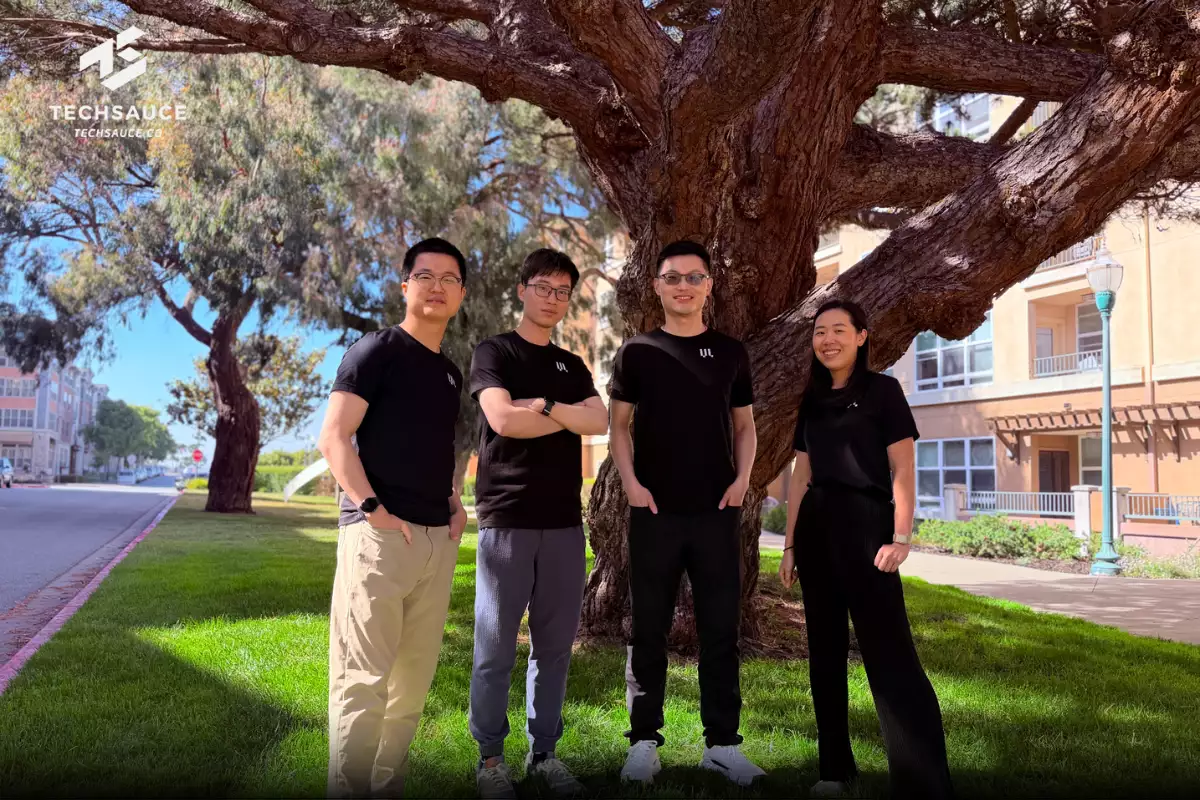
Vision Lab, a San Francisco-based startup led by a Thai MIT graduate, has raised $6M in funding from leading Silicon Valley investors. The company is now expanding its global network of factory partners to help build the data infrastructure needed for the next generation of industrial robots.
Robots are getting smarter, but before they can work effectively in factories, they need to learn from real people performing real tasks. Like an apprentice, a robot can learn by observing a technician tighten a bolt, sort parts, or operate a machine.
The challenge is that there is still very little industrial data available for training robotics systems. While large language models were built on internet-scale datasets, no equivalent dataset exists for physical work inside factories.
Vision Lab helps bridge that gap. The company partners with manufacturers to capture and structure operational knowledge into datasets used by frontier AI labs and robotics companies. The startup counts three of the Magnificent Seven technology companies among its clients.
Today, Vision Lab works with more than 2,000 factories across Asia and Africa, mainly in China and India, and is looking to deepen its presence in Southeast Asia.
"Factories represent where a large share of future robots will be deployed, yet industrial environments remain vastly underrepresented in existing datasets," said James Kujareevanich, CEO of Vision Lab and former McKinsey consultant.
James later attended MIT, where he met his co-founder, an MIT PhD researcher. Together, they founded Vision Lab to address one of the biggest bottlenecks facing physical AI: access to high-quality, real-world training data.
How Partner Factories Benefit
Vision Lab collaborates with manufacturing partners to collect data from real production activities, capturing video and operational workflows from factory floors to support the development of robotics foundation models.
To date, participating factories have collectively earned more than $1 million in data licensing revenue through the program. Participation is designed to have minimal impact on normal factory operations, allowing manufacturers to contribute safely and efficiently.
Beyond generating additional revenue, the partnership also creates an opportunity for factories to become among the first to gain access to emerging AI robotics technologies as they move from research into real-world deployment.
"We are not just building a data layer," James added. "Our long-term goal is to help robotics systems operate reliably in real production environments while making automation more accessible to manufacturers around the world."
About Vision Lab
Vision Lab provides real-world industrial data to leading AI labs and robotics companies. Founded by researchers from MIT and Stanford alongside operators from McKinsey and BCG, the company is headquartered in San Francisco.
Manufacturers interested in joining the Vision Lab partner network can generate additional revenue while gaining early access to the future of industrial robotics. For more information, contact [email protected].
ลงทะเบียนเข้าสู่ระบบ เพื่ออ่านบทความฟรีไม่จำกัด


Anthropic co-founder Jack Clark likens AI to Formula 1 at night without brakes and calls for shared safety standards, as leaders from the IMF, Bank of Canada, and DHL debate who sh...
 0
0

World Bank, IMF, and Singapore leaders explain how Small AI, simple tools that work even on a 3G phone, could help create jobs for 1.2 billion young people, and which sectors and p...
0

Cloudflare Field CISO Volker Rath says AI is weakening traditional defenses. Organizations need Zero Trust, security teams that act as engineers, policy written as code, and clear ...
0