Why AI Alone Won’t Scale Your Business: 5 Lessons from Accenture on Turning AI into Real Business Value
In the session “The AI Execution Paradox: Everyone Has AI. Fewer Have Results” at the Techsauce Global Summit 2026, Anoop Sagoo, CEO of Accenture Southeast Asia, pinpointed a defining enterprise challenge: while AI adoption is surging, very few organizations successfully convert those investments into scalable business outcomes.

This execution gap stems not from technical limits, but from how organizations design workflows, upskill talent, align leadership, and measure return on investment. Here are five strategic imperatives to bridge the gap between AI experimentation and measurable business performance.
1. Design Workflows Instead of Tacking AI onto Existing Processes
The first mistake many organizations make is inserting AI into legacy workflows without questioning the underlying structure. Taking the finance and accounting department as an example, we can see three distinct levels of adaptation:
Automation / Optimization (Doing the same job faster): Most companies start by using AI to read documents, match invoices, or check figures. This saves employees a bit of time, but the underlying structure and way of working remain identical.
Reengineering (Creating connected and efficient processes): Stepping up a level, AI connects procurement systems directly to payments, streamlining working capital and cross-departmental flows. While more powerful, the results remain confined within the boundaries of the finance function.
Reinvention (Reimagining both how work gets done and the value created): The true game-changer is viewing the millions of receipt and supplier data points in accounting not as mere payment paperwork, but as early warning signals for the supply chain. Powered by holistic AI analysis, the organization instantly spots delivery risks or supplier price shifts, pivoting AI from a simple time-saving tool into a complete value engine for the business.
2. Build Workforce Readiness and a Culture of Learning
Deploying technology is easy, but getting people to adopt it willingly and effectively is far harder. The root cause today is that most organizations lack genuine AI Literacy. AI is often treated as just another computer software rather than a new skill set that every employee must learn, much like reading and writing.
Furthermore, fears of role replacement create internal anxiety and silent resistance. Employees hesitate to experiment with tools they worry might one day replace them.
Organizations must urgently restructure their workforce strategy by breaking down departmental silos, such as pairing supply chain and finance teams into cross-functional units and creating a safe environment where employees understand that AI is here to enhance their capabilities, evolve their ways of working, and open opportunities to create higher-value impact.
3. Direct AI Transformation with Clear Top-Down Leadership
Without an explicit top-down mandate from senior executives, AI projects across many companies drift aimlessly. Because AI tools are accessible to everyone, immediate confusion arises at the C-suite level over ownership:
IT Departments view AI as their operational duty.
Marketing, Sales, and HR Leaders independently purchase point solutions to experiment within their own teams.
This fragmented approach leads to duplicated effort, incompatible data, and a scattered vision. Globally successful organizations like JPMorgan Chase and DBS Bank share one common trait: the CEO personally steps in to drive and direct the strategy. Senior leaders must set clear rules, establish governance frameworks (Responsible AI), and enforce Data Sovereignty so everyone works toward a unified goal rather than committing redundant, disconnected investments.
4. Allow AI Time to Learn Enterprise Context
A strange double standard exists in the corporate world: when hiring a new employee, companies routinely offer a 3-to-6-month probation window to adapt to company culture and policies. Yet with AI, leaders expect 100% flawless results from day one.
This is a critical mindset trap. Off-the-shelf AI models excel at general knowledge, but they do not understand your company's context. Most internal policies and workflows were written for human readers, so early errors are natural when feeding these materials to AI.
Organizations must respect the learning curve. They need to invest time in supplying context, business rules, and correct operational workflows, accepting initial fine-tuning phases so the AI gradually learns and matures into a context-aware enterprise capability that delivers actual results.
5. Measure AI Value Across the Entire Workflow
The final trap for executives is setting overly narrow metrics focused solely on cost cutting or saved working hours. If using AI saves an employee one hour a day, the real question is how you turn that saved hour into actual cash or profit. In reality, that is exceptionally hard to do if workflows remain fragmented. Focusing purely on small pockets of saved time rarely yields the massive returns leaders expect.
Similarly regarding operational costs: while AI usage fees have dropped significantly, selecting models based purely on unit price or conversely, deploying the most expensive model for every task, is not the answer.
Leaders must focus on Workflow Economics, the total cost and value generated across the entire process. Matching the right model to task complexity shifts the organizational mindset from using AI to cut budgets to using AI to unlock new growth opportunities for the business.
The core takeaway from this session is that as access to AI normalizes across industries, competitive advantage will not come from having the most advanced model or the largest budget. It will belong to organizations capable of using AI to redesign how work gets done at an enterprise level.
Companies that deliver real results connect technology directly to business strategy, prepare their people to work alongside AI, set clear direction from leadership, and measure value generated across entire workflows.
The essential question today is no longer "Does your organization have AI?" but "How is AI helping your organization create new value and grow in ways it never could before?"
ลงทะเบียนเข้าสู่ระบบ เพื่ออ่านบทความฟรีไม่จำกัด


Transforming Thai Enterprises: iFLYTEK Brings Localized AI Solutions to Techsauce Global Summit 2026
A summary of the 7 AI innovations iFLYTEK showcased at Techsauce Global Summit 2026: AI Translation Screen, Stars MaaS, Astron Agent, Enterprise AI Agents, GuideX, WallEX, and All-...
 0
0

Techsauce, a platform driving the technology and business ecosystem, announced the successful conclusion of Techsauce Global Summit 2026, an international technology and business c...
0
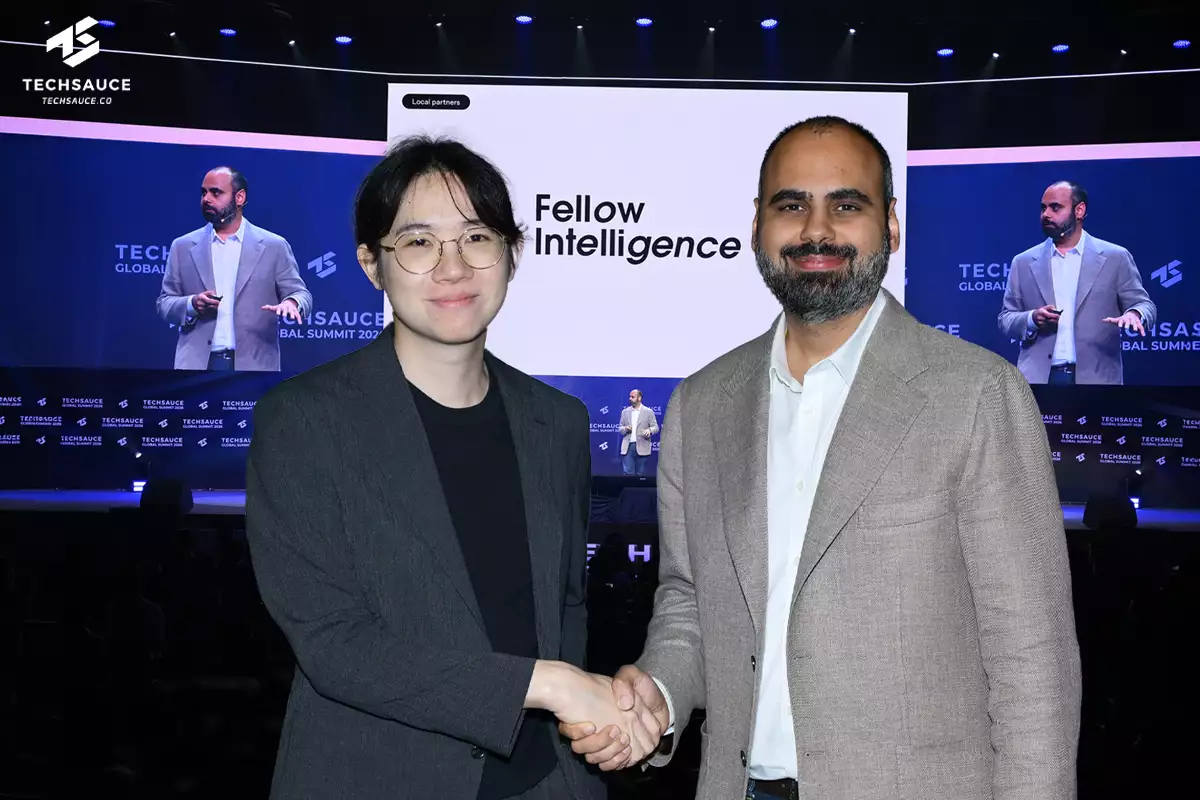
OpenAI Partners With Fellow Intelligence to Accelerate Enterprise AI in Thailand
At Techsauce Global Summit 2026, OpenAI's Sid Sharma announced an official partnership with Fellow Intelligence to fast-track enterprise AI adoption and deployment across Thailand....
0