
Beyond the Pilot: What It Takes to Move AI Agents into Production

Most organizations are already running AI pilots. What separates the ones that reach production, according to Wonderful Thailand, is how the work is designed, deployed and measured.
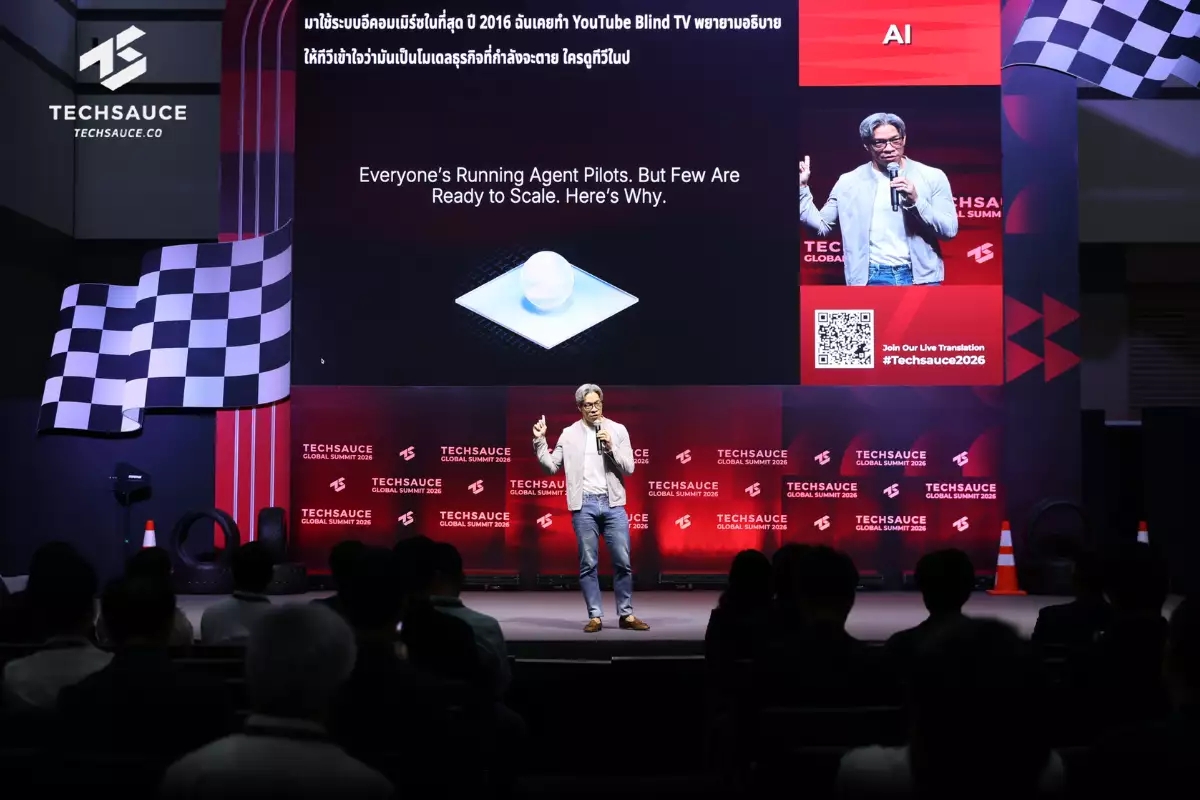
Speaking at Techsauce Global Summit 2026 in a session titled "Everyone's Running Agent Pilots. But Few Are Ready to Scale. Here's Why.", Ariya Banomyong, President of Wonderful Thailand, opened by asking how AI deployments in Thailand are progressing from pilots to practical use. Reflecting on the recent growth of AI, he focused on the next challenge: moving from experimentation to scale. In his view, the constraint is rarely the technology itself, but how organizations are set up to design, deploy and measure it.
Lessons from earlier technology shifts in Thailand
Ariya has watched three technology cycles arrive on schedule: internet adoption in the early 2010s, e-commerce, which many businesses embraced in earnest during the pandemic years, and the shift of audiences from broadcast to online video. In each case the technology arrived as expected, and what differed was when organizations chose to act. AI, he suggested, poses the same question again.
Why do many AI pilots remain in silos instead of moving into production?
Ariya cautioned that building separate agents within each function can make scaling harder later, since the value of AI tends to appear across functions rather than within any one of them. When each department funds its own initiative and selects its own provider, the result can be several implementations that were never designed to work together.
Scope is a second consideration. Solutions built for a sandbox are rarely ready for enterprise volumes, or for the wider set of use cases a business will want to run on the same foundation. Designing for production scale and multiple use cases from the outset, then piloting within that architecture, reduces later rebuilds. The third point was measurement: AI programs work best when tied to business outcomes defined before deployment begins.
What production looks like
Ariya illustrated the point with two client deployments. In the first, an SME lending request moved from a chat message to a booking in the bank's core system, with a relationship assistant, a lending agent and a credit reviewer sharing context along the way. The final step was completed in a legacy system with no Application Programming Interface (API) available. In the second, a single assistant handled a home broadband fault from start to finish, reading the router's status lights through the phone camera rather than passing the customer between queues.
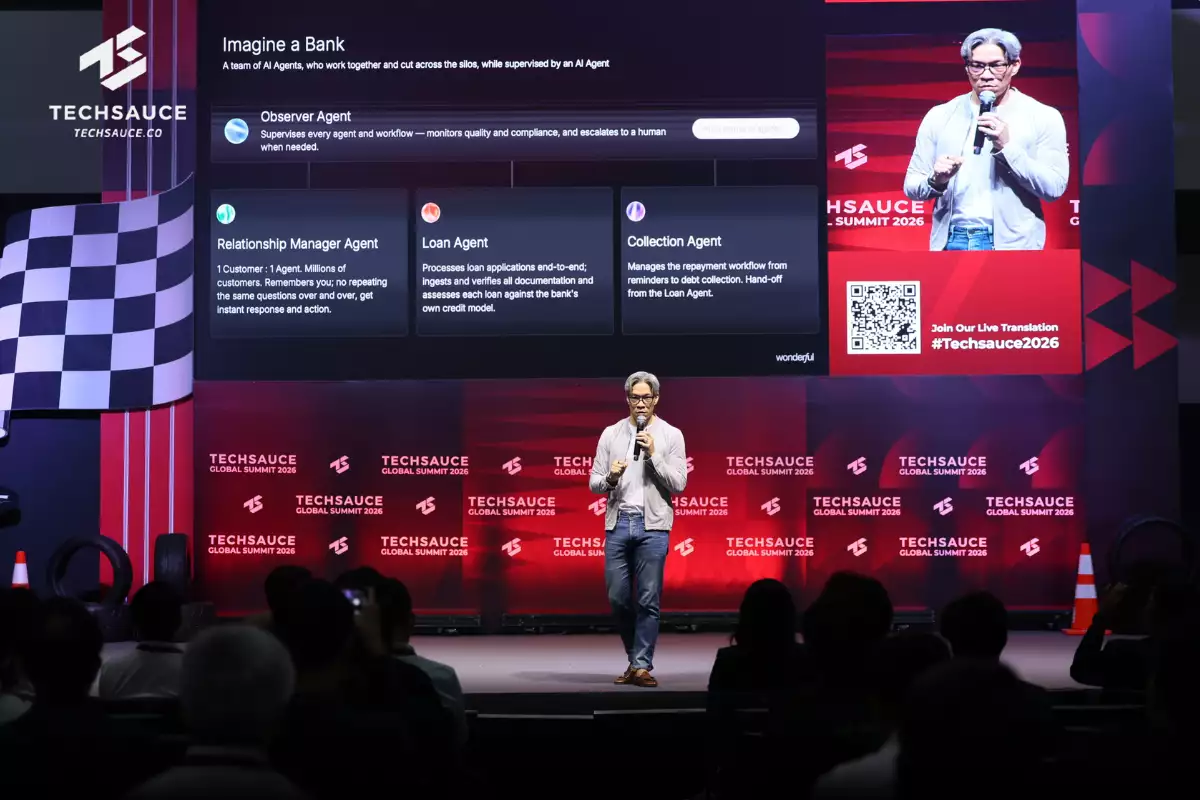
Coordinated agents, he noted, can support smoother handoffs across complex workflows: in a bank, a dedicated agent per customer that retains context, with lending and collections agents passing work between them. On risk, he reframed the discussion around how organizations can design safeguards to reduce the risk of errors. In Wonderful's architecture, an observer agent runs in the background to check that other agents operate within policy, governance and regulatory requirements.
 Results and delivery
Bank Hapoalim in Israel went live within three weeks at 88% containment, meaning roughly 880 of every 1,000 calls or chats were resolved without human involvement. Case studies on Wonderful's website cite comparable results at 80% or above.
Delivery follows two principles: Wonderful's teams work directly with clients to redesign cross-functional workflows, then transfer capability to internal teams who build and manage agents on the same platform. Deployments generally take four to eight weeks, although timing depends on workflow and integration complexity, with governance, guardrails and evaluation tooling in place from the start.
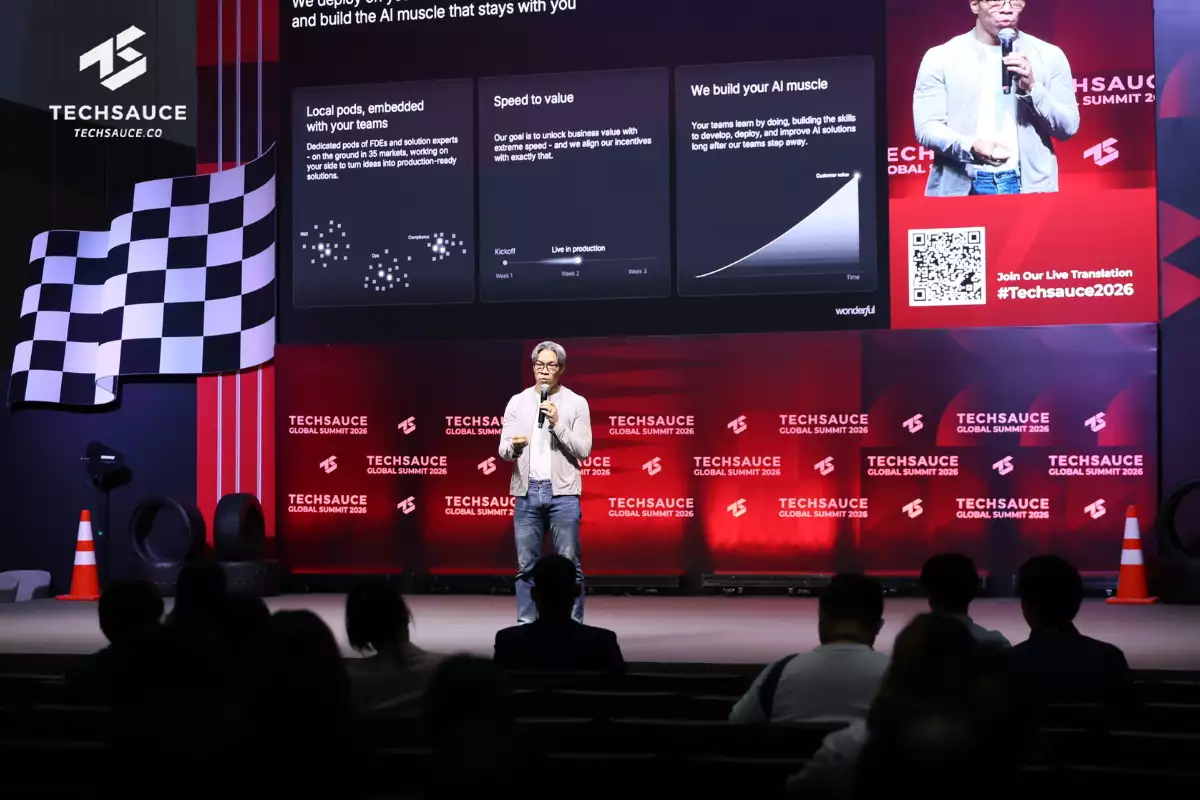
Wonderful operates in more than 35 markets and recently opened in Thailand with a local team. Founded in 2025 and headquartered in Amsterdam, the company positions its product as an enterprise AI operating system, and says the platform is designed to support enterprise AI experiences across languages and markets. In September 2026 the company announced a $550 million Series C led by Insight Partners, with Salesforce joining and Index Ventures, Bessemer Venture Partners, IVP, Vine Ventures and 9Yards Capital returning, at a $5 billion valuation. In the same month it was named Official Enterprise AI Partner of FC Bayern, a three-year agreement that begins with matchday fan services such as digital ticket support.
Ariya closed on timing rather than technology. Eight weeks from now, he asked the executives in the room, will the conversation still be about possibilities, or will agents already be running in production?
Source: Session "Everyone's Running Agent Pilots. But Few Are Ready to Scale. Here's Why." at Techsauce Global Summit 2026, Wonderful, LinkedIn Wonderful, The Wall Street Journal
ลงทะเบียนเข้าสู่ระบบ เพื่ออ่านบทความฟรีไม่จำกัด


Overreliance on AI May Weaken Thinking Skills: Key Points from an IMF Panel
At an IMF Inspired panel titled “AI: Unlocking Our Human Potential,” Dr. Ayesha Khanna, Co-Founder and CEO of Addo, spoke about how AI affects jobs, the economy, and society. She s...
 0
0

Anthropic's Jack Clark Says the World Has Less Than a Decade to Prepare for AI
Anthropic co-founder Jack Clark told the Per Jacobsson Foundation Lecture in Bangkok that AI is speeding up science and the world has less than a decade to prepare. Techsauce summa...
0

Small AI Can Create More and Better Jobs by Reaching Everyone
World Bank and IMF leaders discuss small AI that works on basic connectivity and can expand jobs and access to services....
0