Huawei Advances Agentic World Strategy with Launch of NPO-Powered Atlas 960E SuperPoD and Million-NPU Peerium Architecture

At HUAWEI CONNECT 2026 in Shanghai, the Techsauce team had the opportunity to attend and report directly on global tech breakthroughs and innovation trends. During the opening keynote, David Wang, Deputy Chairman of the Board and Rotating Chairman at Huawei, took the stage to share his vision under the theme "Advancing the Agentic World, Building a Solid Silicon Foundation." He outlined a clear strategy focused on advancing AI infrastructure to lay a solid silicon foundation capable of supporting the full-fledged era of Agentic AI.
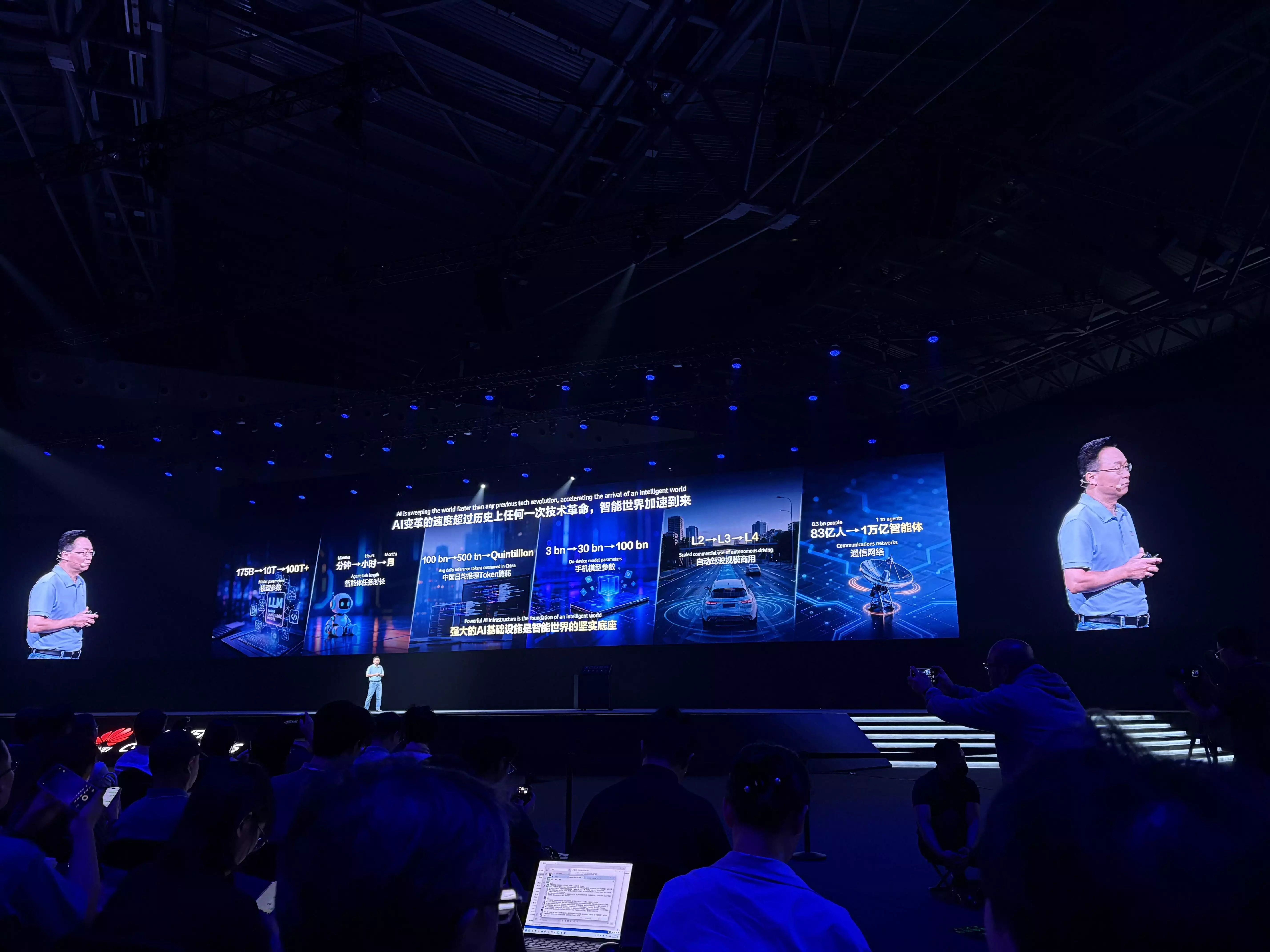
Wang pointed out that AI brains are advancing faster than any technological revolution in human history. Foundation model parameters are projected to surpass 100 trillion by 2030, a scale roughly equivalent to the number of synapses in the human brain.
In China alone, daily inference token consumption has already topped 500 trillion, with expectations to skyrocket into quintillions, or hundreds of millions of billions, by 2030. As a result, traditional IT infrastructure is hitting a wall, making a complete architectural overhaul necessary.
Summary of 7 Key Strategies: How Huawei is Building a Silicon Foundation to Drive the AI Era
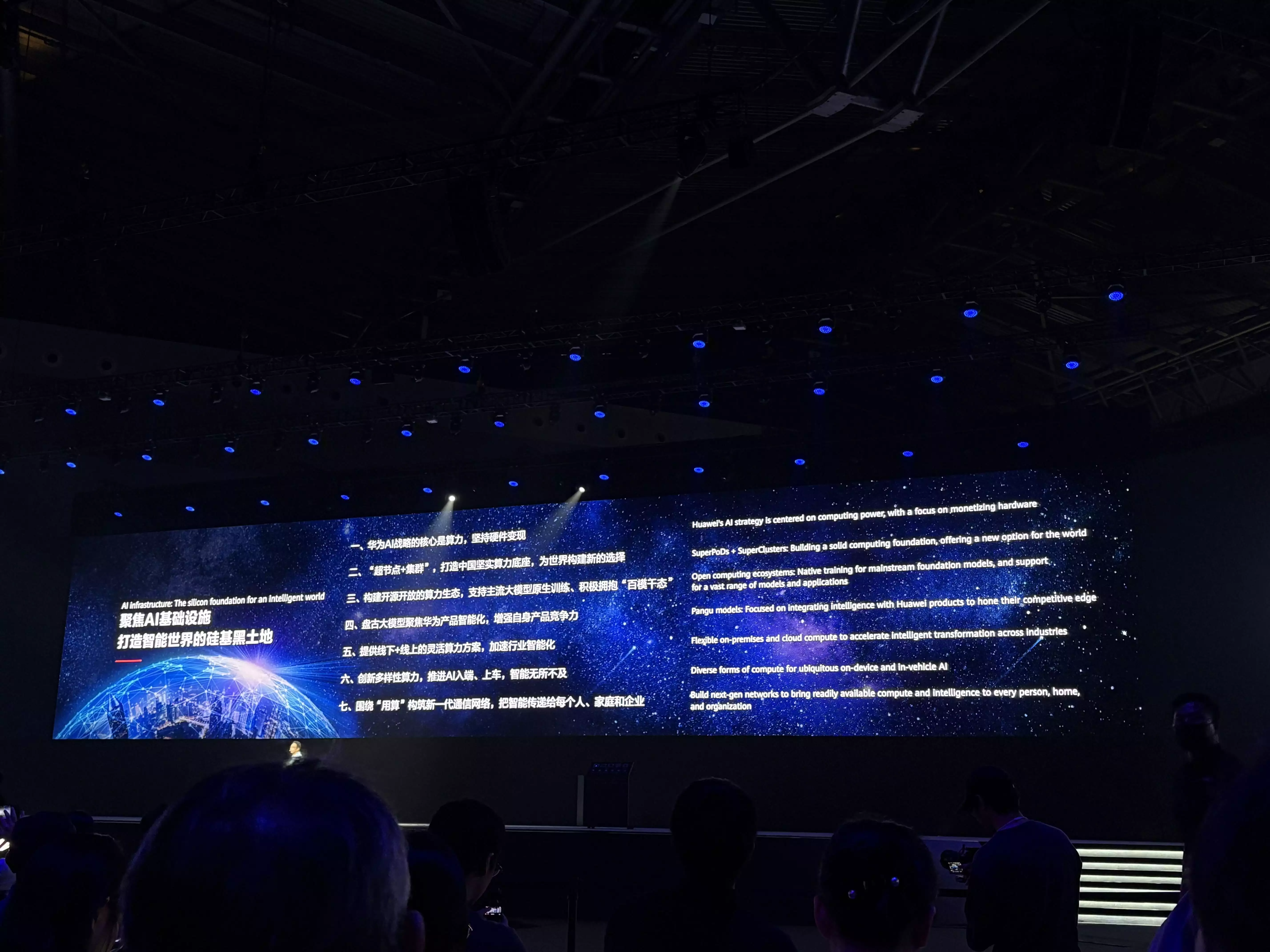
To tackle the challenges of the Agentic AI era, Huawei has mapped out seven strategic pillars.
- Focusing on Computing Power Driving compute power development as the core priority while maximizing real-world value from hardware.
- SuperPoDs & SuperClusters Architecture Moving beyond individual card specs to focus on system-level innovations through SuperPoDs and SuperClusters, offering a brand-new choice for the world.
- Open Ecosystem Support Supporting an open ecosystem by enabling native training on Huawei’s architecture for mainstream global AI models.
- Product Intelligence Utilizing Pangu models to boost intelligence across Huawei's entire product line.
- Flexible Compute Deployment Delivering versatile computing options, available both on-premises and via Cloud, to accelerate digital transformation across industries.
- Ubiquitous All-Scenario Compute Distributing compute chips of all form factors, from micro-units to supercomputers, to embed AI into smartphones, autonomous vehicles, and IoT devices.
- Next-Gen Communications Network Building next-generation communication networks to deliver seamless computing power to every person, home, and enterprise.
Why are SuperPoDs the Ultimate Answer for Massive-Scale AI Buildouts?
Imagine a data center packed with 100,000 AI chips. The biggest hurdle isn't how fast an individual chip runs, it’s how well those chips talk to each other.
In legacy server architectures, connecting massive arrays of chips leads to significant time wasted on inter-device data transfers, forfeiting over 40% of actual processing power. Put simply, it’s like bringing 100,000 brilliant minds together, only for them to waste half the day emailing back and forth, dragging down overall progress.
Huawei addresses this bottleneck with the SuperPoD concept by linking large clusters of processing chips over ultra-high-speed interconnects. Instead of chips operating in silos, the system treats the entire cluster as one cohesive, giant logical computer.
Huawei’s test results reveal that adopting SuperPoDs in large-scale setups dramatically slashes data transfer latency and boosts real-world processing efficiency (MFU) by up to 2.75 times compared to traditional server setups.
World First: Unveiling the Atlas 960E SuperPoD Powered by Optical Data Interconnects (NPO)
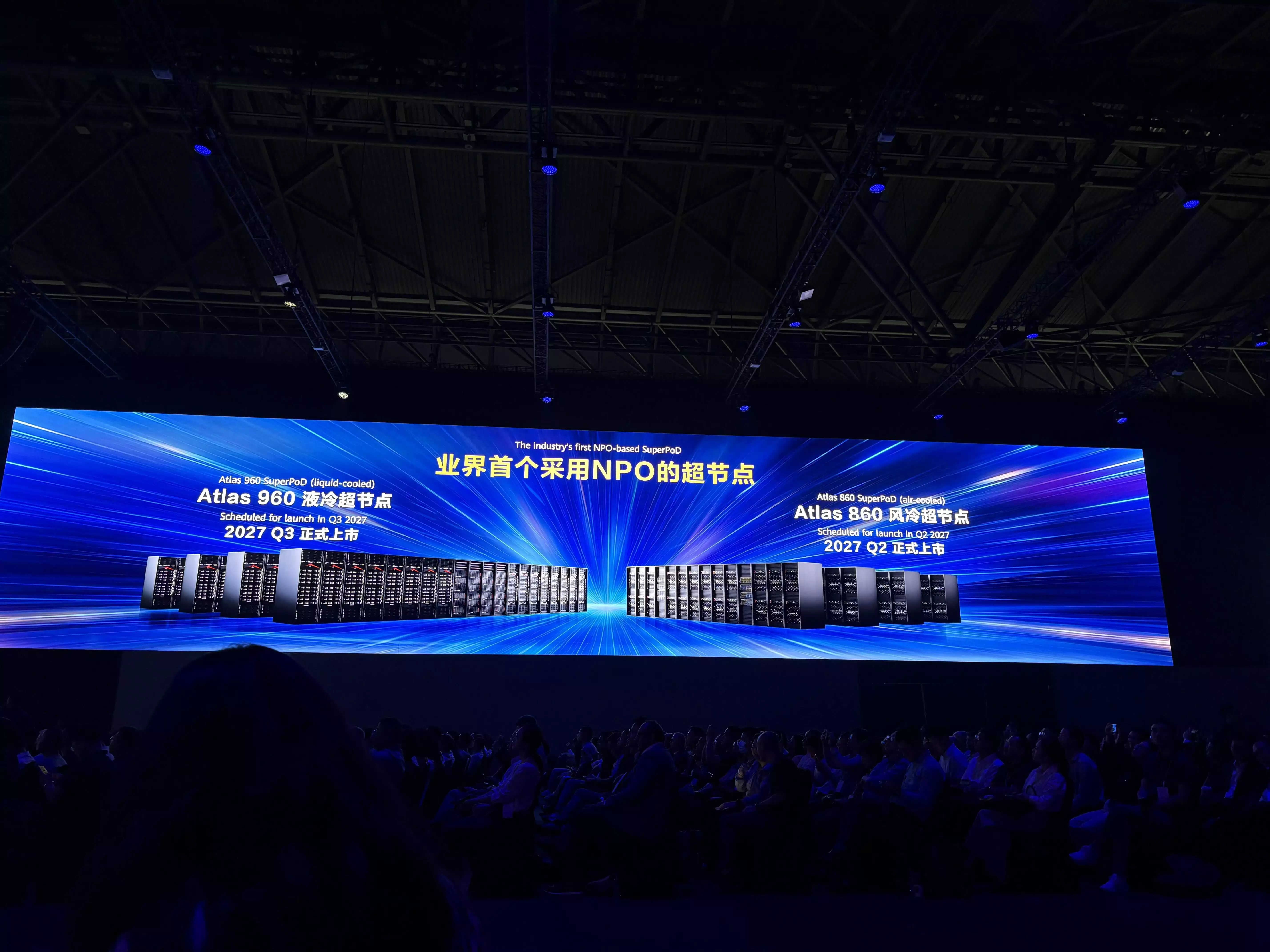
One of the highlights that sparked immense interest among the Techsauce team and event attendees was the debut of the Atlas 960E SuperPoD, the industry's first supercomputer to commercially implement Near-Packaged Optics (NPO).
To put it simply, standard computers transmit data through electrical copper wires. When handling massive data flows, copper wires overheat, slow down, and draw immense power. Huawei bypassed this by positioning optical engines directly alongside the processor chips, using light instead of electricity for data transmission, sharply increasing speeds while dramatically cutting down heat generation.
- Hi-ONE Engine Serving as the core optical converter, Hi-ONE is the world's first mass-production-ready optical engine featuring a built-in light source. It boasts a blistering transmission throughput of 7.2 Terabits per second per unit.
- Atlas 960E SuperPoD Specifications A single SuperPoD rack supports up to 4,096 NPU cards, delivering a staggering 8 EFLOPS of compute performance with 1 Petabyte of total High-Bandwidth Memory (HBM).
- Unmatched Efficiency and Durability Replacing traditional cabling with 5,500 Hi-ONE units eliminates the need for 48,000 legacy optical modules. This slashes power consumption by over 550 kW, equivalent to the power used by hundreds of households. Furthermore, it doubles system fault-free operating time (MTBF) and delivers an outstanding 99.8% system availability.
- Ascend Chip Roadmap (Annual Upgrades Confirmed) Ascend 960DT is a high-performance chip scheduled for delivery in Q1 2027, 9 months ahead of schedule. Ascend 960PR will follow closely with deliveries in Q3 2027, 3 months ahead of schedule. Ascend 970 and 980 are planned for launch in 2028 and 2029, respectively, targeting a 2x performance boost every year.
Introducing Peerium: The Next-Gen Architecture Enabling 1 Million Chips to Function as a Single Machine
Beyond new hardware debuts, Huawei unveiled the Peerium Computing Architecture, a next-generation computing framework designed specifically to shatter AI bottlenecks.
Traditional computing frameworks rely on a Master-Slave hierarchy where a central master node controls subordinate slave nodes, frequently causing bottlenecks under heavy AI workloads. Peerium scraps this model entirely in favor of a peer-to-peer interconnect architecture where all chips communicate as equals. This enables system orchestrations across a massive scale of 1,000,000 processing chips, making them function seamlessly as one giant supercomputer.
The critical backbone behind Peerium’s smooth execution is UnifiedBus (UB), a new high-speed data highway connecting CPUs, AI chips (NPUs), memory, and SSD storage using a single, unified protocol. By removing protocol conversion delays, data flows freely without interruption.
Complemented by the upgraded TaiShan 950 SuperPoD for general-purpose compute, the system pools 256 TB of shared memory, accelerating AI Sandbox deployment speeds by 30x and doubling Vector Search efficiency. Working alongside it is OceanStor M900, a context memory storage cluster for AI inference that uses Single-Hop Direct Access to streamline data transfers from five steps down to just one, halving latency and extending SSD lifespan by up to 16x.
Committed to Open Source: Democratizing AI for Every Person and Device
David Wang emphasized on stage that "no single company can sustain the AI world alone," highlighting Huawei's determination to foster an open, collaborative ecosystem.
This open approach is evident in the Kunpeng ecosystem, which now boasts over 4.16 million developers. Meanwhile, the openEuler operating system has secured the top market share in China’s server OS market with over 20 million installations. Notably, external developers now account for 61% of Huawei's CANN architecture ecosystem, surpassing internal developers for the first time. CANN has also earned global recognition, becoming officially downloadable as a supported accelerator backend on the PyTorch platform.
Looking ahead, Huawei is expanding AI to end-user devices by building specialized compute platforms across four key everyday scenarios: smartphones, PCs, vehicles, and smart homes. By combining Kirin and Ascend chips, Huawei is revamping HarmonyOS into a fully AI-native operating system. In parallel, heavy investments into the Qiankun intelligent driving system aim to transition the automotive industry from assisted driving toward full L4 Autonomous Driving by 2030.
All of these will be connected via next-gen networks like 5G-A/6G and 10-Gigabit optical networks, removing data silos and turning AI compute into an accessible, safe, and utility-like resource for everyone, everywhere.
Key Takeaways from Techsauce
Attending HUAWEI CONNECT 2026 made one thing abundantly clear: the next frontier of AI isn't just about who builds the fastest standalone chip. Instead, it hinges on System Architecture, the ability to connect and orchestrate millions of chips efficiently, sustainably, and seamlessly deliver intelligence to end users.
From the Peerium Architecture and optical-interconnect Atlas 960E SuperPoD to a thriving open ecosystem, Huawei is laying down a solid Silicon Foundation for the Agentic AI era, a shift set to transform everything from hyperscale data centers to autonomous vehicles and daily consumer devices.
ลงทะเบียนเข้าสู่ระบบ เพื่ออ่านบทความฟรีไม่จำกัด

Korawad Chearavanont, founder and executive chairman of Amity, explains at Techsauce Global Summit 2026 how an AI company from Thailand is going global through Vertical AI, acquisi...
 0
0
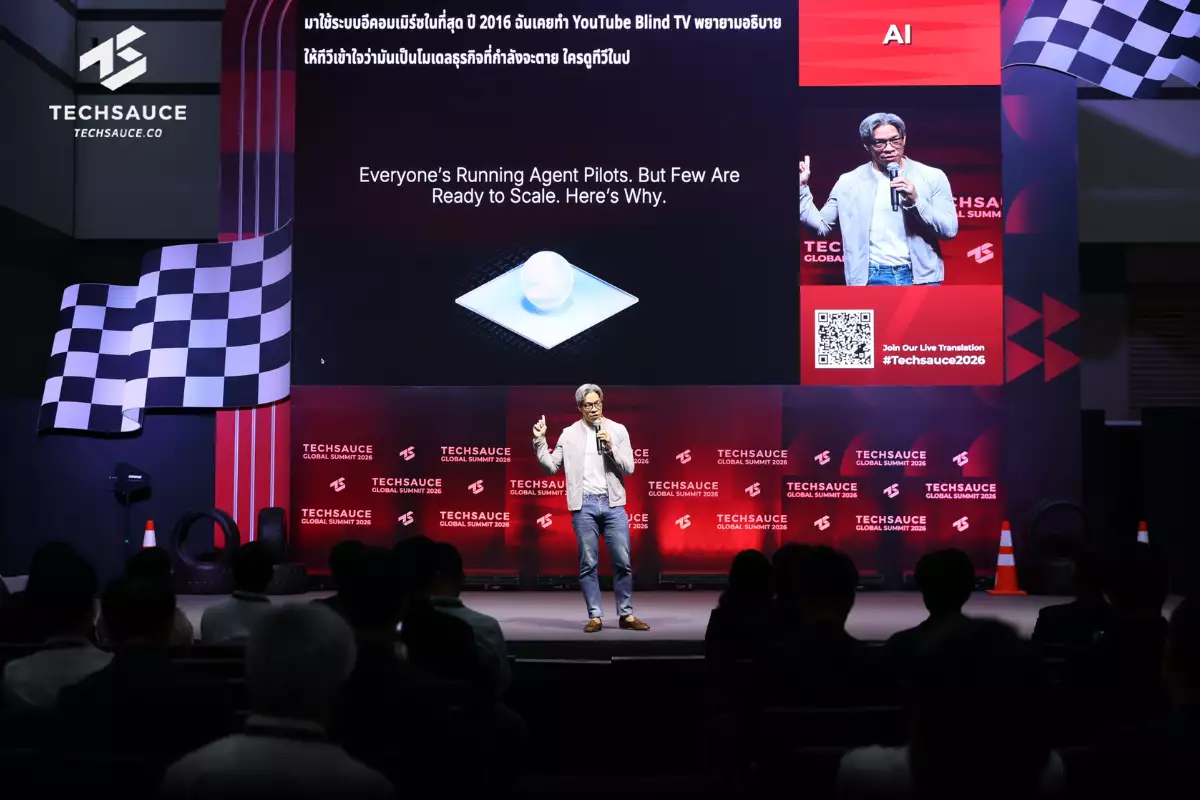
Beyond the Pilot: What It Takes to Move AI Agents into Production
At Techsauce Global Summit 2026, Ariya Banomyong of Wonderful Thailand outlined what separates AI pilots that scale from those that stall: cross-functional design, production-scale...
0

SCBX’s 3-Layer AI Roadmap: A Blueprint for Scaling AI in Big Companies
How to make AI not only a pitch project? Summarizing the AI-First strategy from SCBX and how to develop your company and measure that the ROI is happening....
0