
ASEAN Startup Expansion in a Post-Hype VC Era: Lessons from the Brunei Startup Summit 2026
Southeast Asia's startup ecosystem has entered a period of tough recalibration. Following years of inflated valuations and a widespread mandate to capture market share regardless of burn rate, venture capital markets have fundamentally shifted their criteria for long-term viability — and the rules governing ASEAN startup expansion have changed with them.
This structural pivot served as the central anchor of the Brunei Startup Summit 2026. Over the course of the two-day event, regional policymakers, institutional investors, and veteran founders bypassed the usual tech conference optimism to focus entirely on the mechanics of execution. The discussions stripped away the illusions of easy expansion, revealing a landscape where scaling across ASEAN’s borders relies heavily on a pragmatic respect for local business cultures rather than a charismatic pitch. Furthermore, the patience for theoretical business models has vanished; investors are now looking for operational maturity, expecting founders to present unit economics that actually map to reality and AI integrations that do the heavy lifting rather than simply dressing up a valuation.
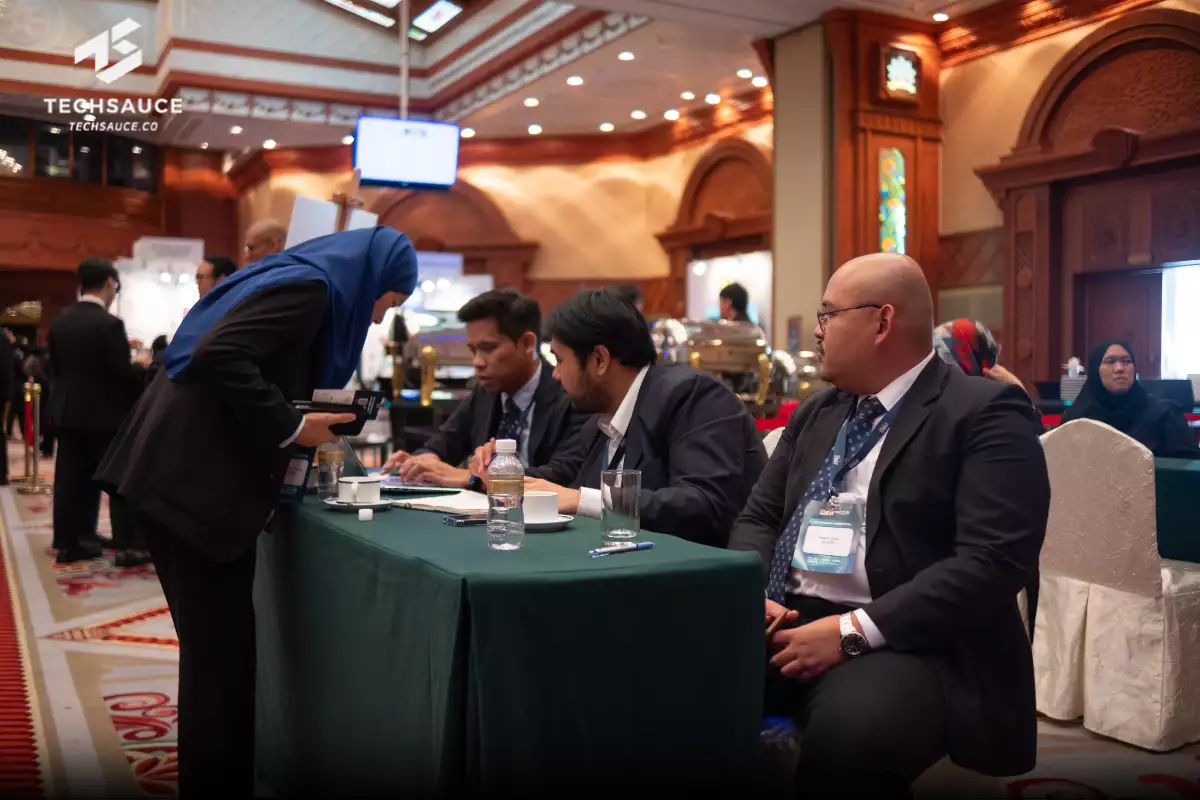
The End of the Mega-Valuation Trap
The venture capital ecosystem is currently penalizing the exact behavior it heavily rewarded just a few years ago: the pursuit of the highest possible early-stage valuation. Shahril Ibrahim, Partner at 500 Global, dissected this trap during his session, explaining that aggressively overpricing an initial round effectively paints a target on a startup's back. When a company inevitably struggles to meet the exponential growth metrics required to justify that early figure, the financial fallout is severe. Founders are left cornered, facing either a complete freeze from later-stage investors or the administrative and cultural nightmare of a down round.
Because the margin for error is now so thin, Ibrahim advised founders to carefully sequence their capital intake rather than rushing toward institutional money. He likened venture capital to a backseat driver who covers the fuel cost but insists on navigating, whereas non-dilutive government grants function more like a no-strings-attached travel fund from a relative. For startups still validating their product, exhausting those grant options first provides the runway to experiment without early dilution or external interference.
The investor panel, featuring East Ventures' Yinwei Ling and AgFunder's John Friedman, reinforced this return to fundamentals. The discussions made it clear that while deep tech and proprietary research are compelling hooks, investors are ultimately underwriting the founder's judgment and commercial execution. A startup can spend a decade perfecting a product in the lab, but without tangible market validation and a team capable of securing revenue, the enterprise's intrinsic value remains at zero.
The Brutal Reality of Cross-Border Expansion
Expanding beyond a home market frequently exposes a startup's structural fragilities rather than validating its business model. Richard Roocroft, SVP Group Head of Commercial at Amity Group, noted that premature scaling is a far greater existential threat to early-stage companies than sluggish growth. He advised founders against the impulse to internalize every operational function when entering new territories, framing the attempt to build market share entirely from scratch not as a sign of ambition, but as a severe liability. Instead, establishing repeatable internal processes and leveraging existing local ecosystems must precede any aggressive push across borders.
The friction of regional expansion is heavily tied to the deeply fragmented nature of ASEAN business cultures—a reality that Kla Tangsuwan, founder of Thailand-based Wisesight, learned at a steep cost. Tangsuwan detailed a failed expansion into Malaysia that resulted in a $500,000 loss, a misstep he attributed directly to a rigid adherence to his home market's sales methodologies. Where his domestic clients expected a narrative-driven pitch with pricing reserved for the final discussions, the Malaysian market demanded immediate, upfront visibility into cost reductions. By overriding his local team's advice and failing to adapt to these specific regional procurement expectations, the venture collapsed. Wisesight's subsequent expansions have since relied strictly on local partners to navigate these critical nuances.
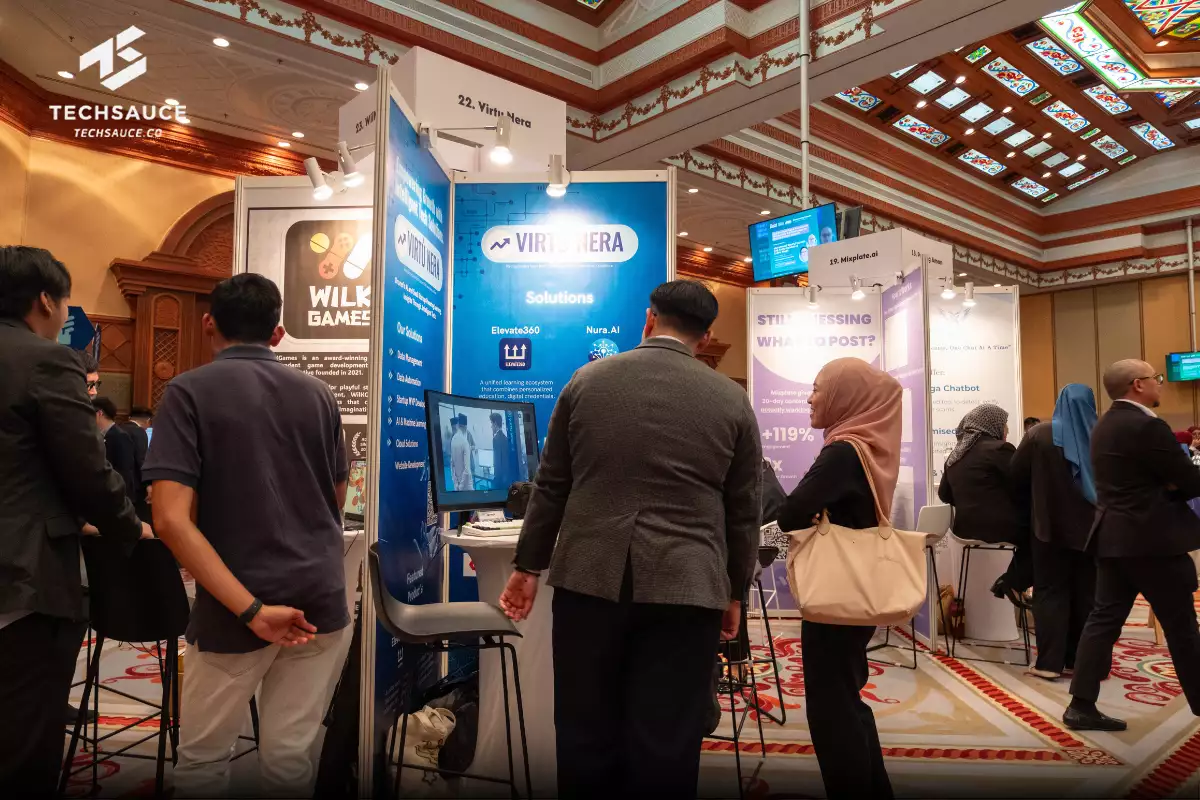
Yet, when executed correctly, establishing a cross-border footprint yields dividends that extend far beyond immediate new revenue. Louis-Alban Batard-Dupré, founder of Yindii, pointed to the distinct psychological leverage gained from entering a second market. By acquiring a distressed competitor in Hong Kong, Yindii effectively discarded its classification as a domestic startup. Earning the designation of a "regional scale-up" fundamentally shifted how the company was perceived by institutional investors and enterprise clients alike, ultimately unlocking major corporate partnerships back in their home base of Bangkok that had previously been out of reach.
Navigating ASEAN's Fragmented Ecosystem
Building on the experiences of Wisesight and Yindii, the summit dedicated significant focus to demystifying the specific regulatory and cultural hurdles across Southeast Asia. The overarching takeaway was that ASEAN cannot be treated as a monolithic bloc; successful market entry demands highly calibrated, hyper-local strategies.
Regional experts outlined the distinct operational realities dictating expansion into key markets:
- Indonesia: While offering a massive consumer base, the market imposes steep structural barriers. Megha Prawita of Kumpul noted that foreign entities face a minimum $600,000 USD capitalization requirement. Because of this high financial threshold, executing low-risk Proof of Concepts (PoCs) with local SMEs is a vital precursor to formal incorporation.
- Vietnam: Capital alone cannot buy market share here. Cong-Thang Huynh of InnoLab Asia pointed out that 90% of foreign startups fail simply by mistaking language translation for true localization. Consumer behaviors dictate entirely different entry playbooks; for instance, Vietnamese consumers exhibit high conversion rates driven by repetitive digital ad exposure, contrasting sharply with the physical retail preferences of neighboring markets.
- Thailand: Thailand’s Board of Investment (BOI) is aggressively attracting foreign capital by offering 100% foreign ownership and extensive tax exemptions for S-curve industries like AgTech and BioTech. Yet, Techsauce co-founder Mimee Lerdsuwankij cautioned against direct-to-consumer plays. Exorbitant customer acquisition costs require incoming founders to adopt B2B2C models, leaning on the infrastructure of established retail networks instead of building audiences from scratch.
- Philippines: The market presents a seemingly frictionless entry point due to its high English proficiency and mature $38 billion IT-BPM sector. However, TechShake’s Janessa Carlos stressed that unit economics must be meticulously recalibrated. Pricing models imported from Singapore or Malaysia will fail if they are not strictly aligned with the actual per capita purchasing power of the local market.
For this complex, multi-tiered ecosystem to function effectively for scaling startups, bureaucratic friction must be aggressively reduced. Addressing this macro-level challenge, Rudiantara, Chairman of Nexticorn and Indonesia’s former Minister of Communications and IT, argued that regional governments must fundamentally evolve their mandates. Rather than operating strictly as regulatory gatekeepers focused on compliance and permitting, state apparatuses must transition into active facilitators, consciously smoothing the pathways for cross-border innovation.
The Human Foundation: Chemistry and Play
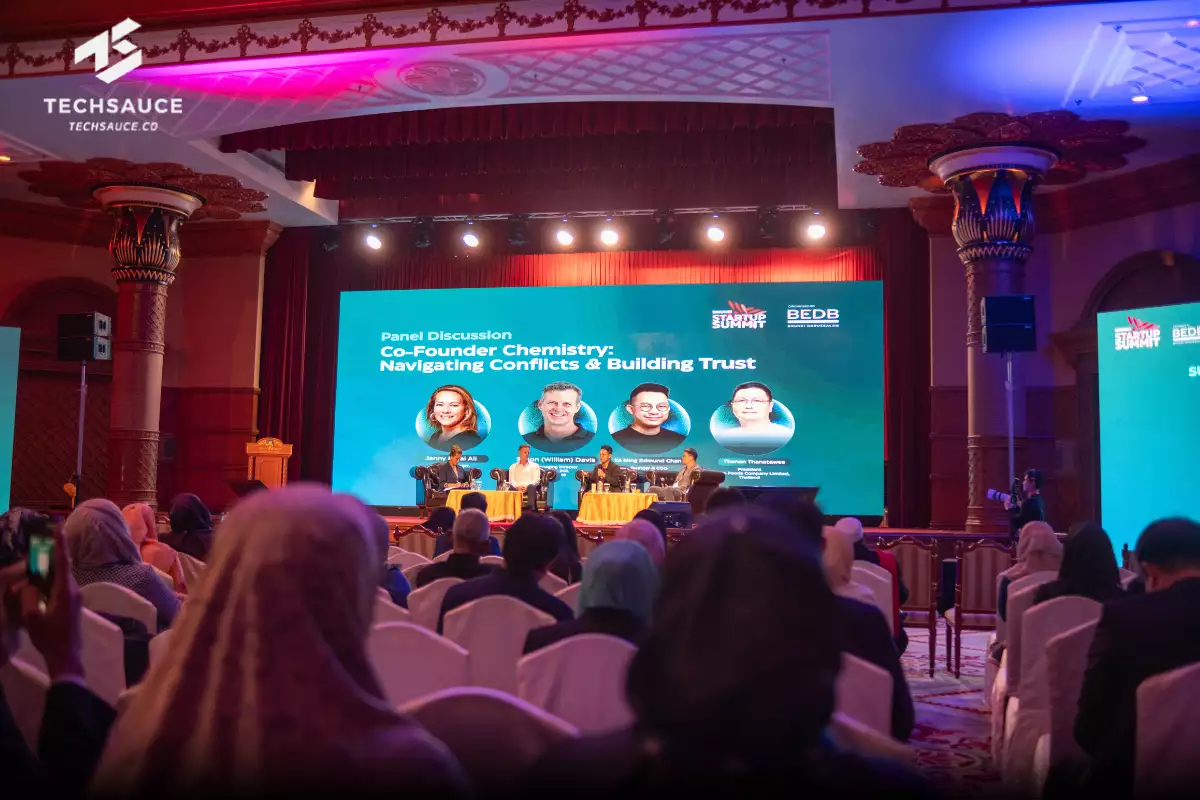
Yet, beyond technological advantages and capitalization tables, a startup's durability ultimately rests on its human infrastructure. As previously noted by the investor panel, venture capitalists are essentially underwriting founder judgment. The Co-Founder Chemistry session, featuring leaders from Seedling, Meat the Next, and Warwick Food Company, underscored that fractured leadership remains one of the primary catalysts for early-stage failure. The panelists universally advised against co-founding ventures with a spouse, advocating instead for partnerships built on complementary operational skills rather than mirrored personalities or purely personal bonds.
Scaling inevitably places immense psychological strain on this human capital. Addressing executive burnout, Narudee Kristhanin of Eureka Global introduced the concept of "serious play" as a critical cognitive tool for leadership teams. Rather than a frivolous team-building exercise, she framed structured play as a necessary neurological reset. It allows high-stress leaders to lower their defensive barriers, unlock lateral problem-solving, and clearly identify their enterprise's true "unfair advantage" amidst chaotic growth phases.
The Blueprint for a Recalibrated Ecosystem
The summit’s concluding pitch competition provided a live demonstration of these recalibrated industry standards. The top prize was awarded to Brunei-based Wilk Games, whose founder, Wilson, showcased Tiku’s Tales, a globally appealing 3D action platformer. Rather than presenting a bloated customer acquisition budget, Wilk Games demonstrated profound capital efficiency, securing 1,300 organic wishlists on the Steam platform with zero marketing spend. The victory underscored that global visibility is entirely achievable from a smaller domestic market when paired with rigorous product execution.
As the Southeast Asian ecosystem matures past the era of easy capital, the mandate for founders has fundamentally shifted. Success no longer hinges on manufacturing hype to secure vanity valuations. Instead, it requires building defensible tech moats, navigating local market nuances with humility, and forging resilient leadership teams.
The path forward was perhaps best summarized by Amity Group’s Richard Roocroft, who offered a definitive sequence for modern startups: ambition sets the vision, meticulous structure supports it, and only then does true growth follow.
ลงทะเบียนเข้าสู่ระบบ เพื่ออ่านบทความฟรีไม่จำกัด

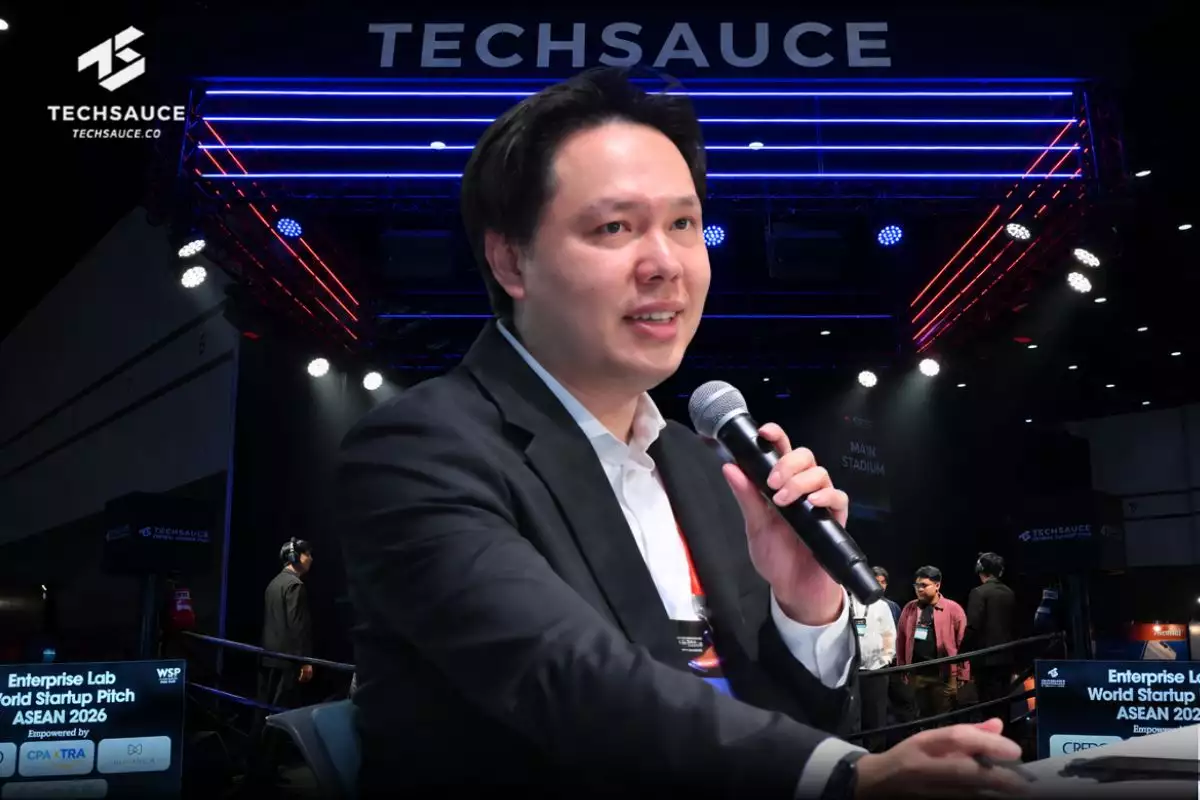
Following the Enterprise Lab World Student Pitch ASEAN Edition at Techsauce Global Summit 2026, Techsauce spoke with Tirayu Songvetkasem, Chief Digital Officer of CP AXTRA. As an E...
 0
0

When AI Chooses for Your Customer: Accenture Song on the New Rules of CX
Accenture Song's Tuomas Peltoniemi on how AI agents are taking over customer decisions, and the five lessons brands need before the buyer stops being human....
0

20 Years of Lessons from DeeMoney's CEO Technology Moves Information, but Trust Is What Moves Money
DeeMoney co-founder and CEO Aswin Phlaphongphanich unpacks the unspoken facts of global payments at Techsauce Global Summit 2026: there is no global transfer network, payment firms...
1