Inside the Mindset of New-Gen Leader Tanit Chearavanont: Stripping Away Legacy Systems to Build Everything In-House to Become ASEAN's Retail Tech Leader
"Your MakroClick is terrible!"
This blunt feedback from an important customer to Tanit Chearavanont, Group Chief Wholesale Business Officer of CP AXTRA, was the starting point that drove him to undertake a massive strategic rethink — transforming a platform once plagued by complaints of a "bad system," "slow delivery," and "ordering on Monday only to receive goods on Friday," leading to the decision to strip out the old system entirely and build a brand-new one from scratch using Thai tech talent.
What is the behind-the-scenes story of how Tanit and his engineers evolved into a massive technology powerhouse, successfully steering the organization to become a leading Thai E-commerce player?
Techsauce breaks down the lessons learned from Tanit Chearavanont's session at The Economist Impact: Technology for Change Asia, revealing the formula for transforming an enterprise into a top-tier regional Retail Tech leader.
3 Years of Turning ‘Numbers’ into ‘Trust’
In 2022, Makro's online revenue share was just 13.6%. Following an intense digital transformation from 2022 to 2025, that figure has surged to between 31% and 32%.
2026 marks a crucial milestone. Makro is no longer just optimizing its existing branches and assets; it is aggressively expanding its "Dedicated E-commerce Fulfillment Centers."
Investments in both warehouses and storefronts, coupled with the development of a proprietary Order Management System (OMS), have largely eliminated delivery pain points, achieving near 100% order completeness.
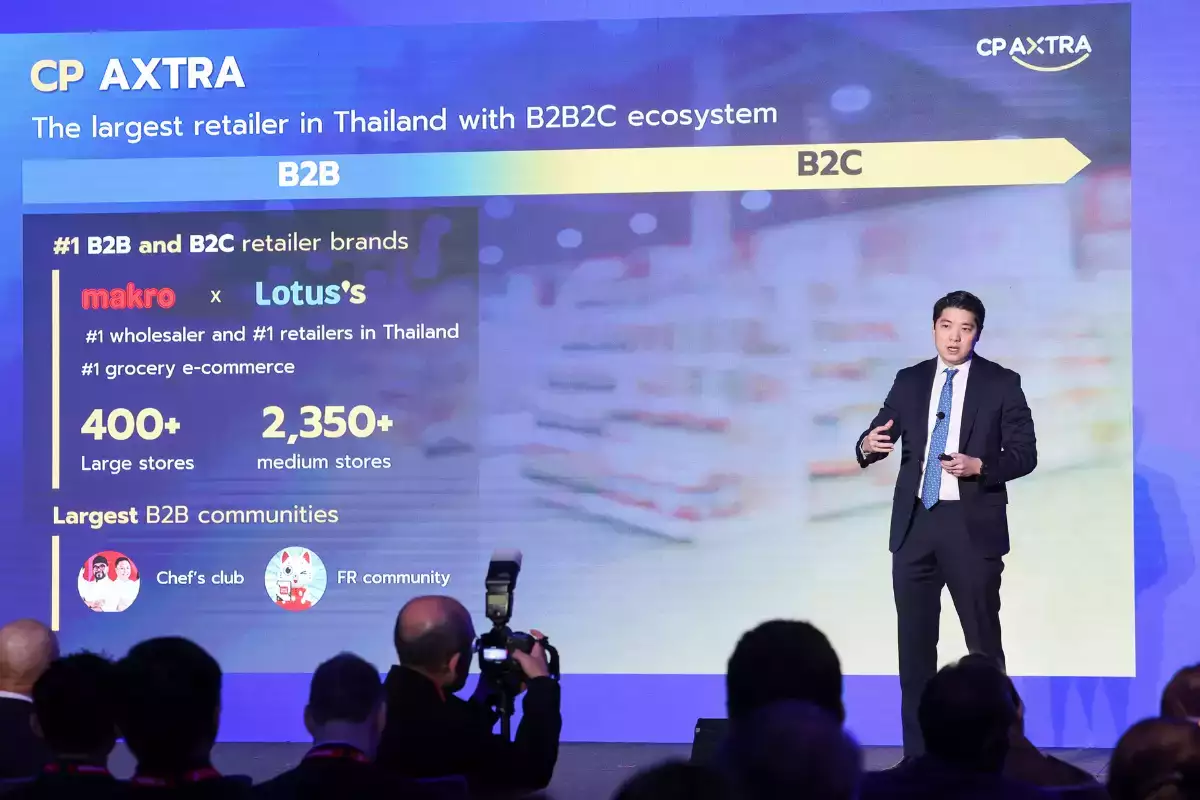
The Secret to Overtaking the Giants: The 1P Strategy
The Southeast Asian and Thai e-commerce markets are dominated by three platform giants.
These platforms operate on a 3P (Third-party) model, providing a marketplace for third-party sellers.
Consequently, the actual revenue these platforms earn is much lower than the total Gross Merchandise Value (GMV) generated on their sites.
Tanit, however, chose to pursue a different model: a platform built on a 1P (First-party) approach, which focuses primarily on selling the company’s own inventory. This strategic move yielded two major results:
- Makro is now #1 in 1P sales.
- It has become the leading Thai-owned e-commerce platform.
"This is just the beginning. We are pushing to expand our GMV growth, which will undoubtedly elevate us to the #2 or #3 spot even when compared to global platforms,"
When the OMS Crashed... It Was Time to ‘Build Our Own’
Another pivotal moment for Tanit occurred during the highly anticipated launch of Makro Pro, featuring celebrity Yaya Urassaya. The sheer volume of orders overwhelmed their third-party SaaS Order Management System, causing a total system failure. That very day, the team made a decisive move to abandon the external software, pivot to an open-source solution like Medusa, and build an entirely new system in-house within 6 months.
Today, this proprietary OMS processes up to 2 million parcels per day. Its underlying intelligence allows it to instantly reroute orders between branches if one cannot fulfill them, ensuring customers receive 99-100% of their items. Notably, 60-70% of this traffic comes from provincial areas outside the capital.
The People and the Mindset to ‘Keep Going’
This transformation required CP AXTRA to dramatically scale its engineering team — growing from roughly 20 people to a tech workforce of 400. The ultimate goal is to push the engineering ratio within the team even higher.
Beyond headcount, the real driver of CP AXTRA's competitive edge lies in owning its innovation. Over the past 1-2 years, the company has registered four AI patents. The first two were developed using Llama technology, while the two most recent patents leverage a combination of various Large Language Models (LLMs) from both the West and China to maximize operational capabilities.
However, Tanit believes that becoming the undisputed #1 in the region cannot be achieved alone. This led to a strategy of partnering with global tech companies through "Co-creation"—building innovations specifically tailored for the Thai market. Key partnerships include:
Cainiao (under Alibaba Group) Revolutionizing Makro's in-store operations with AI and smart logistics:
- iWMS (Intelligent Warehouse Management System): Boosted picking and packing efficiency by 140%.
- TMS (Transportation Management System): Manages a fleet of over 4,000 trucks, expanding delivery capacity from 15,000 to 100,000 orders per day.
- AI-Powered Planogram: An intelligent layout system that analyzes retail space and branch inventory for highly accurate product placement.
CJ Logistics: The South Korean logistics giant with over 90 years of experience stepped in to elevate the end-to-end supply chain
- Total Control Tower: Provides real-time visibility over the movement of all goods.
- TCO (Total Cost of Ownership): Applied holistic cost management principles to cut cross-docking delivery times (from warehouse to branch) from 72 hours down to less than 24 hours.
- Software & Source Code Sharing: More than just a software purchase, this is a source-code-level collaboration to co-develop a Warehouse Management System specifically tailored for modern retail.
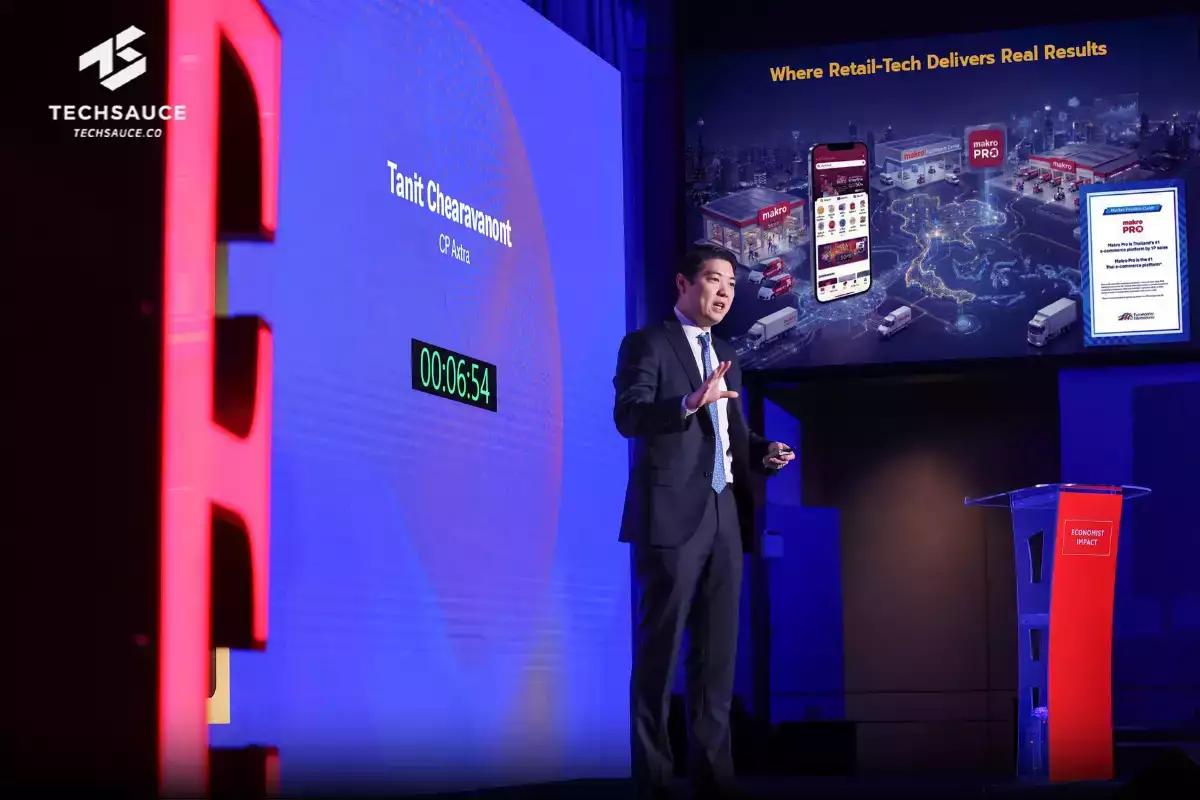
Transformation comes from the people and mindset. Not everyone is going to be on board with your vision, but you have to have that conviction to keep driving forward.
Throughout this journey, CP AXTRA has proven that corporate transformation starts with the courage of a leader who refuses to surrender to criticism — someone brave enough to discard legacy systems, build an in-house engineering powerhouse, and co-create proprietary innovations alongside global tech partners.
And this is just the start. CP AXTRA's next move is to take this proven technological model and scale it to expand into major ASEAN markets, such as Malaysia and the Philippines.
This reinforces its ultimate goal: to rise as the undisputed "Retail Tech Leader of ASEAN."
Reference: Case Study Session "New Retail Experiences" from The Economist Impact: 6th annual Technology for Change Asia
ลงทะเบียนเข้าสู่ระบบ เพื่ออ่านบทความฟรีไม่จำกัด

When AI Chooses for Your Customer: Accenture Song on the New Rules of CX
Accenture Song's Tuomas Peltoniemi on how AI agents are taking over customer decisions, and the five lessons brands need before the buyer stops being human....
 0
0

20 Years of Lessons from DeeMoney's CEO Technology Moves Information, but Trust Is What Moves Money
DeeMoney co-founder and CEO Aswin Phlaphongphanich unpacks the unspoken facts of global payments at Techsauce Global Summit 2026: there is no global transfer network, payment firms...
1
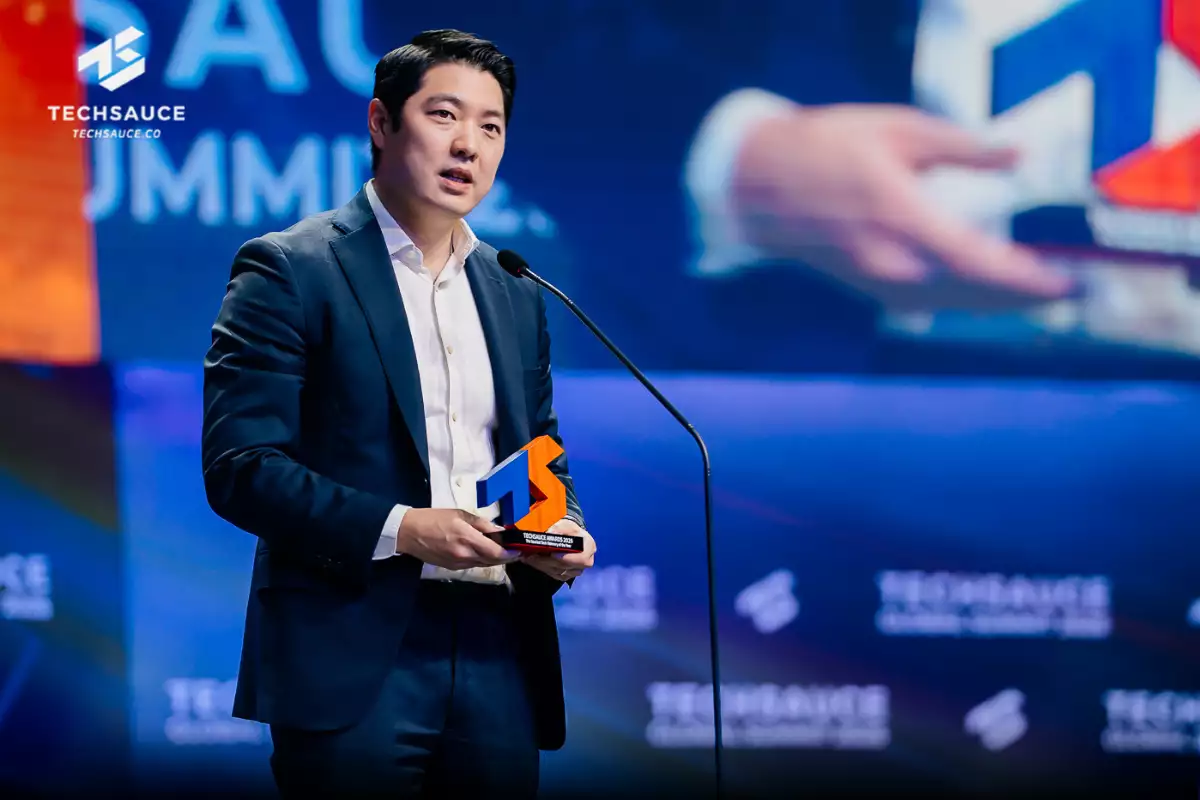
Some parts, I admit, were difficult challenges for me. But I have to thank the team for believing in me when others said it couldn’t be done....
0