
Why Thailand Needs More Than Factories? Exclusive Interview with Kai Li of Tsinghua University
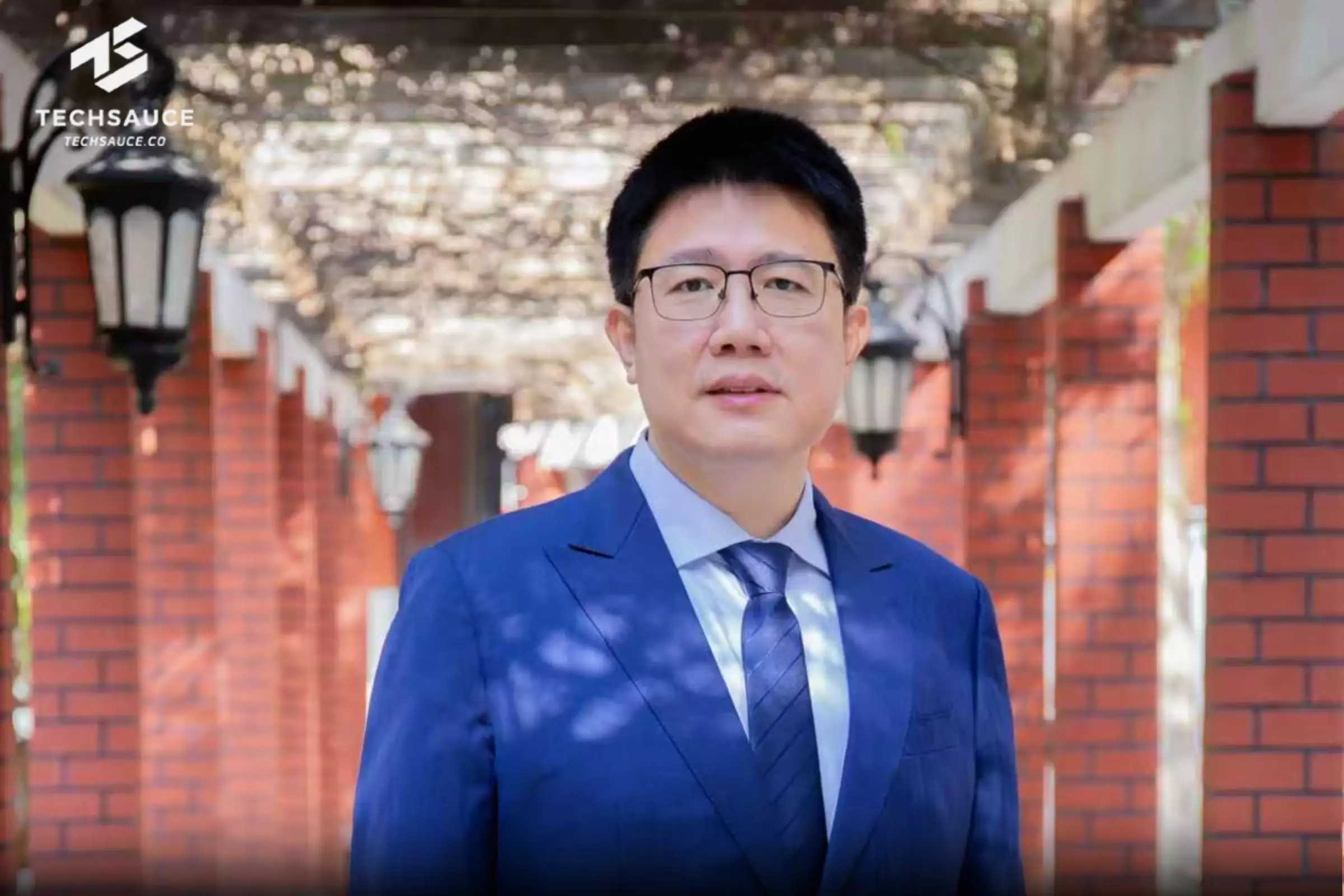
Investment can arrive faster than local suppliers, skilled workers and power infrastructure can grow. For Kai Li, Chair Professor of Finance at Tsinghua University’s PBC School of Finance, that gap is central to whether Thailand converts new investment into durable economic value.
Investment links between China and Southeast Asia are moving beyond trade and straightforward factory relocation. The harder question is how much value a host country can build around the production base itself.
Kai Li, a macro-finance researcher and Chair Professor of Finance at Tsinghua University’s PBC School of Finance, sees Thailand’s opportunity in the ecosystem around localized production: components, automation, logistics and supporting services, alongside final assembly.
Techsauce spoke with Li during Bangkok Economic Festival 2026, a forum held on the margins of the IMF–World Bank Group Annual Meetings in Bangkok. His point was direct: capital needs to move alongside local suppliers, talent and infrastructure, particularly reliable power. When those elements do not keep pace, investment in fast-growing industries can run into constraints before its broader benefits materialise.
Capital allocation matters as much as capital mobilisation
Li sees China’s next five years as a transition in its growth model. Property, infrastructure and rapid capital accumulation had been major engines of growth for many years. The next phase, he argues, will place more weight on productivity improvement, technological diffusion and stronger household demand.
That shift is not a smooth one. Property-price adjustment, local-government debt and volatility in external demand can create pressure on industries that grew under the previous model. Still, Li’s core question is where capital goes.
“Expanding capacity is not the same as creating economic value,” he said. The test is whether capital reaches firms, industries and technologies capable of generating sustainable returns.
For a macro-finance researcher, that also means tracing how financing translates into additional output and household income. Productivity gains need to reach employment, wages and incomes if they are to support durable consumption. For Southeast Asia, he expects China’s shift toward consumption and innovation to reshape demand patterns and create new openings for supply-chain collaboration and technological diffusion.
An AI investment boom is not yet an AI productivity boom
The same distinction applies to AI. Heavy investment in chips, data centres, networks and power infrastructure does not automatically create a broad productivity payoff. That payoff comes when businesses use AI to produce more, improve quality or lower costs.
Li frames the financing challenge around what he calls “compute finance.”—the financing, risk sharing, and asset management of computing infrastructure throughout its life cycle. GPUs and servers are costly assets, but they can become obsolete rapidly as technology advances. Financing them therefore involves more than a borrower’s credit risk. It also requires decisions about how intensively the assets will be used, whether they can be upgraded or redeployed, and who bears the risk when their residual value falls.
The issue has a practical relevance for Thailand as data-centre investment grows. Power availability, reliability and affordability become part of the economics of computing, rather than an issue to consider after an investment decision has been made.
‘0 to 1’ and ‘1 to N’ need different capital
Li separates innovation into two categories. “0 to 1” innovation is exploration: developing a genuinely new technology or business model. “1 to N” innovation is exploitation: scaling and refining a proven technology.
Both are valuable, but their financial risks differ. Scaling an established technology with predictable cash flows and tangible assets can often be financed through bank credit. Frontier innovation is more uncertain, relies more heavily on intangible capital and has a greater chance of failure.
That is why Li argues for patient equity capital: equity investors willing to bear risk over a longer horizon in exchange for potential upside. The aim is not simply to provide more money for technology. It is to match financial structure to the stage of innovation.
The mismatch can also help explain what Li calls “involution”: intense competition in the same area that pushes profit margins down. China has developed important strengths in engineering, manufacturing scale and continuous improvement, he noted. The problem emerges when financial incentives encourage too many firms to expand similar capacity faster than demand can absorb it. Competition then lowers returns without necessarily producing more breakthroughs.
Green finance needs to look forward
Li applies the same logic to the energy transition. Green finance should not only reward companies that are green today. It should also help companies become greener tomorrow.
Many carbon-intensive companies may have significant potential to reduce emissions, but they need financing to upgrade equipment and adopt cleaner technologies during that transition. Li points to forward-looking instruments such as green credit, green leasing and transition finance. These can support investment based on credible plans to reduce future emissions, instead of relying solely on a company’s past environmental performance.
That broadens the opportunity set beyond renewables and electric vehicles. He also points to power grids, storage, industrial efficiency, equipment upgrades and business models that make cleaner technology affordable to more firms. As AI and electrification advance, reliable energy infrastructure becomes more important across all of them.
From final assembly to localized production
For China–Southeast Asia cooperation, Li expects the next stage to move beyond trade and simple factory relocation. The larger opportunity, in his view, is to build an entire ecosystem around localized production.
Thailand is an important example. Li sees a mature automotive base and a Chinese EV supply chain that is becoming more deeply localised, as automakers establish plants and bring component suppliers with them. He also points to Thailand’s efforts to upgrade electronics from downstream assembly toward higher-value activities, as well as the rapid growth of data-centre investment.
Across these sectors, he sees a common gap: the speed at which capital arrives may exceed the speed at which local suppliers, talent and infrastructure can support and absorb it.
That makes workforce development and power planning part of the investment proposition from the outset. A factory, data centre or new supply chain may bring capital into the country, but its local economic value depends on whether firms and people around it can move up with it.
Four questions before committing capital
Looking toward 2030, Li sees opportunities in AI adoption, energy-system investment, regional supply-chain development and services responding to demographic change. Yet, as he puts it, “a good growth story does not automatically make a good investment.”
He suggests four practical questions for business leaders considering a new investment:
1. Is customer demand real and durable?
2. Will returns on invested capital remain attractive after competition intensifies?
3. Can the balance sheet survive currency movements, refinancing pressure and slower-than-expected growth?
4. Can the firm upgrade, redeploy or exit assets if technology changes?
The questions sit alongside three risks that he believes Asian businesses should watch: the global financial cycle, overinvestment and technological and political uncertainty. Changes in US dollar interest rates, exchange rates and investor risk appetite can quickly alter financing conditions. Capacity can grow faster than real demand. Assets can become obsolete sooner than expected, while trade rules and geopolitical risk can alter supply-chain relationships.
For Li, balance-sheet flexibility is therefore a competitive advantage. The companies best positioned for 2030 will be those able to capture real opportunities without becoming financially fragile.
ลงทะเบียนเข้าสู่ระบบ เพื่ออ่านบทความฟรีไม่จำกัด

Techsauce Global Summit 2026 | Highlights
Highlights from Techsauce Global Summit 2026, held under the theme "The Race to the NEXT…" This year's summit brought together business leaders, entrepreneurs, startups, investors,...
 0

One AI System for Many Companies: Lessons in Building an AI Strategy After a Merger
Mergers and acquisitions are one of the fastest ways for an organization to expand its capabilities in the AI era, bringing in technology, new markets, or valuable data and buildin...
0

Techsauce visits the KOREA-GAME INNOVATION HUB at gamescom asia x Thailand Game Show 2026 to hear how 10 Korean game companies see Thailand and ASEAN, and what kind of local partne...
0