
Closing the Diagnostic Divide: A New Vision for Democratizing Diagnostics
Diagnostics are the invisible engine of modern medicine. They guide critical clinical decisions, enable early intervention, and form the very heart of preventive healthcare. Yet, for a vast portion of the global population, this life-saving technology remains out of reach, locked within the walls of centralized hospitals. This creates a dangerous "diagnostic divide"—a gap between what is technically possible and what is accessible. The mission of democratizing diagnostics aims to close this gap, as the current result is a healthcare model that reacts to crises rather than preventing them."
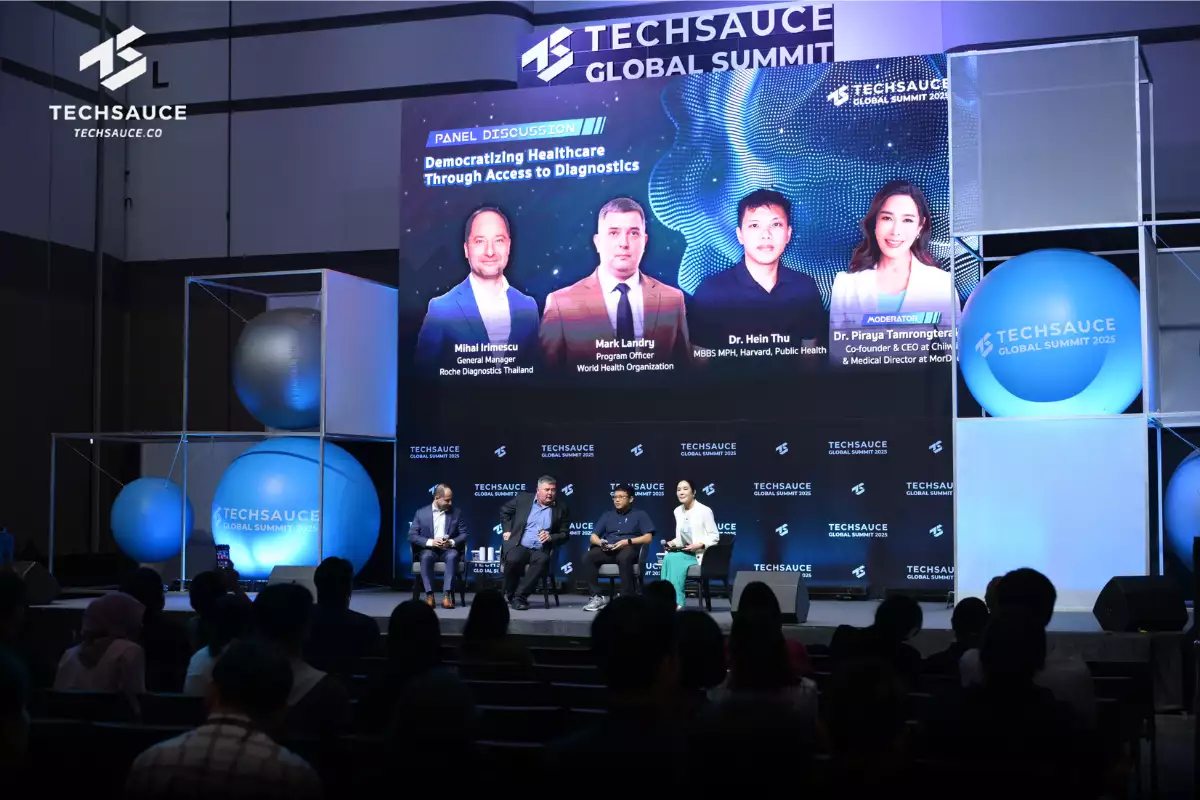
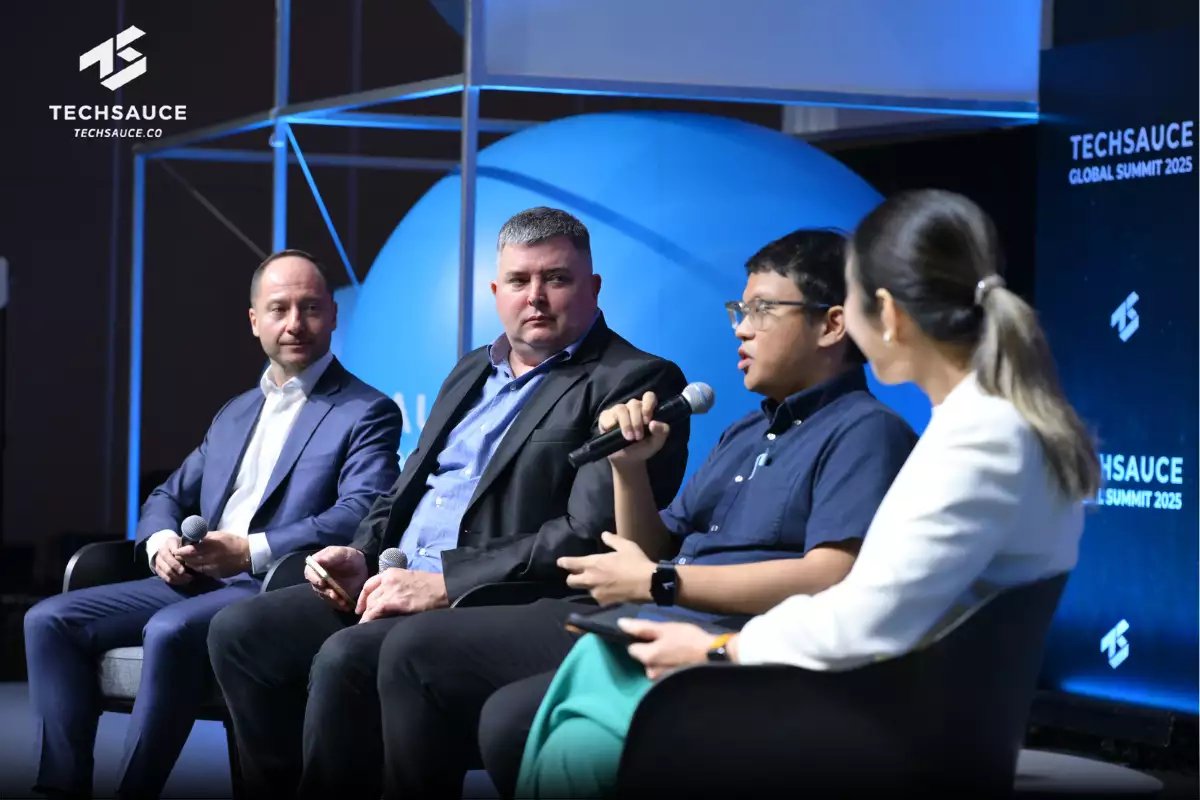
This challenge was the central focus of "Democratizing Healthcare Through Access to Diagnostics," a critical session at the HealthTech Summit (Aqua Stage) at Techsauce Global Summit 2025. The panel discussion, moderated by Dr. Piraya Tamrongterakul (Co-founder & CEO, Chiiwii), brought together a trio of experts: Mihai Irimescu (General Manager, Roche Diagnostics Thailand), Mark Landry (Program Officer, World Health Organization), and Dr. Hein Thu (Research Fellow, DTH Lab). These experts from private industry, public health, and global research dissected why this divide persists and outlined a new framework for truly accessible healthcare.
The 1,000-Person Problem
To understand the scale of the problem, Dr. Hein Thu pointed to a foundational paper on the "Ecology of Healthcare." The data is staggering: for every 1,000 people in a community who experience symptoms, only 200 will visit a physician, and a mere 8 will ever be hospitalized.
This statistic reveals a profound truth: the formal healthcare system is blind to 99% of the health issues brewing in the community. As Dr. Hein explained, healthcare today primarily happens "inside the medical institutions." This makes diagnostics the "biggest gatekeeper for the access to healthcare," a barrier that locks the vast majority out of the system until their condition becomes a crisis.
The Economic Miscalculation
Why is healthcare so reactive? Mihai Irimescu argued it's a simple, flawed economic incentive. He highlighted a stark mismatch in the Asia-Pacific region: while diagnostics drive approximately 70% of all clinical decisions, they receive only 2% to 3% of healthcare budgets.
The vast majority of resources, Irimescu explained, are spent on treatment and managing complications. The system is built to pay for failure, not prevention. This structural flaw is dangerously compounded by what Mark Landry, speaking from his role at the World Health Organization, called a "triple challenge" in Southeast Asia: the "massive emergence" of NCDs, overburdened healthcare systems, and a digital dividend that has not yet been equitably harnessed.
A Shifting of Power
Faced with these challenges, the panelists agreed that a new philosophy is needed. Democratization, Landry argued, is not just about distributing more tests; it's about a "shifting of power" that gives individuals and communities the agency, tools, and trust to act on their own health.
To achieve this, the entire financial model must be re-engineered. Mihai Irimescu called for a "reshape[ing] of the financial flows" to allocate far more resources to early, proactive diagnostics. The goal, he argued, is to catch diseases early, avoiding costly complications and shifting the system's focus from treatment to prevention.
"It's Not a Tech Problem"
This shift, however, faces a massive hurdle that technology alone cannot solve. As Mark Landry stated, "This isn't about adoption and use of digital diagnostics... It's not a tech problem. It's a problem about where's the trust?"
This trust deficit is a critical barrier to equity. Dr. Hein Thu pointed out that new technologies are often built for tech-savvy people and formal institutions simply because "they can afford that and then they can make money on that."
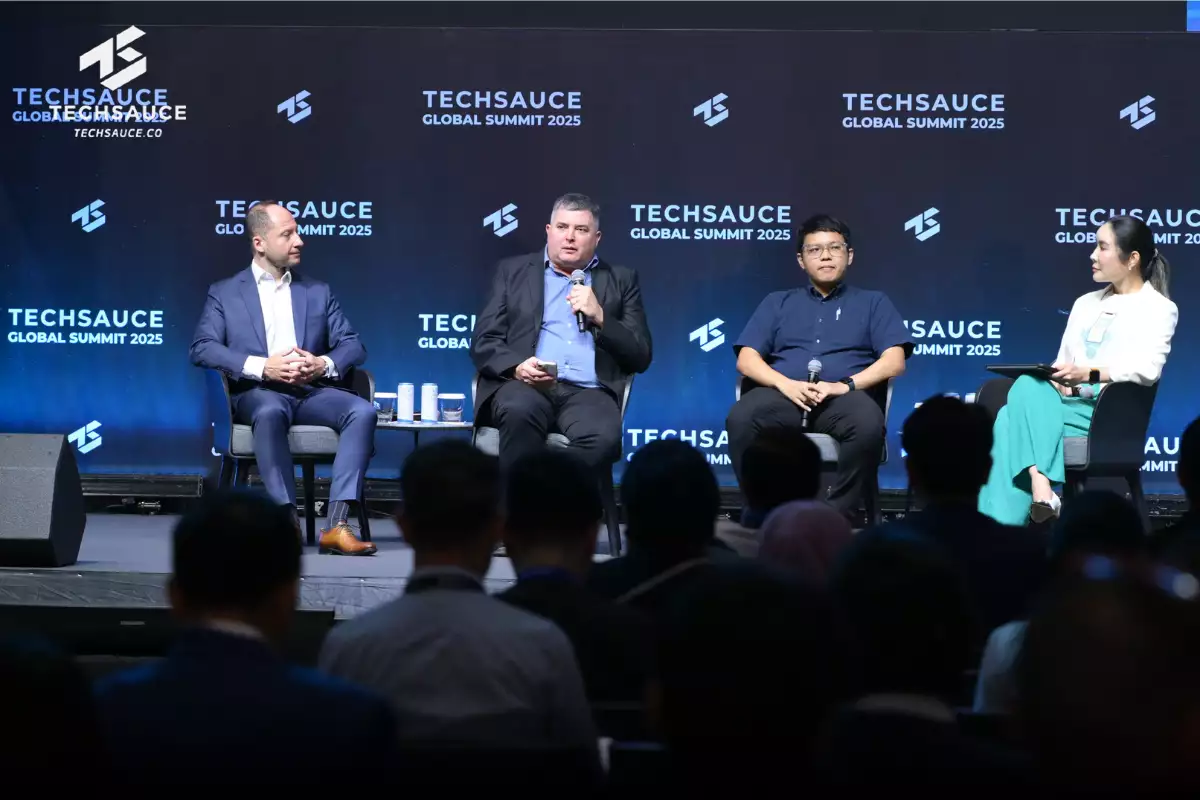
Landry warned that without first building trust, we are "at risk of just simply digitizing inequality" rather than truly "operationalizing, democratizing health." This danger is amplified by "fantasy use cases" built by technologists without community input, leading to "too many pilots that fail."
The panel argued that the central question must be flipped. As Landry powerfully put it:
We shouldn't be asking are people ready for the use of these digital diagnostics, but rather are institutions ready to earn their trust.
The System—Fragmented and Siloed
This trust deficit is worsened by deep, structural flaws. Mihai Irimescu pointed to "fragmented healthcare systems" as a primary culprit.
He described a "very high dropout rate" where a patient may get a basic diagnosis in their community, but the "referral system is actually broken." These early-diagnosed people fail to reach specialists due to distance, cost, or lack of insurance. The system, for them, is a series of dead ends.
This fragmentation means that even brilliant innovations fail to scale. As Landry stressed, they "cannot be successful in isolation. It won't happen."
The "Boring" Foundation for a Digital Future
So, what is the solution? The panel was unanimous: we must first build the "unsexy" foundations before we can deploy the "sexy" tech.
Mark Landry offered the most memorable call to action: "we have to make boring the boring stuff—like digital public infrastructure—the new sexy. Boring is the new sexy."
This, he explained, means grounding all health tech in "regulation, governance, architecture," and robust data protection acts. This is the only way to build the trust and "guardrails" necessary for a national-scale digital health system.
The Solution: An Open, Connected Ecosystem
Once that "boring" foundation is in place, the technical solution becomes clear. Mihai Irimescu made a powerful advocacy for connectivity.
He argued for an "open ecosystem" where data can "flow seamlessly." This vision of a connected ecosystem directly solves the fragmentation problem. It ensures that a patient's data can follow them from their village health clinic to a specialist in the capital, creating a seamless, reliable experience that builds trust.
This connectivity also unlocks the future of diagnostics. Dr. Hein Thu noted that most tests today are "cross-sectional"—a single snapshot in time. Citing his mom's use of ChatGPT for health advice, he highlighted the immense value of "longitudinal care," or data collected over months and years. The challenge, he noted, is that the "economic models" to compensate for this new, continuous form of care don't exist yet—linking the panel's vision for the future straight back to its most fundamental challenge.
The Way Forward: Trust, Connect, and Collaborate
The panel's conclusion was a clear, three-part call to action for the entrepreneurs, policymakers, and public health leaders in the audience:
- Build the Foundation: Prioritize earning public trust by focusing on the "boring" but essential foundations of governance, regulation, and interoperable digital infrastructure.
- Engineer the Ecosystem: Move away from siloed solutions and commit to building an "open ecosystem" where data can flow seamlessly to provide real value to the patient.
- Innovate the Business Model: Create the new financial and economic models needed to support and pay for a system focused on longitudinal, preventive, and community-based care.
The panel's insights provided a sober, realistic, and powerful roadmap. Finally, Dr. Piraya Tamrongterakul summarized, the future of diagnostics ultimately depends on "collaboration, trust, and inclusivity."
Based on the session: “Democratizing Healthcare Through Access to Diagnostics” at the HealthTech at Techsauce Global Summit 2025.
ลงทะเบียนเข้าสู่ระบบ เพื่ออ่านบทความฟรีไม่จำกัด


Techsauce had the opportunity to speak with Eric Tse, the son of Tse Ping, who has fully taken over as Chairman of CTTQ and CEO of SBP Group....
 0
0
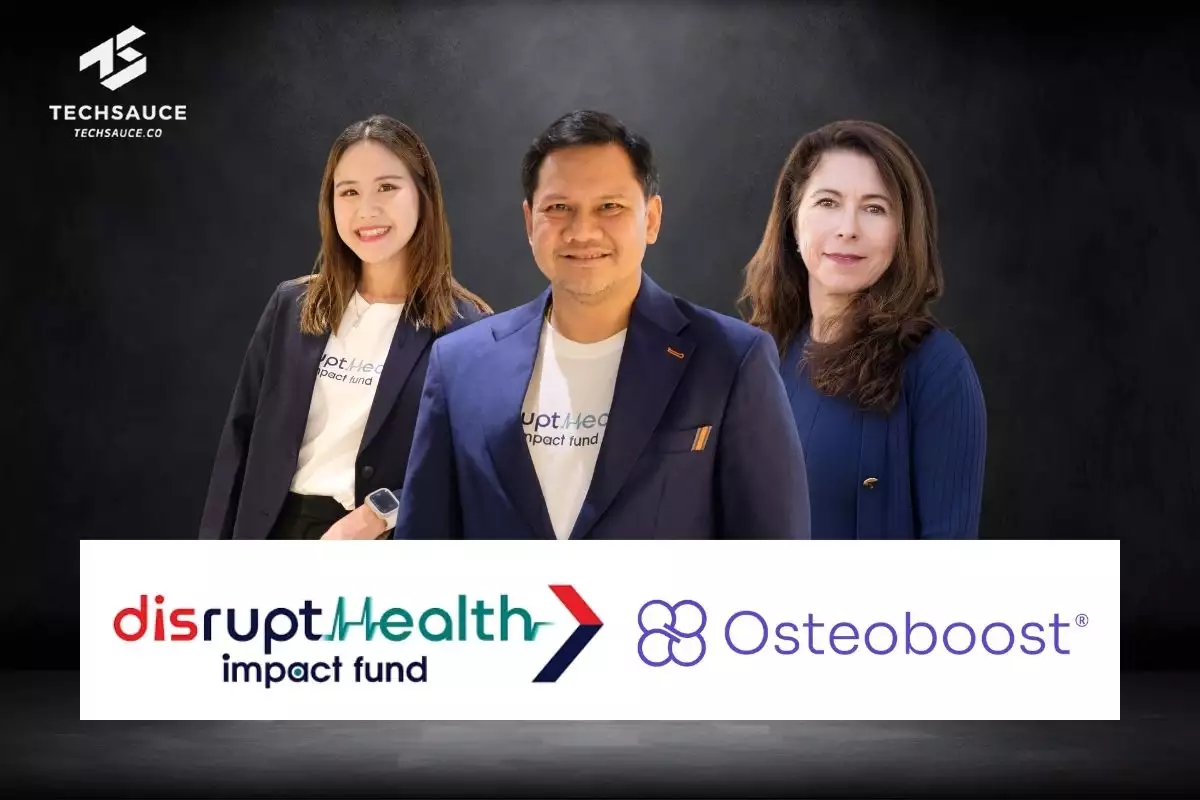
Disrupt Health Impact Fund backs US startup Osteoboost, tapping into the booming Women's HealthTech market. Read how this deal shapes the future of Silver Age tech....
0

A research team from Mahidol University has developed the MUTM Melioidosis Antibody Test. This innovative rapid test kit delivers results within 15 minutes with over 95% accuracy....
0