
Beyond the Hospital: How Preventive HealthTech and Policy are Uniting for National Wellness
Modernity has brought many improvements to wellness. People now live longer and survive more diseases than in any other period. Still, health remains a pressing concern. Despite living longer and having multiple solutions, our wellness faces significant threats. Modern illnesses, the COVID-19 pandemic, and environmental deterioration worsen our health. The coming wave of the aging demographic could also strain and possibly break the healthcare systems we rely on. This is precisely the gap that preventive healthtech aims to fill—using technology to build a proactive wellness model before people get sick.

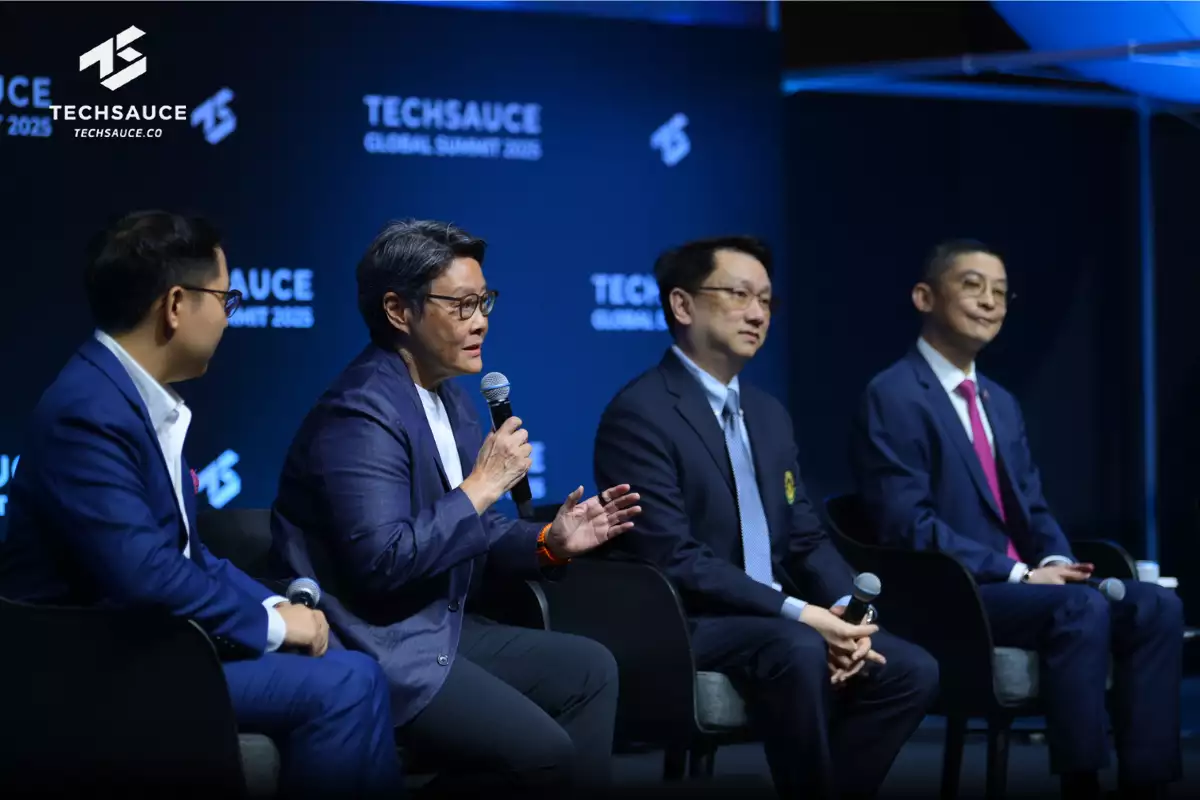
In this article, we look at a session from Techsauce Global Summit 2025, titled "Prevention, Care and Longevity: How Can Tech Support?" The HealthTech Stage panel featured Pien Ploenbannakit (Novo Nordisk Pharma Thailand), Dr. Nart Fongsmut (Chiva-Som International Health Resort), Prof. Weerasak Muangpaisan (Siriraj Academic Center of Geriatric Medicine, Mahidol University), Dr. Tanupol Virunhagarun (BDMS Wellness Clinic and Resort), and moderator Dr. Varoth Chotpitayasunondh (Ministry of Public Health).
Let’s find out how these health leaders in Thailand discussed these issues and how tech can help as a combatant against the coming crises stemming from our situation.
Our State of Health still Remains Precarious
Although advancement and modern medicine allow us to live longer, our lives aren't exactly a picture of wellness. Especially as we get older, our quality of life tends to deteriorate. This is increasingly true as we live past 60. As one of the panelists, Dr. Tanupol, put it:
The average healthspan for people around the world is just only 63. It means everyone in this room will have to suffer [for] 10 years before we die.
Dr. Tanupol attributes these 10 years of suffering to the first culprit the healthcare system is facing today: NCDs, or Non-Communicable Diseases.
The Plague of Modern Lifestyle
One of the most urgent issues we are facing is NCDs. These can be roughly explained as chronic, non-transmissible long-term illnesses that result from our own lifestyles, behaviors, and environmental factors. Common examples are heart disease, stroke, various types of cancer, diabetes, and chronic respiratory diseases. Dr. Tanupol proceeded to mention that NCD deaths in Thailand account for up to 80%, an alarming figure.
Destroy Your Health and Empty Your Pocket
The threat to the healthcare system not only makes your life worse for wear, but it also makes you all the poorer for it. As our health gets worse, so does the upkeep needed to retain our quality of life. In an increasingly difficult economy sandwiched by bubbles and inflation, increased health upkeep and more expensive living costs may just as well be the straw that broke the camel's back. Pien Ploenbannakit put it in a clearer picture:
The cost of obesity is about 1.2% of GDP, and without doing anything, it's going to be 5% of GDP.
The Cherry on Top, Aging Society
As if we don’t have enough issues already, our society is reaching an aging state, piling on top of the NCD hyperendemic and a straining economy. This sets up our healthcare system for a massive potential resource drain in the foreseeable future.
As we age, health upkeep tends to increase for us to cope with upcoming living conditions. Increased health spending, combined with the two former issues, tells us that we’re heading for instability. This is especially true when NCDs are still a major issue; the population won’t just age, but will age unhealthily. This leaves us with a majority of society becoming old and unhealthy, with increased health costs under a straining economy—a perfect recipe for disaster.
The New Blueprint for Healthspan
Presented with these daunting challenges, the panel agreed that the current model is unsustainable. Moderator Dr. Varoth surmised that the usual philosophy of "reactive care"—simply treating people after they get sick—cannot cope with this crisis.
What we need, the panel argued, is a fundamental shift to a more sustainable method focusing on long-term outcomes: "proactive health." As Dr. Tanupol stated, this is already happening in the industry, driven by the philosophy that "prevention is better than the cure." This new proactive model is where technology can improve our long-term healthspan.
But how exactly? The panel explained that technology today, especially devices designed for data gathering, can shift prevention from generic advice (like 'eat well') to a precise, personal 'blueprint for health.' Dr. Tanupol compared it to the checkup of an F1 car, which is not about fixing what’s broken; it's about a team of experts using "tons of information" to assist patients in achieving a long, high-quality healthspan.
Instead of just a simple blood test, this "blueprint" goes deeper, using technology to analyze a person’s DNA, cellular level, epigenetics, telomeres, and cardiovascular health. But this level of data creates a new challenge: "tons of information" that no single doctor can process. This, the panel argued, can be delegated to Artificial Intelligence.
Dr. Tanupol clarified that AI is not here to replace the doctor. He argued that the human element remains essential, as wellness maintenance still requires a human to provide the human touch that builds confidence and guides the patient. In this model, AI acts as the essential co-pilot. Its function is to "summarize everything," analyzing thousands of data points to present clear metrics detailing the scores and risks involved. This will allow the human doctor to "prescribe the personalized longevity plan." As Dr. Tanupol put it, with this data-driven partnership, a doctor can finally show a patient what parts of their lifestyle and environment they can change to ensure a higher quality of life into old age.
Assembling the National Wellness Ecosystem
This entire tech-enabled process creates a new framework for health, which Dr. Tanupol defined by "four words": Predict, Prevent, Personalize, and Participate. The last of these, Participation, is the most critical shift. Unlike "sick care," where a patient is passive, this new wellness model demands active participation—a challenge that AI-driven data can help motivate.
However, Dr. Nart cautioned against falling into a purely technological trap, citing the "extreme" approach of tech figures like Bryan Johnson. The goal, she argued, is not immortality but "quality of life"; hence, the primary concern is to see what we can do so that we can age gracefully, not to extend our life if it is detrimental to our happiness.
For me I think longevity is not just the life path... It's the health span. It's not just adding years to life, it's adding life to years.
- Prof. Weerasak Muangpaisan
Technology, no matter how advanced, is just an engine. Especially to implement on an entire nation, it needs a vehicle. This vehicle is a unified national strategy, one built on human-centric principles, not just data alone, as much of the human experience cannot be fully understood by just data alone.
Both Dr. Nart and Dr. Tanupol share an ambitious vision for this strategy, referring to their work as part of "Team Thailand" with the goal of establishing the nation as the "wellness destination of the world."
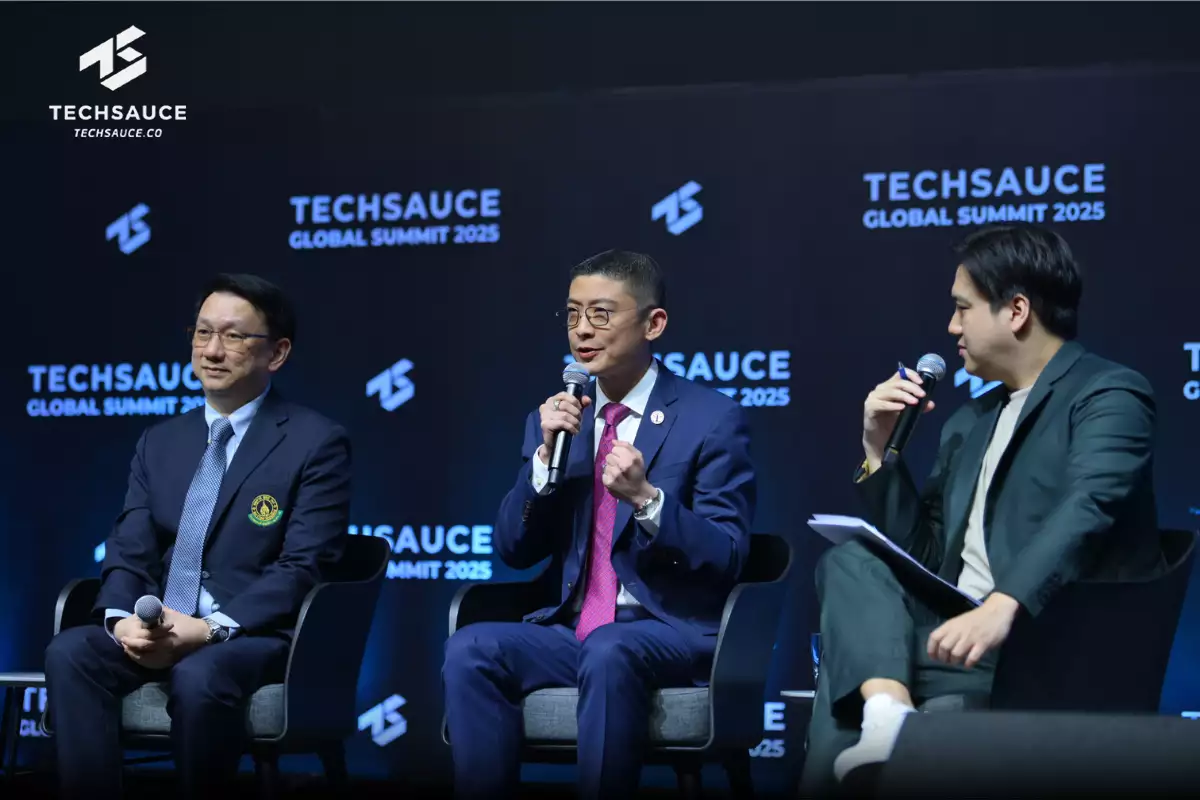
They conceptualize it as a complex operational model, which requires a collaborative, comprehensive framework that goes beyond simple Public-Private Partnerships (PPP). It requires what the moderator, Dr. Varoth, termed 'PPP+P,' which insists on including the 'People' as a core component alongside the public and private sectors.
Pien Ploenbannakit provided a perfect case study of this model in action. His work at Novo Nordisk with the Bangkok Metropolitan Administration (BMA) on the "Cities for Better Health" initiative shows how this ecosystem functions. It combines government policy (public), private sector innovation (private), and citizen engagement (people) to systemically tackle the root causes of obesity—one of the key NCDs fueling our health crisis.
The Human Barrier
A blueprint alone will not be effective if implementation and adoption are not followed up by the population. Having a powerful vehicle will mean nothing for the journey if it hits the ultimate roadblock: the human barrier. A solution is only a solution if it is actually used.
Prof. Weerasak, an expert in geriatric medicine, was central to this point. He warned that the demographic most in need—our aging population—is often the most excluded by new technology. The barriers are clear:
- Digital Literacy: A significant gap exists, especially for older adults in rural areas.
- Lack of Co-Creation: Tech is often designed for seniors, not with them. Prof. Weerasak stressed that tech must be simple and co-created with users to be effective.
- Cultural and Systemic Gaps: Solutions must be culturally adapted to the Thai context and, critically, must be integrated into the national health system. If a new app or device exists in a "silo," unable to share its data, it cannot be part of a systemic solution.
These hurdles show that technology adoption is not a simple problem; it is a complex challenge of design, education, and system integration.
When you discuss quality of life with seniors, the one word that they are asking for is independence. Yes, independence is the ultimate goal for seniors.
- Dr. Nart Fongsmut

Navigating the Coming Health Crisis
The panelists all agree that the threats of NCDs, rising healthcare costs, and an aging population are not distant problems; they are here, and they form a "perfect recipe for disaster." The "reactive care" model we have relied on is unsustainable and unlikely to weather the next wave of health crisis.
However, a proactive, personalized, and participatory model of health, powered by the predictive "blueprint" of AI and advanced diagnostics and driven by a collaborative "PPP+P" ecosystem, may be just what we need to sustain the straining healthcare system we’re in.
This solution is not simple, and its success is not guaranteed. It requires overcoming significant human and systemic barriers. But the blueprint for a healthier, more resilient future exists.
The panel’s final takeaways left the audience with a multifaceted call to action, aimed at every level of society:
- The Systemic Call: Prof. Weerasak argued that we must move self-care from a "personal choice" to a default part of the national health system, giving everyone the opportunity to be healthy.
- The Industry Call: Dr. Nart urged the tech industry to help build "Team Thailand" as a wellness hub with the necessary tools for screening and precision medicine.
- The Social Call: Pien Ploenbannakit emphasized the personal-as-political, reminding the audience that "health is wealth" and that starting individual conversations about health can drive national-level impact.
- The Personal Advice: Dr. Tanupol offered a direct, personal call to action: to embracing the "Six Pillars of Longevity"—sleep, diet, exercise, avoiding toxins, mental health, and social connection.
All these actions, from the systemic to the personal, were perfectly summarized in the moderator Dr. Varoth's collective and powerful closing statement:
The future of health is not something that happens to us. It is something that we can all actively build.
Based on the session: “Prevention, Care and Longevity: How Can Tech Support?” at the Techsauce Global Summit 2025.
ลงทะเบียนเข้าสู่ระบบ เพื่ออ่านบทความฟรีไม่จำกัด


Techsauce had the opportunity to speak with Eric Tse, the son of Tse Ping, who has fully taken over as Chairman of CTTQ and CEO of SBP Group....
 0
0
Disrupt Health Impact Fund backs US startup Osteoboost, tapping into the booming Women's HealthTech market. Read how this deal shapes the future of Silver Age tech....
0

A research team from Mahidol University has developed the MUTM Melioidosis Antibody Test. This innovative rapid test kit delivers results within 15 minutes with over 95% accuracy....
0