
Regeneration from Two Generations: What We Need to Transform
In an era where uncertainty is the new normal and crises—both climate and social—are relentless, the concept of ‘sustainability’ may no longer be enough. We may need to go a step further: to ‘regeneration’.
At the Techsauce Global Summit 2025, a powerful and fascinating conversation unfolded during the panel discussion “Regeneration from Two Generations: What We Need to Transform.” It brought together two generations with different starting points and perspectives, yet a shared goal of creating a better future. The discussion featured Dr. Sirikul Laukaikul, a branding and sustainability expert who uses the Sufficiency Economy Philosophy as her guiding star, and her daughter, Sirikanes Sakulyong, an architect and Thailand's first certified Biomimicry expert.
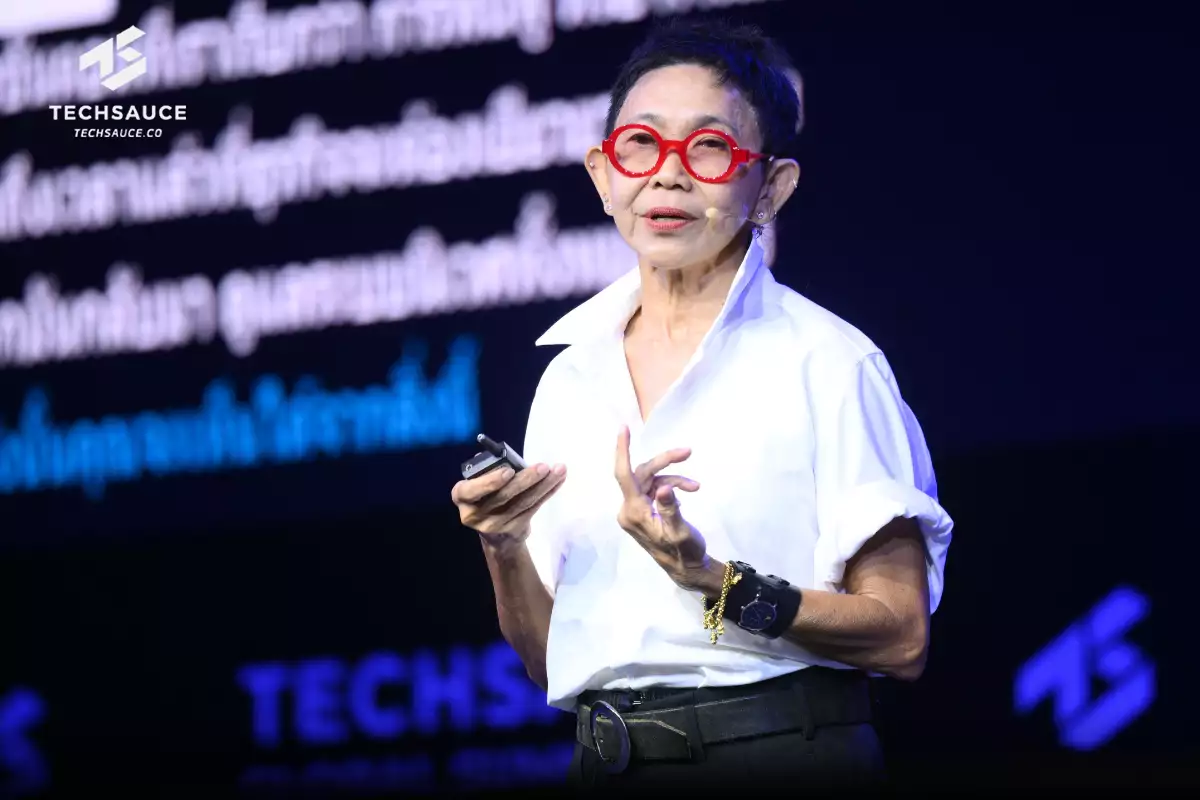
Different Beginnings, Shared Ground
Dr. Sirikul began by reflecting on her own youth. “I was born in a time when it felt like nature was endless. The rivers and canals were clean, the air was fresh. We used resources extravagantly without a second thought because nature was everywhere and taken for granted.”
In stark contrast, Sirikanes painted a picture of her generation. “I was born into an era of scarcity, what we call the climate crisis. The oceans are polluted, the air is thick with smog, and life is getting harder. It's a time of urgency that demands radical change for us to survive.”
This difference in experience between the two generations highlights why our approach to solving problems must evolve.
From CSR to Regeneration: The Evolution of ‘Doing Good’ in Business
Dr. Sirikul provided a compelling timeline of business practices related to society and the environment, showing that regeneration isn't a new idea but the next stage of a journey businesses are already on.
- Conventional Era: The ultimate goal was to “maximize profit.”
- Compliance Era: As the environment worsened, businesses were forced to “do less bad.”
- Green Era: Beginning in manufacturing, the focus was on “eco-efficiency” in factories.
- Sustainable Era: Recognizing that compliance wasn't enough, businesses aimed to “do more good,” with the UN Sustainable Development Goals (SDGs) as a key benchmark.
- Post-COVID Era: A setback occurred as many businesses first cut their CSR and sustainability budgets to stay afloat.
- Regenerative Era: This is the current era where sustainability is no longer sufficient. It's time for businesses to “heal the whole system” and care for the entire ecosystem.
Sirikanes added her definition of regeneration. "In biology, it's like a gecko that can regrow its tail. But on a larger scale, all living systems have a natural regenerative quality. It's about restoring, maintaining health, and strengthening a system. In the human context, it’s about reimagining how we live and meet our needs without solely exploiting or extracting resources."
Two Perspectives, Two Practices: When Branding and Design Must Regenerate
Both speakers demonstrated how their respective fields have evolved in line with the concept of regeneration.
Branding, by Dr. Sirikul:
- Place Branding: Marketing to promote a tourist destination and drive economic growth.
- Placemaking: A more sustainable approach that involves the community and creates an overall experience.
- Power of Place: A regenerative concept that goes beyond marketing. It’s about collaborating to unlock a place's unique potential, creating opportunities for all life within that ecosystem by integrating local wisdom and bioregional awareness.
Design, by Sirikanes:
- Human-Centric Design: Focused on solving problems and meeting human needs. For example, designing comfortable headphones with good, safe sound.
- Conscious Design: Begins to consider the impact and footprint of a product, using eco-friendly materials or designing for recycling.
- Life-Centric Design: Takes it a step further by using the principles of nature as a guide to promote circularity, mutualism, and adaptability. A prime example is the Phipps Conservatory and Botanical Gardens, designed to be a hub of life and evolve alongside the city.
The Sufficiency Economy Philosophy and Biomimicry
When discussing concrete approaches, both speakers presented core philosophies that act as their compass. Dr. Sirikul adheres to the Sufficiency Economy Philosophy of the late King Rama IX. It's not about rejecting progress but creating an “adaptive system” through three key principles:
- Moderation: Achieving balance in all dimensions.
- Reasonableness: Strategic planning that considers impact, or “footprint management.”
- Self-Immunity: Creating stakeholder engagement. This leads to a “sustainable brand” and “inclusive growth.”
Sirikanes uses Biomimicry, which she describes as “consciously emulating the genius of life.” She sees nature as a mentor with 3.8 billion years of research and development.
- Emulation: Learning from termite mounds for ventilation, lotus leaves for self-cleaning surfaces, or whale fins for efficient movement.
- Deeper Principles: The goal is to “create conditions conducive to life.”
- Key Components: Emulation, Ethos (ethics), and (Re)Connection to nature.
Technology as an ‘Ecosystem Builder,’ Not Just a ‘Tool’
Sirikanes offered a powerful analogy: “Branding is like the complex mycelial network beneath the ground, while technology is like the mushroom that sprouts to spread spores and broader impact.”
Instead of viewing technology as merely a tool for efficiency, we can expand its purpose:
- From Efficiency to Reciprocity: Use Blockchain to create transparent and traceable food systems that reward farmers who farm ethically, forging a new relationship between producers, consumers, and the land.
- From Extraction to Stewardship: Use data and AI to understand and measure the health of ecosystems, such as tracking biodiversity restoration, instead of just focusing on carbon reduction numbers.
- From Simulation to Emulation: Instead of using technology to create “robot bees” to replace vanishing bees (simulation), we should use technology to emulate nature's “principles.” For example, using GIS technology to map local knowledge for forest restoration.
Dr. Sirikul concluded this point by saying, “We should view technology like ‘soil’ that nurtures and promotes life, not ‘silver’ that is used to control.”
Upgrading the Mindset: From Ego to Eco and ‘Seva’
Ultimately, all this change can't happen without a shift in our collective mindset. Dr. Sirikul outlined the necessary journey of the human mindset:
- Ego: The era when humans felt they were in control and above everything, leading to destruction.
- Eco: The era when humans begin to realize they are just a small part of an ecosystem.
- Seva: The highest level, a Sanskrit word meaning selfless service, where we realize “We are born to serve others.”
The Dawn of Symbiosis and ‘Mother Logic’
The conversation concluded that regeneration isn't a solo journey but a “symphony of different generations” that requires symbiosis as its core.
Dr. Sirikul introduced her most profound idea: “mother logic” as the “operating system” for our world. This isn't about gender roles but a logic infused with gratitude and a commitment to “create conditions for other life to flourish.”
Sirikanes reinforced this concept with a personal story. The values and passion she absorbed from her mother as a child became a “safety net,” giving her the courage to find her own path, which ultimately led her back to this very conversation, beautifully connecting with her mother's work.
This mother-daughter dialogue isn't about an older generation handing problems to the younger one. It's a picture of the “dawn of mutualism,” where all generations and professions must come together to build a regenerative future for all life, starting with the smallest and closest unit: the family. As the wise sage they both quoted said, “Everyone is a friend.”
Based on the session: "Regeneration from Two Generations: What We Need to Transform" at Techsauce Global Summit 2025
ลงทะเบียนเข้าสู่ระบบ เพื่ออ่านบทความฟรีไม่จำกัด


Japan handles disasters exceptionally well because it has a 'culture of resilience' embedded in daily life. Research by Professor Miho Mazereeuw and the book Design Before Disaster...
 0
0

The SME Sustainability Playbook: Turning Cost to Competitive Edge
For SMEs, sustainability can feel like an expensive burden. This article, based on insights from Techsauce Global Summit, UOB, and Panpuri, provides a practical playbook. Move beyo...
0
In an era where the world faces a convergence of "Technology Supercycles"—including Quantum Computing, Generative AI, and Biotechnology—the key question echoing through innovation ...
0