
The SME Sustainability Playbook: Turning Cost to Competitive Edge
For years, the approach to sustainability, whether at the corporate level or for SME Sustainability, might have meant a yearly budget for a CSR activity—a photo-op planting mangroves, a press release, and a banner on the company website. As Panpuri’s Managing Director, Pramote Dechaboonsiripanich, noted, "I don't think that's going to fly anymore with the consumer's mind."
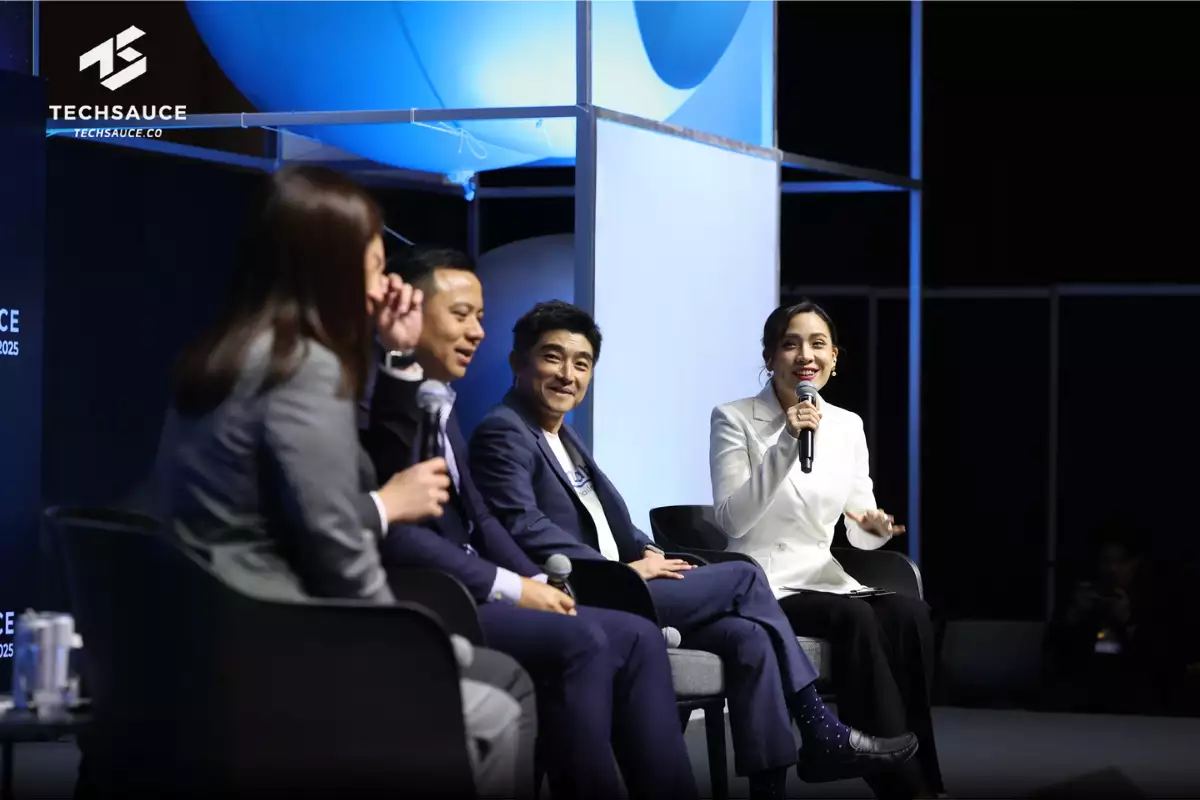
He's right. Today, particularly for the Gen Z and Millennial consumers who now drive the market, that superficial approach is no longer enough. This shift creates a new, non-negotiable challenge for Small and Medium Enterprises (SMEs), who now face both market pressure and financial pressure to adapt. As warned by one of the panelists, "If the SME hasn't considered sustainability, in the future, it may cause a problem when you accept funding from the bank." The question for SMEs is therefore no longer why they should become sustainable, but how to do so effectively.
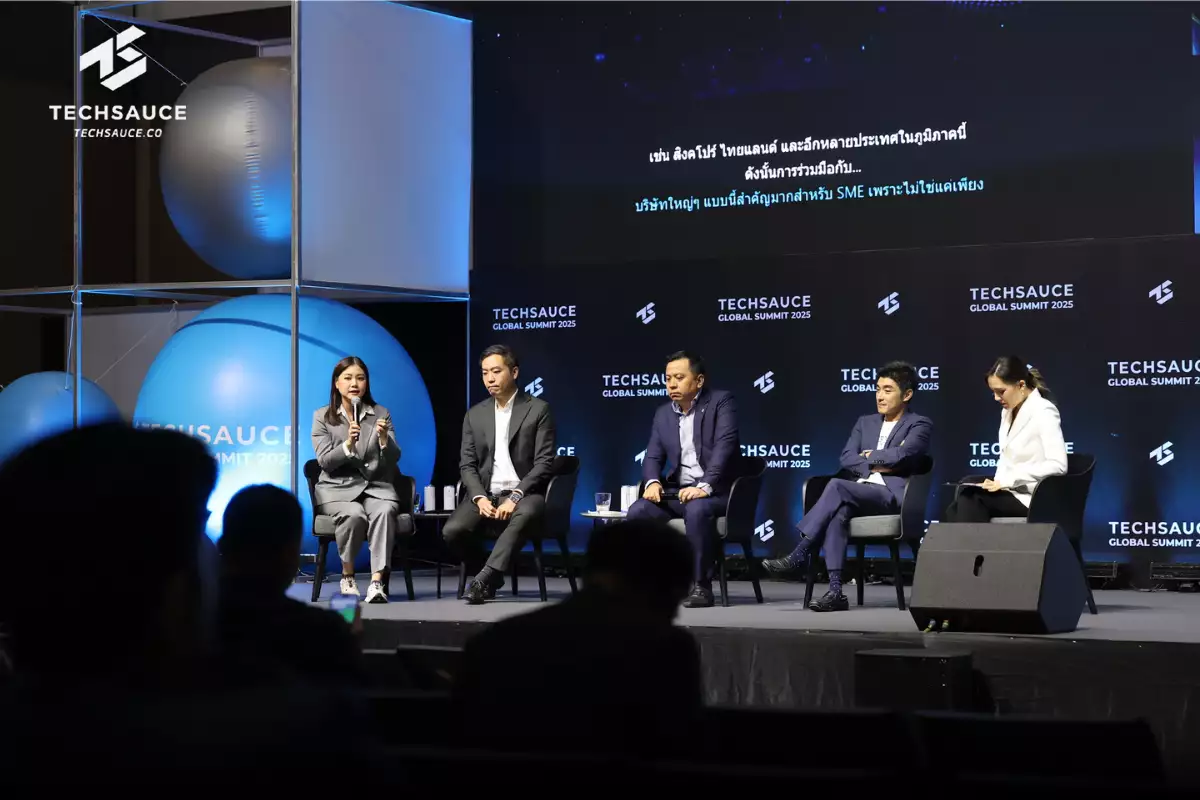
This article draws from that session at the Techsauce Global Summit 2025, titled "Driving Sustainable Business Practices," held on the Business Builder and Expansion Stage. The panel featured Banlang Wongthawatchai (Head of Digital Engagement & Ecosystem Partnerships, UOB Thailand), Sathit Boonchalok (Executive Director & Head of Product Management, UOB Thailand), Pramote Dechaboonsiripanich (Managing Director, Panpuri), and Oranuch Lerdsuwankij (Co-founder & CEO of Techsauce Media), and was moderated by Chawisa (Wendy) Chen (Founder & CEO of WENDAYS).
The "Green Premium" and Practical Inconvenience
Mr. Pramote, whose brand Panpuri has successfully built a global reputation on a "clean" and sustainable-first ethos, was candid about the challenges. First is the "green premium," the reality that sustainable materials often cost more.
Today, virgin plastic is cheaper, much cheaper than recycled plastic… So how would you be sustainable in that sense?
- Pramote Dechaboonsiripanich
Beyond cost, he pointed to regulatory hurdles and consumer acceptance. For instance, while European consumers demand refill stations to reduce packaging, Thai regulations can make it difficult to implement for body products, slowing adoption.
For many SMEs, these challenges make sustainability feel like an expensive, compliance-driven burden.
A New Ecosystem of Finance and Strategy
The other speakers argued that this is precisely where the ecosystem is evolving. New financial and strategic tools are emerging to specifically help SMEs overcome these exact challenges.
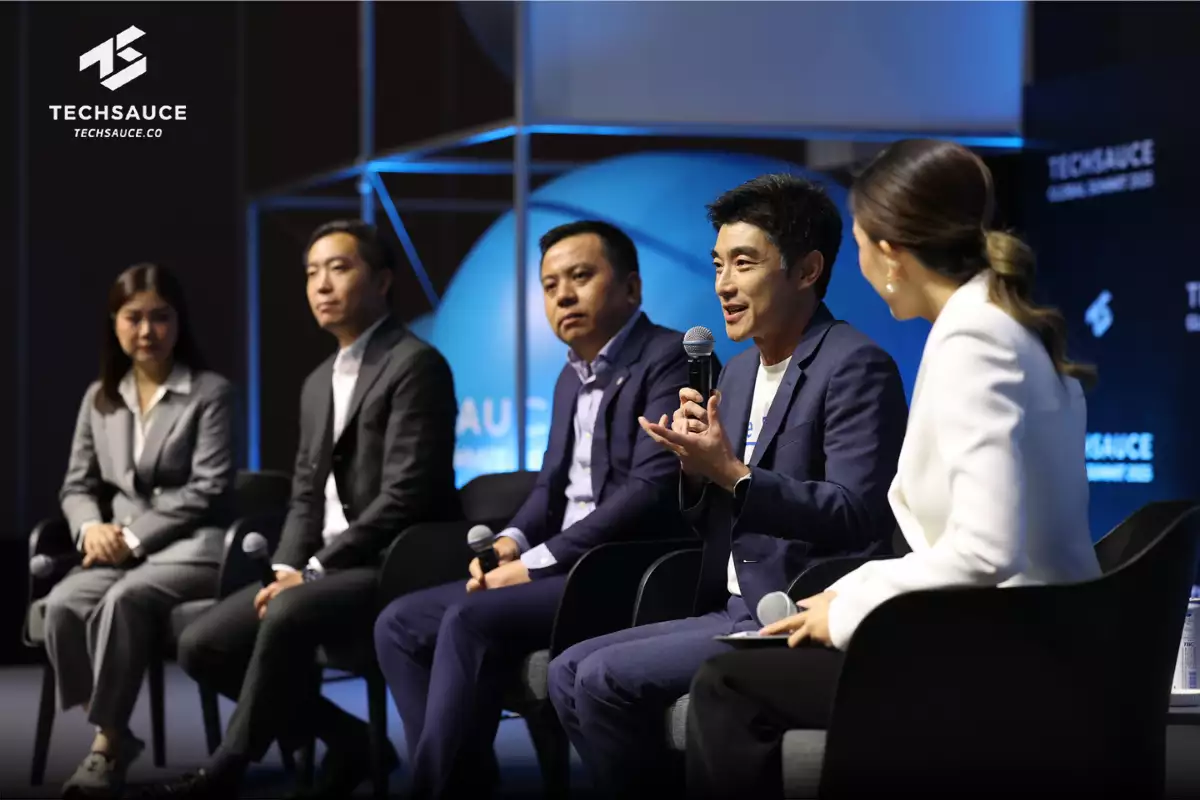
1. Reframing the Cost: Finance as an Enabler, Not a Gatekeeper
The "green premium" is a cash flow problem, and UOB's representatives explained how they are reframing the bank's role to solve it. "We try to reduce the barrier," said Sathit Boonchalok.
He gave a tangible example: an SME hesitant to invest in solar panels. UOB's approach is to demonstrate that the investment can be cash-flow positive.
We try to convince the SME that if you... Save 30%, actually, the thing that you pay to the bank for the installment is lower than the savings that you get.
- Sathit Boonchalok
This transforms sustainability from a cost center into an efficiency-driven, profit-saving measure. Banlang Wongthawatchai, added that technology like AI and FinTech is further accelerating this, making it easier to verify green practices and deploy "green loans" faster and cheaper.
2. Reframing the Mindset: From Burden to Business Model
The second major barrier is the strategic one: Where do I even start?
This is the problem Techsauce, in partnership with UOB, is tackling. "Many SMEs always think that sustainability is the burden. But how can we turn this perception into opportunities?" asked Oranuch Lerdsuwankij, CEO of Techsauce.
Their solution is a hands-on accelerator program that moves beyond theory. It starts by analyzing an SME's core business model and then systematically "embeds and integrates" sustainability within it. As Khun Oranuch explained, this shifts the focus from "how to build" to "how to build what matters," using sustainability to find a new competitive edge, or "blue ocean," for the company.
The PAÑPURI Case Study
Panpuri serves as the ideal case study for this new, integrated approach. Khun Pramote provided concrete examples of how sustainability is not just a department, but a filter for every business decision:
- Product Design: Product launches intentionally reduced paper usage by 30% by eliminating secondary packaging.
- Formulation: The brand's "clean beauty" standard bans over 7,000 ingredients, far exceeding regulatory requirements.
- Logistics: All e-commerce boxes are 100% free of plastic, including the tape and cushioning.
- Physical Spaces: Their store in Terminal 21 Pattaya was built using recycled bricks.
Panpuri proves that balancing luxury, profitability, and sustainability is possible. The "green premium" is managed as a long-term investment in brand value, which, as Khun Pramote noted, "is a luxury in this era."
If Not Now, When?
The panel concluded on a note of urgent optimism. The challenges for SMEs are real, but the ecosystem of support—from innovative financing to hands-on strategic programs—is finally here.
The old excuse of sustainability being "too expensive" or "too complicated" is fading. With new consumer demands and accessible support, the real question is no longer if an SME can afford to become sustainable, but if it can afford not to.
As Pramote challenged the audience
If not you, then who? And if not now, when?
Based on the session: “Driving Sustainable Business Practices” at the Techsauce Global Summit 2025.
ลงทะเบียนเข้าสู่ระบบ เพื่ออ่านบทความฟรีไม่จำกัด


Japan handles disasters exceptionally well because it has a 'culture of resilience' embedded in daily life. Research by Professor Miho Mazereeuw and the book Design Before Disaster...
 0
0
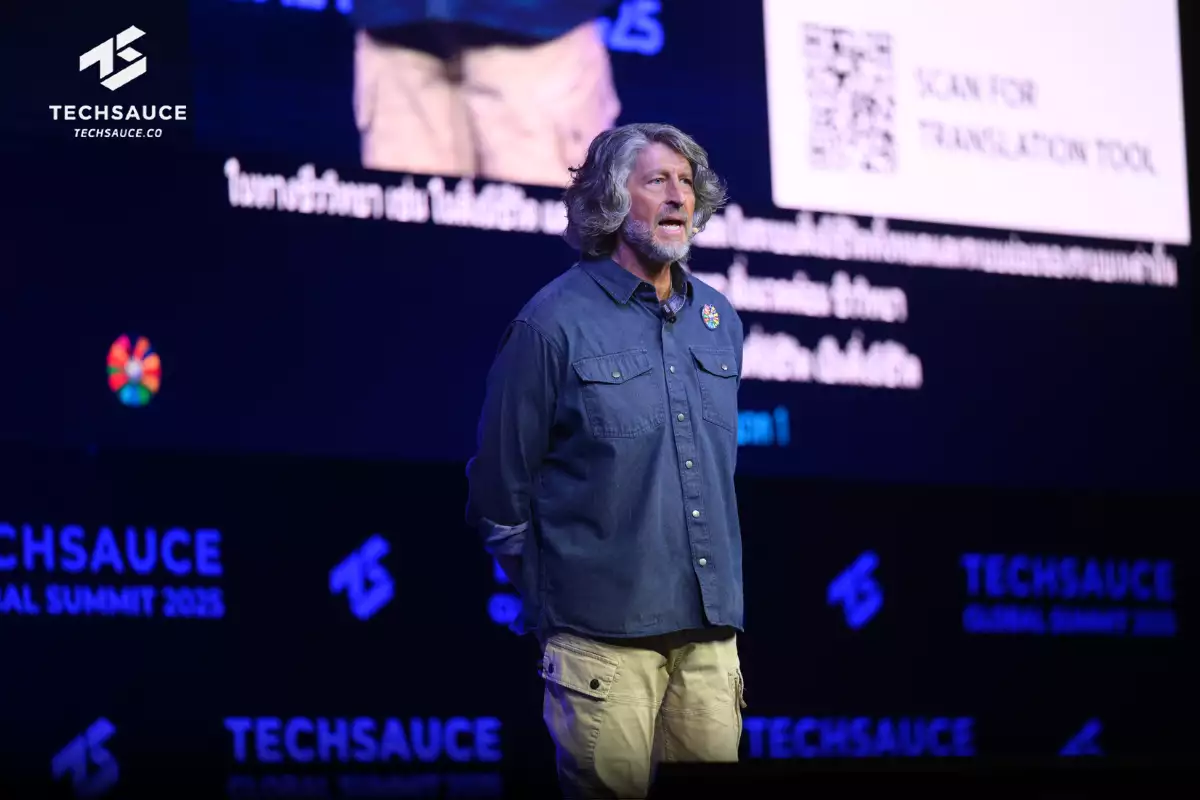
In an era where the world faces a convergence of "Technology Supercycles"—including Quantum Computing, Generative AI, and Biotechnology—the key question echoing through innovation ...
0
Regeneration from Two Generations: What We Need to Transform
At Techsauce Global Summit 2025, Dr. Sirikul Laukaikul and Sirikanes Sakulyong explored how regeneration—beyond sustainability—can guide branding, design, and technology to heal ec...
0