
When Trust Becomes the New Currency of Asia-Pacific. A Conversation with Eduardo Pedrosa on APEC as AI and Trade Rewrite the Rules
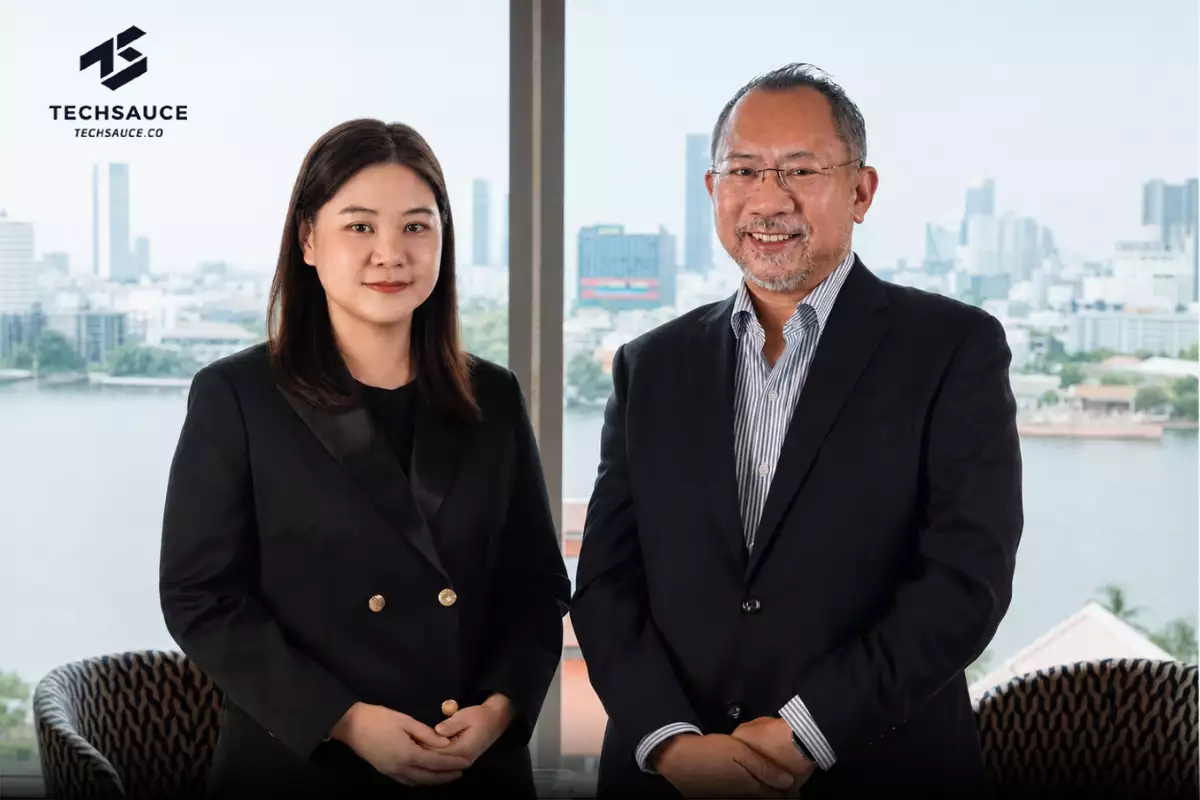
In a world shaped by geopolitical volatility, pressure on global trade and AI changing the way business is done at a faster pace, APEC may appear to be a policy-level forum far removed from the daily realities of small entrepreneurs. Yet for Eduardo Pedrosa, Executive Director of the APEC Secretariat, what happens around these meeting tables is a negotiation over the future of cross-border markets across 21 economies.
On 6 July 2026, Techsauce had an exclusive interview with Eduardo Pedrosa during ABAC3 in Bangkok to discuss the role of APEC at a time when trade, AI and trust have become one shared challenge for the region.
At ABAC3 in Bangkok, business representatives from 21 economies are finalizing recommendations to be delivered to APEC leaders in Shenzhen later this year. ABAC, or the APEC Business Advisory Council, usually produces around 100 recommendations covering areas from trade, connectivity, the digital economy and education to human resource development.
Even though all parties are on the business side, that does not mean they all see the same path forward. Pedrosa explained that government-to-government work is difficult, and business-to-business work is no less difficult. Different business groups face different challenges, want different policy recommendations and move at different speeds of growth.
That is what makes ABAC3 more than one meeting among many this year. It is the final stretch where the business community must sharpen its priorities before turning the voices heard in Bangkok's meeting rooms into recommendations that economic leaders will read at the end-of-year forum.
Trust is how a region with different views keeps moving
Pedrosa previously wrote on the APEC blog that trust is Asia-Pacific's strongest currency. In this interview, he did not describe trust as an idealistic concept. He spoke about trust as the outcome of continuous conversation.
The word cooperation in APEC (Asia-Pacific Economic Cooperation) really is the pathway towards greater trust
That sentence reflects the nature of APEC clearly. APEC does not operate through binding rules in the way a conventional free trade agreement does. It works through conversations, experimentation and the search for common ground among economies that differ widely in levels of development, political systems, industrial structures and technological readiness.
Pedrosa pointed out that without a space where different sides can ask one another directly why things are being done in a certain way, what businesses need in order to grow or what direction governments are taking in policy design, trust is almost impossible to build.
This matters greatly in a year when the world is debating supply chains, trade restrictions and technological competition. The region's risk is not only a lack of technology. It is also a lack of predictable rules. If businesses do not know how far data can flow across borders, what form AI rules will take or whether energy systems can support AI usage, large-scale investment becomes harder to make.
FTAAP 2040 and the question of what a new-generation free trade area should look like
One issue Pedrosa emphasized was FTAAP, or the Free Trade Area of the Asia-Pacific. In 2026, the idea reaches its 20th anniversary. FTAAP was originally discussed as a future vision for free trade in Asia-Pacific, but today's question has moved much further.
Pedrosa asked in return that everyone already knows what a traditional free trade agreement looks like, but what should a free trade agreement of 2040 look like?
The question matters because trade over the next 10 to 20 years will not involve only tariffs, customs or market access for goods. It will also involve labour, the environment, state-owned enterprises, digital services, data, energy and AI. Each of these areas touches different sensitivities across economies.
Seen this way, the new Services Roadmap endorsed by trade ministers in 2026 is significant because it adds innovation to the services agenda. Pedrosa gave an example that when people talk about services in the new era, they may immediately think of Software-as-a-Service, or SaaS. In policy terms, however, the issue is much broader because services have become a channel for innovation across the entire economy.
Services are no longer just one sector of GDP. They are the connecting layer between technology, businesses and consumers, from cloud, fintech, logistics and e-commerce to AI platforms that small businesses use to reduce the cost of entering new markets.
AI can grow when the rules can talk to one another
When the conversation turned to AI, the word Pedrosa used was interoperability, or the ability of different systems and rules to work together. He sees APEC as focused on promoting innovation and making systems interoperable, while the details of governance must still respect the differences among economies. All 21 economies have different state structures, responsible agencies and levels of readiness.
Those differences, however, must not become permanent walls. The internet and the digital economy are cross-border by nature. If each economy sets its own rules without talking to others, businesses serving multiple countries will face ever-rising hidden costs.
A clear example is AI and intellectual property. Pedrosa explained that much of AI works by mining and processing existing information. The question, then, is not only what AI can do. It is also where standards on data rights and intellectual property should go so that creators, businesses and users can operate within the same system.
For SMEs, this issue matters even more than it does for large organizations because regulatory compliance costs always weigh more heavily on smaller players. Pedrosa sees AI as a tool that can help entrepreneurs identify which rules apply in a particular country, which documents they should start with or which official sources they should consult.
But he gave a clear warning that entrepreneurs should not trust every answer from AI. What AI can do well is point users toward more accurate sources of information. That does not mean the first answer it gives is the final fact.
APEC's AI agenda is therefore not limited to large technology companies. If digital rules become more interoperable, SMEs will be able to use AI as a tool to cross information and regulatory barriers more effectively. If rules fragment, AI will become another cost that smaller players have to carry.
Thailand's role beyond hosting
For Thailand, hosting ABAC3 in Bangkok is a good moment to position itself within APEC. But Pedrosa pointed out that the area where Thailand can show a role beyond event hosting is the 2026 APEC BCG Award, which builds on the Bio-Circular-Green Economy concept.
BCG matters as a policy idea because it tries to make the circular economy not only a sustainability cost, but a business opportunity that can generate real income. Pedrosa gave the example of plastic waste that can re-enter the economy as new products if the right entrepreneurs and business models exist.
The 2026 APEC BCG Award does not focus mainly on large organizations. It emphasizes small entrepreneurs creating innovation in their own spaces. That means Thailand's role in APEC is not only about opening meeting rooms or hosting ceremonies. It is about showing that sustainable growth needs room for smaller players to be seen, to learn from one another and to scale in practical ways.
At a time when AI requires enormous energy input, supply chains need to become more resilient and the digital economy depends on more interoperable rules, the role of a mid-sized economy such as Thailand may not lie in owning the most advanced technology. It may lie in creating practical examples for the region to see how major policy agendas can reach real entrepreneurs.
Trust as the infrastructure for the region's next step
Pedrosa closed the conversation with a vision of an Asia-Pacific region that is open, peaceful, dynamic and resilient. But the path toward that vision will not come from one end-of-year declaration alone. It will come from working-level meetings, letters to ministers, reports to leaders, follow-ups on recommendations and repeated conversations among governments, businesses and stakeholders.
In a world where AI and trade are changing faster than before, trust is not a polished word on an international stage. It is the infrastructure that gives businesses the confidence to invest, gives SMEs the confidence to enter new markets and allows a region with different views to keep moving forward together.
ลงทะเบียนเข้าสู่ระบบ เพื่ออ่านบทความฟรีไม่จำกัด

When AI Chooses for Your Customer: Accenture Song on the New Rules of CX
Accenture Song's Tuomas Peltoniemi on how AI agents are taking over customer decisions, and the five lessons brands need before the buyer stops being human....
 0
0

20 Years of Lessons from DeeMoney's CEO Technology Moves Information, but Trust Is What Moves Money
DeeMoney co-founder and CEO Aswin Phlaphongphanich unpacks the unspoken facts of global payments at Techsauce Global Summit 2026: there is no global transfer network, payment firms...
1
Some parts, I admit, were difficult challenges for me. But I have to thank the team for believing in me when others said it couldn’t be done....
0