
Banking Beyond Tomorrow: How SCB TechX is Rewriting the Inclusive FinTech Playbook
At Techsauce Global Summit 2025, the future of Inclusive FinTech wasn't just about shiny new apps—it was about empathy, infrastructure, and the end of "one-size-fits-all" banking.
In a fireside chat titled "Banking Beyond Tomorrow: Building FinTech for Mass Market," Thisana Thitisakdiskul, CEO & Co-founder of Noburo Platform, sat down with Suttipong Kanakakorn, CEO of SCB TechX. As a veteran engineer with roots in Silicon Valley and the architect behind Thailand’s National Digital ID (NDID), Suttipong offered a masterclass on how legacy institutions can pivot to serve fragmented customer needs through hyper-personalization and modular architecture.
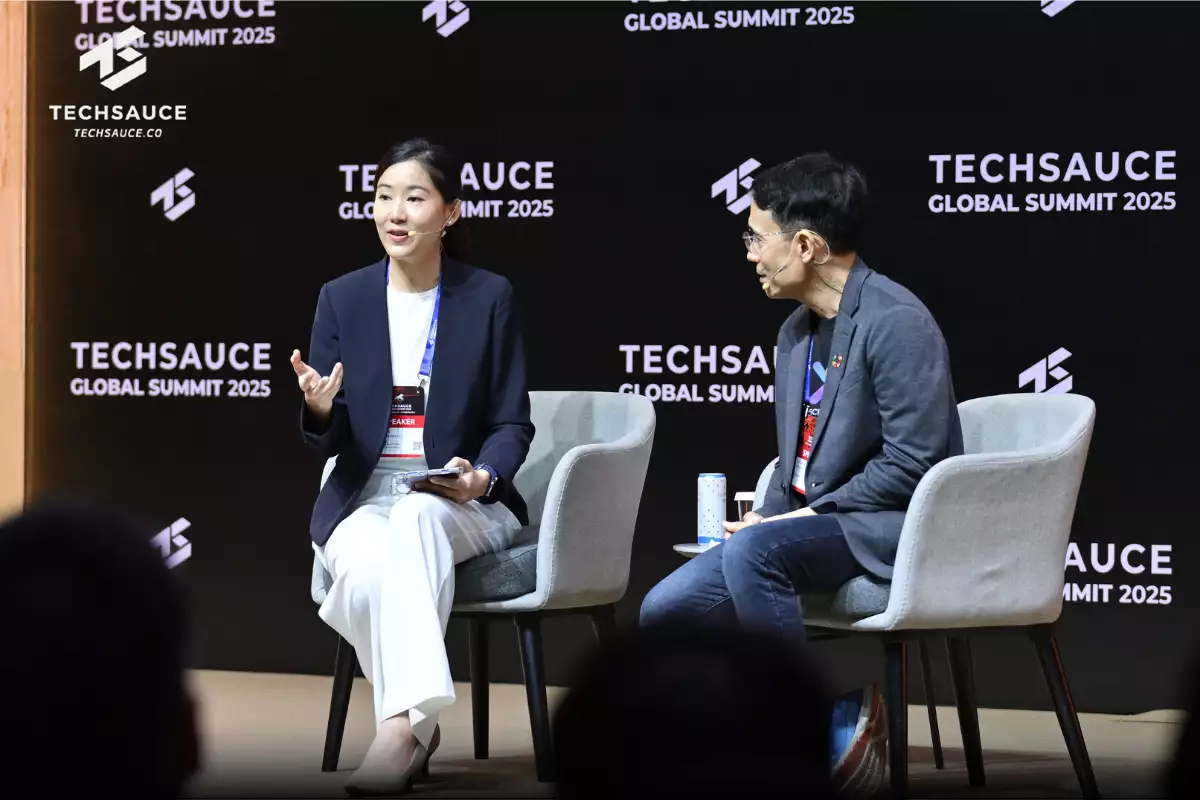
The Era of "Fragmentation" and Hyper-Personalization
The session opened with a critical diagnosis of the current market landscape. Suttipong identified "fragmentation" as the defining trend of modern banking. The customer base is no longer a uniform block; it is a complex mosaic ranging from digital-native graduates and gig economy workers to retirees and SME owners. Each of these groups has distinct financial behaviors, pain points, and goals that a generic mobile banking interface simply cannot address. The industry has moved past the phase where merely having an app is a competitive advantage; the battleground is now relevant.
They don't want a mobile app where their only relationship is transferring money. They want a relationship that goes beyond that—they want a friend, a trusted partner.
— Suttipong Kanakakorn
To achieve this, Suttipong argues that AI must move beyond basic automation to hyper-personalization.
- Context is King: An app should not offer investment portfolios to a user with low liquidity. Instead, it should understand their financial stature immediately.
- AI as a Consultant: Beyond tracking spending, AI should act as a lifestyle partner. Suttipong illustrated this with a coffee example: if an AI notices a user enjoys trying different cafes, it should proactively suggest new openings, adding value beyond the transaction.
- The End of Call Center Menus: 80% of call center inquiries are repetitive questions. The goal is to replace frustration-inducing chat menus with natural language AI that can answer users instantly, freeing humans for higher-value tasks.
Humans in the Loop: The Safety Net
While the future is automated, Suttipong was careful to emphasize that it is not unsupervised. As transaction volumes scale and AI takes over routine interactions, the role of the human banker shifts from "processor" to "protector." This is particularly vital in an era where digital fraud is rampant and often targets the most vulnerable demographics, such as the elderly.
Suttipong illustrated this with a scenario involving anomaly detection. If a risk-averse retiree suddenly initiates a high-value transfer—a potential sign of a scam or coercion—an AI flag should trigger a human intervention. A bank staff member can then call the customer to verify the intent. In this model, technology provides the proactive alert, but humans provide the judgment and protection.
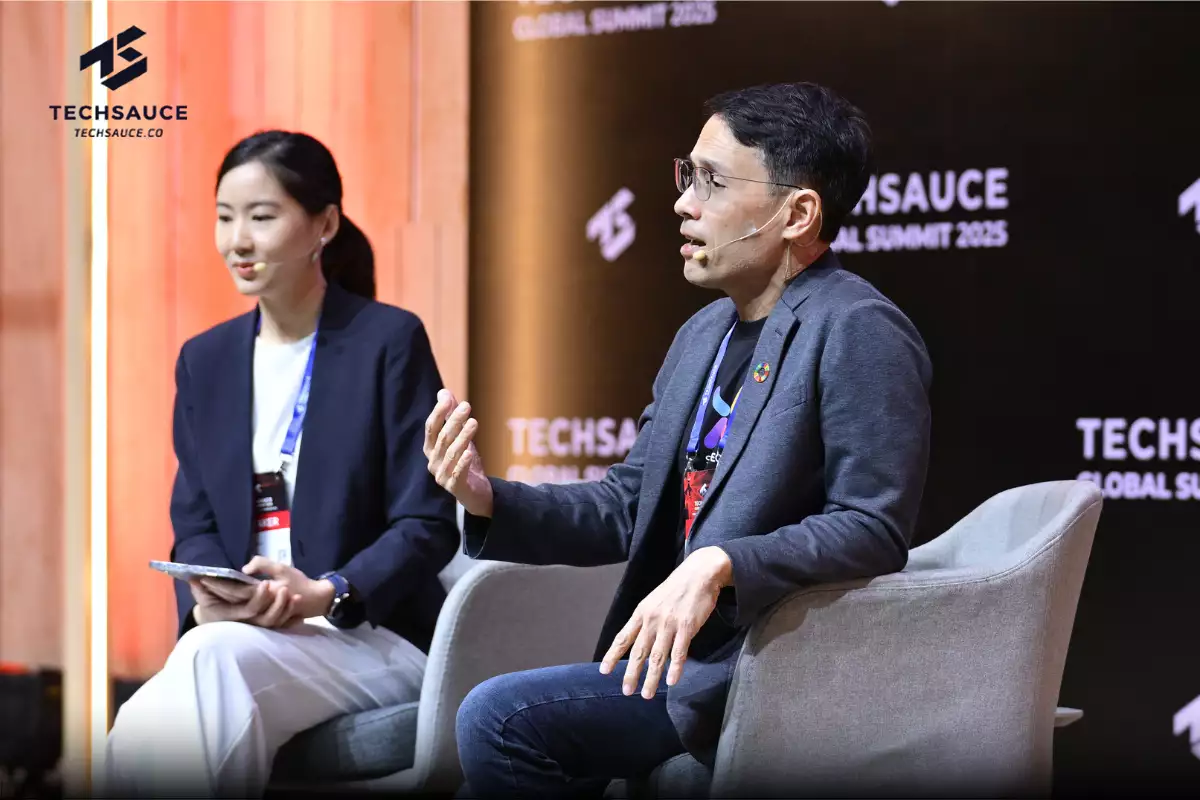
The "USS Constitution" Model: Modular Architecture
One of the most compelling segments of the talk focused on the infrastructure required to support this agility. Suttipong introduced the metaphor of the USS Constitution, a naval frigate that has remained in service for over 300 years. The ship is still afloat not because it is untouched, but because it has been continuously maintained, with planks and parts replaced over centuries. This, Suttipong argues, is how banks must view their architecture.
Basically, don't build monolithic systems intended to sit unchanged for a decade:
- Continuous Evolution: Systems must be built so parts can be swapped out and upgraded continuously without sinking the ship.
- Modularity is Essential: Core banking, loan management, and origination must be separate modules. This allows the bank to scale specific parts (e.g., handling transaction spikes on lottery days) without overhauling the whole stack.
- Open Architecture: This modularity enables collaboration. Banks don't need to own every part of the value chain. For specific segments—like high-risk debt rehabilitation or complex derivatives trading—banks can use open APIs to route customers to specialized FinTech partners (like Noburo) who can serve those needs better.
Cultural Shift: The Blurred Roles of the Future
Technology alone cannot drive transformation; it requires a workforce capable of wielding it. Suttipong advised both emerging FinTech founders and legacy executives to "think like a startup," a philosophy that goes beyond agility and permeates the very definition of job roles. At SCB TechX, the goal is to eliminate the silos that typically slow down enterprise innovation.
He described a future workspace where roles are fluid and overlapping. In this environment, a UX designer doesn't just draw wireframes; they utilize AI tools to generate functional code. Conversely, developers are encouraged not to wait for pixel-perfect mockups but to use AI to visualize solutions instantly based on their understanding of the business logic. By uniting the workforce and equipping them with AI, the bank reduces the "handover" time between departments, allowing products to reach the mass market at startup speed.
We don't want people with rigid, defined roles,
— Suttipong Kanakakorn
Winning the "Arms Race" Against Scams
Addressing a pressing concern from the audience regarding the sophistication of AI-driven scams, Suttipong offered a pragmatic yet optimistic outlook. He acknowledged that scammers are becoming increasingly advanced, utilizing social engineering and deepfakes to manipulate victims. It is an adversarial arms race where the "thieves" are constantly evolving.
However, Suttipong reminded the audience that banks hold the ultimate strategic advantage: control of the gateway. "We don't have to match them technologically in every way; we just have to win the war on not letting the money go out easily," he explained. Even if a scammer successfully convinces a victim that their child is in danger and they must pay immediately, the bank's systems can detect that the destination account is suspicious or the transfer amount is abnormal. By combining AI-driven detection with the "human in the loop" verification mentioned earlier, the bank acts as the final firewall, protecting customers from their own panic-induced decisions.
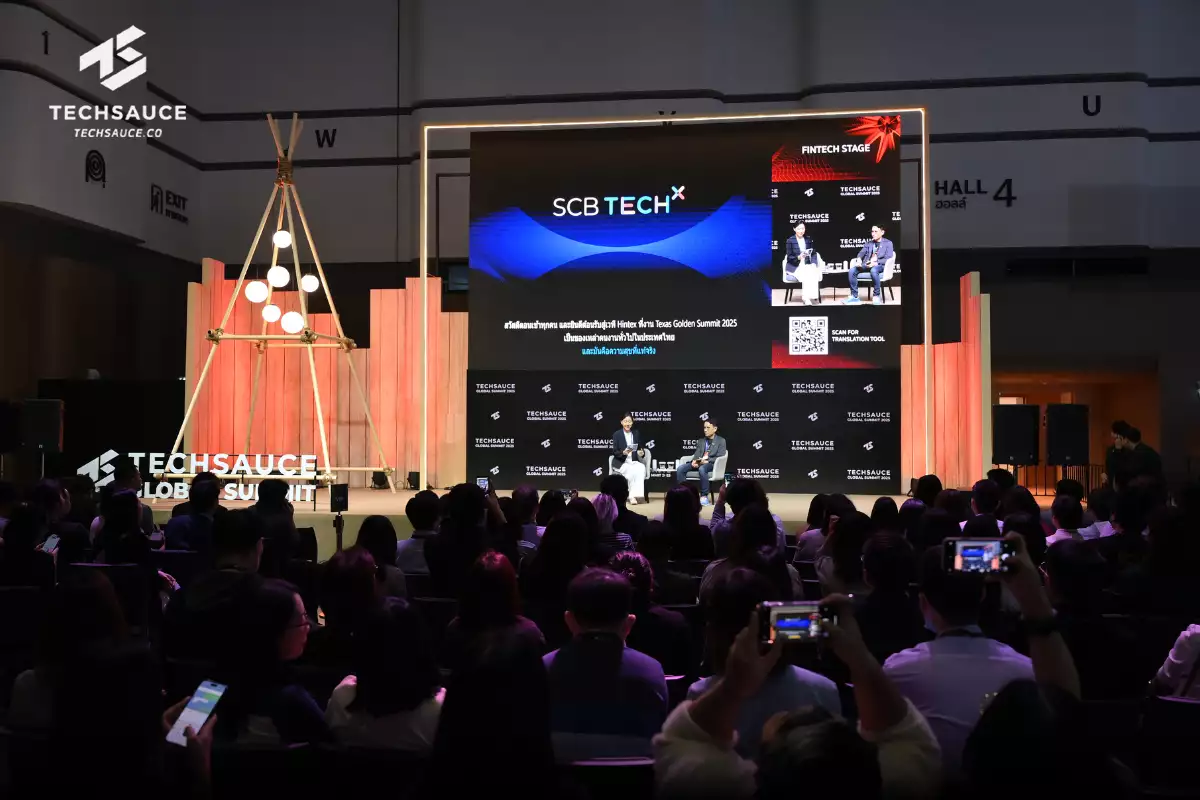
Architecting a Resilient Financial Ecosystem
The future of mass-market FinTech isn't about replacing humans with machines; it's about using machines to make banking more human. By adopting a modular "USS Constitution" architecture that allows for constant evolution, and leveraging AI for hyper-personalization, SCB TechX is laying the groundwork for a financial ecosystem that is resilient, inclusive, and scalable.
As Thisana Thitisakdiskul concluded, wrapping up the session: "It’s not just about technology; it’s about deeply understanding the people we serve."
Based on the session: “The Autonomous Future of Banking Powered by Agentic AI” at the Techsauce Global Summit 2025.
ลงทะเบียนเข้าสู่ระบบ เพื่ออ่านบทความฟรีไม่จำกัด

When AI Chooses for Your Customer: Accenture Song on the New Rules of CX
Accenture Song's Tuomas Peltoniemi on how AI agents are taking over customer decisions, and the five lessons brands need before the buyer stops being human....
 0
0

20 Years of Lessons from DeeMoney's CEO Technology Moves Information, but Trust Is What Moves Money
DeeMoney co-founder and CEO Aswin Phlaphongphanich unpacks the unspoken facts of global payments at Techsauce Global Summit 2026: there is no global transfer network, payment firms...
1
Some parts, I admit, were difficult challenges for me. But I have to thank the team for believing in me when others said it couldn’t be done....
0