
Huawei Reveals 5 AI Telecom Trends at MWC Shanghai 2026 as Networks Shift from Connectivity to Experience
At MWC Shanghai 2026, Huawei introduced a series of new concepts and solutions for the telecom industry, ranging from GigaUplink for the Mobile AI era, 5G-A services for high-speed railways, AI-OTN for enterprise networks, to AI-FAN for home broadband.
Although these solutions address different parts of the network, they all point to the same direction: the telecom industry is moving beyond selling “connectivity” toward delivering “experience” designed around real-world use cases.
Here are five key signals from Huawei that show how AI-era networks are changing.

1. AI-era mobile networks will need to prioritize uplink
In the past, many users judged internet quality mainly by download speed. But in the Mobile AI era, uploading data back to the cloud will become increasingly important, whether for AI glasses, smart wearables, video content, video calls, or AI agents that need to interact in real time.
Barbara Pareglio, Senior Technical Director at GSMA, said Mobile AI is reshaping mobile network traffic from a downlink-focused model toward one that requires a better balance between uplink and downlink. Uplink enhancement, latency assurance, and deeper collaboration between devices, networks, and the cloud will become key directions for future network development.
Huawei introduced its GigaUplink Solution to help operators improve uplink capabilities. The solution combines multi-antenna upgrades with algorithms for spectrum collaboration, device-network collaboration, and network collaboration. According to Huawei, it can increase uplink capacity by five times and improve coverage by 10 dB.
2. 5G-A will become a scenario-based service, not just a faster network
Another highlight was the launch of the 5G-A High-Speed Railway Network Acceleration Service by GSMA, China Mobile, and Huawei, which is scheduled for commercial rollout in China in August 2026.
The service is designed under a “1+3+5” framework: one special identity through a VIP logo displayed on smartphones, three core technologies including 5G-A high bandwidth, dedicated high-speed railway networks, and an AI-native core network, as well as five use cases: livestreaming, video conferencing, online gaming, AI Calling, and AI Office.
This shows that 5G-A may not be positioned only as a faster network. Instead, it can be packaged as a scenario-specific experience, such as working on a high-speed train, joining online meetings while traveling, or using AI Office in an environment that requires highly stable connectivity.
3. Home broadband will shift from selling speed to delivering intelligent experiences
For home broadband, Huawei introduced its AI-FAN Solution to upgrade home broadband from a connectivity-based model to C³: Connectivity + Committed + Content.
This means selling more than internet speed. It includes guaranteed experiences and network-enabled services or content, such as smart elderly care, cloud gaming, and 3D movie viewing.
Huawei said next-generation home broadband networks will rely on Wi-Fi 7, 50G PON, FTTR, Wi-Fi optimization, and home AI agents to deliver more stable user experiences, rather than simply offering higher Mbps numbers.
4. Enterprise networks will need to combine connectivity with computing
For enterprise customers, Huawei introduced its AI-OTN Solution to upgrade private line services from C: Connectivity to C²: Connectivity + Computing.
Huawei said private lines in the AI era should not compete only on bandwidth. They need to evolve into systems that address multiple dimensions, including latency, reliability, and security, supported by technologies such as Optical Cross-Connect, or OXC, Automatically Switched Optical Network, or ASON, and quantum encryption.
Huawei also proposed that operators redesign network strategies around AI data centers, with latency targets of 1 ms within cities, 5 ms within provinces, and 20 ms nationwide, along with 99.9999% reliability and security supported by QKD quantum encryption.
This reflects how enterprise networks in the AI era will no longer be just data transmission routes. They will become part of the computing system that must connect efficiently with data centers, cloud platforms, models, and applications.
5. AI agents will become a new type of network user
Another interesting development was the launch of Connection Agent by China Mobile Research Institute, Huawei, and GSMA Intelligence. It is designed as a gateway to connect and coordinate multiple AI agents, while providing dedicated network services for different types of agents.
Huawei said this reflects a shift from rule-based services toward agentic service orchestration, which could become a key foundation for the next generation of intelligent connectivity.
This suggests that future networks may need to support not only people and devices, but also large numbers of AI agents working on behalf of users or organizations. These agents may require different levels of network quality depending on their context and tasks.
From infrastructure to experience platforms
Huawei’s announcements at MWC Shanghai 2026 reflect a new phase of competition in the telecom industry.
Speed, coverage, and price will remain important foundations of networks. But the next challenge goes deeper: designing services that fit the real-world contexts in which people and organizations use connectivity.
Mobile AI, work on high-speed railways, intelligent home broadband, enterprise networks connected to computing power, and the rise of AI agents are expanding the role of telecom networks. Networks are moving from background systems that transmit data to critical infrastructure for new forms of digital experience.
In the future, telecom services may be measured by how well operators can turn networks into experiences that users can truly feel in everyday life. This could also become a new opportunity for operators to create value beyond traditional connectivity.
ลงทะเบียนเข้าสู่ระบบ เพื่ออ่านบทความฟรีไม่จำกัด


Anthropic co-founder Jack Clark likens AI to Formula 1 at night without brakes and calls for shared safety standards, as leaders from the IMF, Bank of Canada, and DHL debate who sh...
 0
0
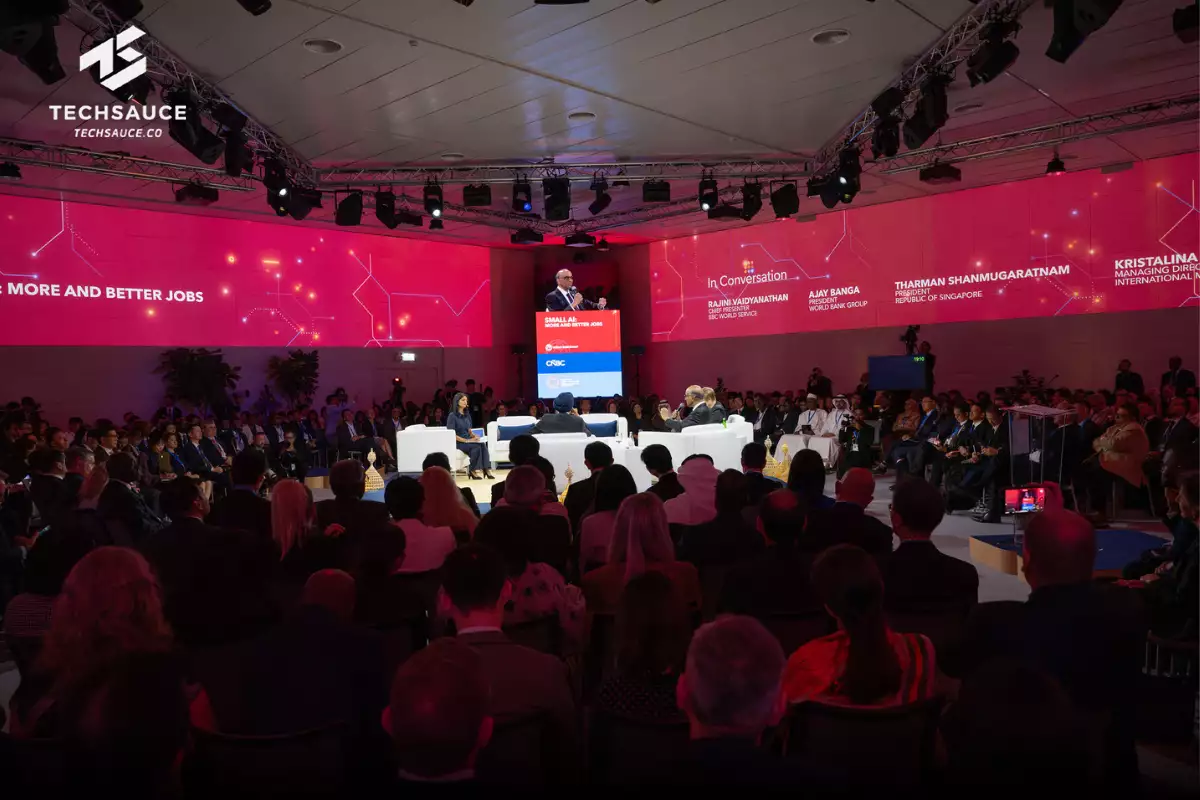
World Bank, IMF, and Singapore leaders explain how Small AI, simple tools that work even on a 3G phone, could help create jobs for 1.2 billion young people, and which sectors and p...
0

Cloudflare Field CISO Volker Rath says AI is weakening traditional defenses. Organizations need Zero Trust, security teams that act as engineers, policy written as code, and clear ...
0