
Where Will Jobs for 1.2 Billion Young People Come From? World Bank and IMF Leaders Point to "Small AI"
 Credit:Flickr
The Queen Sirikit National Convention Center was built to host the 46th Annual Meetings of the World Bank Group and the IMF in 1991. Thirty-five years later, the meetings have returned to the same building, this time for the 81st edition. The moderator opened the session by asking whether anyone in the room had attended the 1991 meetings, before observing that the world today is in a very different place.
One of the biggest changes is AI. Most conversations about it still revolve around managing risk, but this opening session posed a different question: how can AI be used to create jobs and growth? The focus was on practical applications that people can actually access. Titled "Small AI, More and Better Jobs," the session brought together Ajay Banga, President of the World Bank Group; Tharman Shanmugaratnam, President of Singapore; and Kristalina Georgieva, Managing Director of the IMF.
Banga noted that over the next 15 years, 1.2 billion young people will turn 18. If they grow up with clean air, clean water, good health, education, and skills, this could become a major demographic dividend.
Once they reach adulthood, however, they will need jobs. By a job, he means being able to contribute something productive to society, whether by working for a large company or a small one, or by running a business of one's own, and feeling the hope and dignity that come from earning a living.
Emerging Markets Need AI That Works on a 3G Phone

Banga sees the world talking about AI from two very different angles. On one side are large language models (LLMs), which many fear could take people's jobs. He acknowledged that this is possible, although there is not yet clear evidence of it.
For emerging markets, however, the key challenge is applying AI to make everyday work more productive, from schools and teachers to health workers and smallholder farmers. This is what the World Bank calls Small AI. Banga explained that the term emerged during a meeting of the World Bank's Jobs Council, which Tharman co-chairs.
While LLMs may affect labor markets in developed countries, he believes Small AI holds enormous potential for middle-income and lower-middle-income countries to raise productivity and create new jobs.
At its core, Small AI means developing simple AI tools that fit local needs and can be accessed even on a 3G mobile phone. Banga pointed to Edge AI, which processes data close to where it is used, as an example of technology that can work in places where infrastructure is limited.
A Rash at a Clinic, a Leaf on a Farm
To show how Small AI could work in practice, Banga described two scenarios in which technology could give local communities access to knowledge and services that were previously hard to reach.
The first was a clinic in Indonesia. In this hypothetical case, a patient comes to see a nurse with a skin rash, but the nurse cannot tell what is causing it. The nurse takes a photo and sends it to a doctor who oversees 20 clinics.
The doctor can examine the photo directly or use a locally developed AI tool that runs over a 3G phone to help assess the condition. If it turns out to be eczema, the doctor can prescribe an ointment, and the patient can go home right away. If further examination is needed, the patient can be referred to a specialist at a regional hospital, with the date and time of the appointment booked in advance.
Banga pointed out that even in developed countries, booking a specialist appointment through a digital system is not easy, and Small AI could help cut through these complicated steps. It could also allow primary healthcare centers staffed by nurses, midwives, and medical technicians to connect with doctors far away, without needing a specialist at every site.
The second example involved farmers in India. Banga said the World Bank is working with Google to develop a platform that helps farmers and cooperatives access fertilizer, seeds, crop insurance, credit, and better prices for their produce.
He described a hypothetical woman farmer who cannot read but can use a 3G phone to photograph the underside of a leaf. AI then identifies the plant disease and recommends a suitable pesticide, so she does not need to know the name of the disease herself.
She can then order the product on her phone for 25 rupees and pick it up at the cooperative, thanks to the bank accounts that are now widely accessible to people across India, Banga explained.
Both examples reflect the same idea: Small AI is not meant to replace workers. Instead, it gives them access to knowledge, tools, and services that may once have been out of reach, whether they are nurses at rural clinics or smallholder farmers who may not be able to read.
For Banga, the real opportunity of Small AI lies in using technology to enhance what workers can do and to help them work more productively.
Five Sectors That Can Create Jobs Without Waiting for Work from Abroad
Banga explained that the World Bank is placing greater emphasis on job creation. This does not mean it will stop investing in schools, roads, skills centers, or clinics. Rather, every project must also consider how it will create jobs and economic opportunities for people.
Job creation has to start with infrastructure, both physical and human, alongside sound policy and governance, as well as de-risking to attract private investment at scale. Banga noted that the private sector creates 75 to 85% of the jobs in any given country, while the role of government is to create an environment in which investment can happen.
Building on this thinking, the World Bank's Jobs Council, made up of representatives from academia, the public and private sectors, and civil society, has identified five sectors with the potential to create jobs in developing countries. The emphasis is on jobs that serve local economies, rather than on the model of the past 30 to 40 years, in which developed countries outsource work to developing ones.
The five sectors are:
- Infrastructure, from bridges, roads, airports, digital systems, power, and water supply to skills and education. Infrastructure not only creates construction jobs directly but also opens the door to other economic activity.
- Smallholder agriculture, a vital source of food in many countries. Smallholder farmers often struggle to compete, so access to cooperatives and technology can help them become more productive and reach more economic opportunities.
- Primary healthcare. Expanding community health centers creates jobs for nurses, midwives, and medical technicians, while technology and AI can connect these workers with doctors far away, improving services in areas that lack specialists.
- Tourism, which creates jobs across many related businesses. Banga highlighted Thailand as a prime example of a country that has used tourism to drive employment and intends to take the industry even further.
- Value-added manufacturing, particularly in emerging markets rich in minerals and metals, which have the opportunity to build industries that add value to these resources and create quality jobs at home. He also mentioned opportunities in Africa's creative industries.
Economies Are Growing, but Jobs Are Not Keeping Up
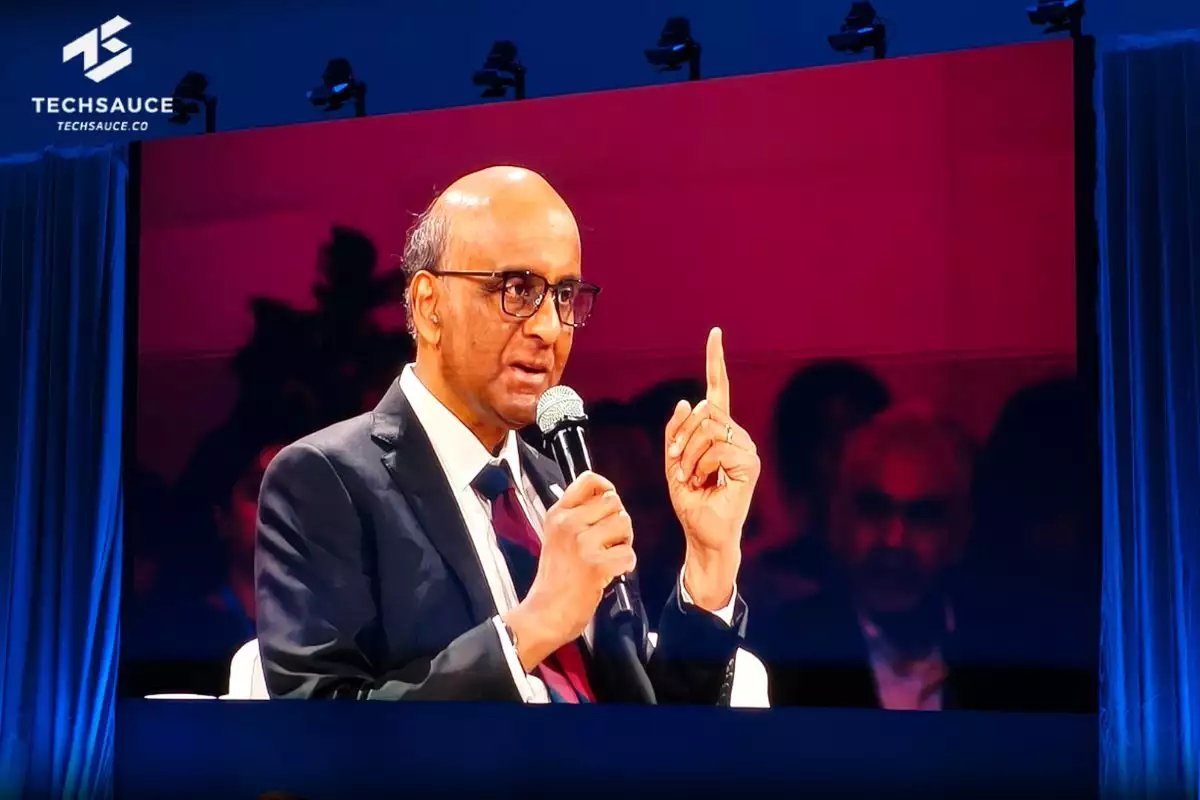
Tharman Shanmugaratnam, President of Singapore, believes the world is entering a new era in which economic growth alone may no longer be enough to create good jobs.
He pointed to China, India, and the developing economies of Southeast Asia, which are still growing fairly well even though job creation has not kept pace. Growth and employment are starting to move in different directions, and if governments and businesses do not adapt quickly, AI could widen this gap even further.
Another of his concerns is a K-shaped economy and labor market, in which growth is uneven: some groups benefit and keep moving up, while others are left behind.
Tharman explained that in the early days of automation, lower-skilled manufacturing workers were among the first to be affected. Some had to move into services or the gig economy, made up of freelance and one-off work.
This wave of change driven by AI may be different, however. The group he worries about most is middle-skilled workers, who form the backbone of the labor market. If they are displaced or pushed out of the job market on a large scale, inequality could deepen, and the skills these workers have built up over many years could go unused.
New Jobs, from Factories to One-Person Companies
Although AI poses risks to the labor market, Tharman still sees opportunities to create new jobs, particularly in developing countries, where he identified at least three sectors with significant room to grow.
The first is manufacturing. Tharman believes factories should not be written off, because labor in many parts of the developing world still costs less than both labor in China and robots, which keeps manufacturing an important source of jobs.
He cited four or five Indian states where export-oriented manufacturing is growing rapidly, as well as Vietnam, which still has potential in this area. What matters is attracting investment, getting land ready for development, and reforming labor regulations so that people can enter the job market and advance in their careers.
The second is green energy, which not only strengthens energy security but also forms essential infrastructure for an AI economy that consumes enormous amounts of electricity.
According to Tharman, for the same $1 million invested, renewable energy creates three times as many jobs as fossil fuels, making it another industry that can generate both economic growth and employment.
The third is healthcare, which he sees as one of the industries where AI will make workers more productive rather than replace them.
Today, developing countries have only one-fifth to one-tenth as many nurses per capita as developed countries. Closing even half of this gap would require many more doctors, nurses, and community health workers.
He pointed to India, where community health workers play a vital role in vaccination, maternal health, and educating families. Healthcare, in other words, still needs many more workers, and AI can help them deliver better services.
Beyond these three industries, Tharman believes AI is blurring the line between being an employee and being an entrepreneur, because technology allows a single person to start and run a business at a lower cost.
He calls this phenomenon the one-person company: a business that starts with just one person and gradually adds staff as it grows. AI makes it easier for small entrepreneurs to reach technology and markets without needing many people or resources from the outset.
His example was China's Zhejiang Province, which has a network of services supporting one-person companies, from access to AI models and energy to a range of professional services, helping small entrepreneurs run their businesses more efficiently.
Tharman sees this type of business as another source of jobs and economic growth, one that governments should support just as they support large industries.
The First Rung of the Career Ladder Is Disappearing
Another problem Tharman believes must be addressed urgently is the shrinking chance for new graduates to land their first job, especially in the technology industry, which has been hit hardest by AI. The same trend is beginning to appear in other industries as well.
He explained that if new graduates have to wait a year to find work, they not only miss the chance to build skills and experience but must also compete with the next cohort of graduates entering the labor market the following year. What they lose is not just time, but also the practical skills learned on the job and confidence in their own future.
Tharman proposed that governments take the measures used during the global financial crisis and the COVID-19 pandemic and turn them into long-term policy, particularly incentives for private companies to hire new graduates, so that young people have the chance to start their careers and keep developing their skills.
At the same time, he believes learning on the job will become even more important, because AI does not replace every task in a role at once. It changes jobs piece by piece, which gives workers time to adapt and learn new skills.
Preparing people for the world of work in the age of AI, however, has to start with the education system.
Tharman noted that most universities still place too much emphasis on academic learning, even as the link between degrees and career opportunities weakens. He cited data from the United States showing that demand for college graduates has fallen for the first time in a century, and that the wage premium graduates earn over non-graduates has shrunk considerably.
He therefore proposed that universities expand learning by doing, including internships, real work alongside studies, and dual education systems in which students spend substantial time learning inside companies.
Just as important, education systems must not be locked into a single model. Some professions require deep specialization, while others call for broad knowledge across many fields in order to work effectively with AI.
Since no one knows for sure how the world of work will change over the next five years, education systems also need to be flexible and ready to adapt, just like workers and businesses.
The First Wave of AI Is Investment. The Next Is Real-World Adoption
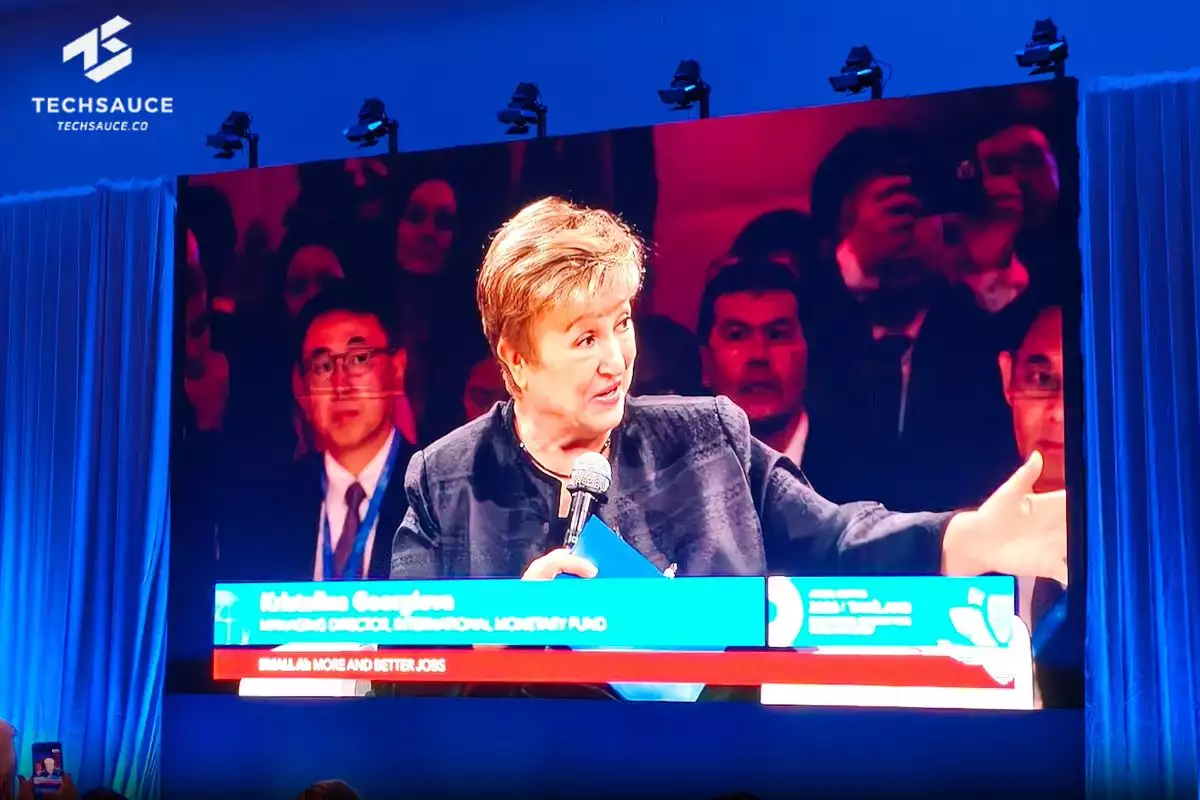
Kristalina Georgieva, Managing Director of the IMF, opened her remarks by saying that whether you love AI, hate it, or fear it, the technology is already part of the world.
She explained that the first wave of economic impact is already visible in massive investment in AI, including the construction of data centers and the development of AI models. This spending has boosted demand and investment, helping to drive growth in some countries.
Looking at the AI supply chain, she identified three key countries that play leading roles in producing AI: the United States, China, and India. Another group consists of countries building the infrastructure to support the technology, many of them in Asia, including Thailand.
Georgieva believes these investments are one of the factors keeping global growth at around 3%, despite pressure from problems with energy supply.
She sees this as only the beginning, however. The major opportunity for AI going forward lies not just in developing the technology but in putting it to use on a wide scale.
Georgieva believes that if countries are prepared, AI could become a technology that everyone can access, much like the mobile phone.
For developing countries, however, adopting AI depends on several important conditions: access to electricity, digital infrastructure, people's readiness to use the technology, and government measures that make it safe to use.
The IMF estimates that AI could raise economic growth in Asia's advanced economies by about 0.5 to 1 percentage point, while emerging markets in Asia could see an additional 0.2 to 0.8 percentage point.
This matters especially for Asia's advanced economies, which are aging rapidly. If AI can add as much as 1 percentage point to growth, that could be enough to offset the economic impact of an aging society and still generate additional growth.
The IMF Warns AI Could Affect 40% of Jobs Worldwide. How Should Governments Prepare?
On the future of the labor market, Georgieva likened the impact of AI to a tsunami that is rolling in slowly. It may not hit all at once, but it is still a tsunami that must be prepared for.
The IMF estimates that around 40% of jobs worldwide could be affected by AI over the long term, whether AI makes them more productive, makes certain kinds of work less important, or replaces workers altogether.
Broken down by income level, the share of jobs that could be affected is about 60% in advanced economies and 23% in low-income countries.
Georgieva cautioned, however, that the lower figure does not necessarily mean low-income countries will be less affected. It simply reflects that AI has only limited reach in these countries so far, and that Small AI is not yet widely used.
To deal with this change, she proposed that governments prepare in three key areas.
1. Study and Track Changes in the Labor Market
Georgieva cited an IMF study in the United States, which found that about 10% of jobs in the areas studied require AI skills and pay more, while routine jobs are declining.
At the same time, some of the jobs that are growing are low-wage, such as data center construction and service work. Even though overall employment in the areas studied has increased, that does not mean job quality has improved along with it.
The most worrying group is young people entering the labor market, because the entry-level jobs that once allowed them to build experience and grow their careers are changing.
Georgieva therefore sees AI not as reducing demand for labor across the board, but as changing the kinds of workers the market needs. She acknowledged, however, that this trend could shift in the future.
2. Reform Education to Support Lifelong Learning
Governments need to rethink how education systems should prepare people for a world with AI, because learning a skill once and relying on it for the rest of one's life may no longer be enough.
Continuous learning and upskilling must therefore become a core part of both the education system and the labor market.
3. Review Fiscal Policy and the Tax System
Georgieva raised a question: if AI makes economies rely less on human labor and more on capital, where will governments collect taxes to sustain national revenue?
Governments will still need money to help people adapt to change. If tax revenue falls, the public sector may have less capacity to support those who are affected.
She stressed that while no one can say for sure what the world of work will look like in five years, what governments can do now is collect data, analyze the impact, learn from what is happening, and act to adapt.
What Do the Three Leaders Hope to See in Five Years?
At the end of the session, the moderator asked the three leaders what change they would most like to see over the next five years.
Banga wants to see Small AI put to real use in as many emerging markets as possible, so that technology expands people's economic opportunities and their ability to work.
Tharman hopes the world can avoid a new wave of divergence between developed and developing countries, and that AI and technology can help countries keep catching up with one another, as happened in East Asia.
Georgieva wants to see AI take on the work people would rather not do, giving them more time for what they love, while they remain productive, enjoy a good quality of life, and keep the dignity of being part of society.
Reference: "Small AI: More and Better Jobs" session at the 2026 IMF-World Bank Group Annual Meetings
ลงทะเบียนเข้าสู่ระบบ เพื่ออ่านบทความฟรีไม่จำกัด


Anthropic co-founder Jack Clark likens AI to Formula 1 at night without brakes and calls for shared safety standards, as leaders from the IMF, Bank of Canada, and DHL debate who sh...
 0

Cloudflare Field CISO Volker Rath says AI is weakening traditional defenses. Organizations need Zero Trust, security teams that act as engineers, policy written as code, and clear ...
0

KBank and Techsauce hosted “EMPOWER THE FUTURE ECONOMY,” an affiliated program of the IMF–World Bank Group Annual Meetings 2026, with leaders from IFC, Standard Chartered Bank, Mic...
0