SPACE-F Roadshow: ‘Feeding the World Through Innovation’ Positioning Bangkok as the Global FoodTech Launchpad
The SPACE-F Batch 7 Roadshow at SO/Bangkok opened with a critical question for the Southeast Asian economy: How does the "Kitchen of the World" transform into its global innovation powerhouse? This event wasn't just a seminar; it was the activation of Thailand’s premier equity-free FoodTech incubator and accelerator. Powered by a strategic alliance between the National Innovation Agency (NIA), Thai Union Group, Nestlé, and Mahidol University, the program projects a unified vision: shifting Bangkok from a traditional manufacturing base to a Global Launchpad for deep-tech.
By bridging the gap between scientific discovery and industrial scale, this alliance ensures that Thai entrepreneurs stop just exporting ingredients and start exporting the intellectual property that defines the future of food.
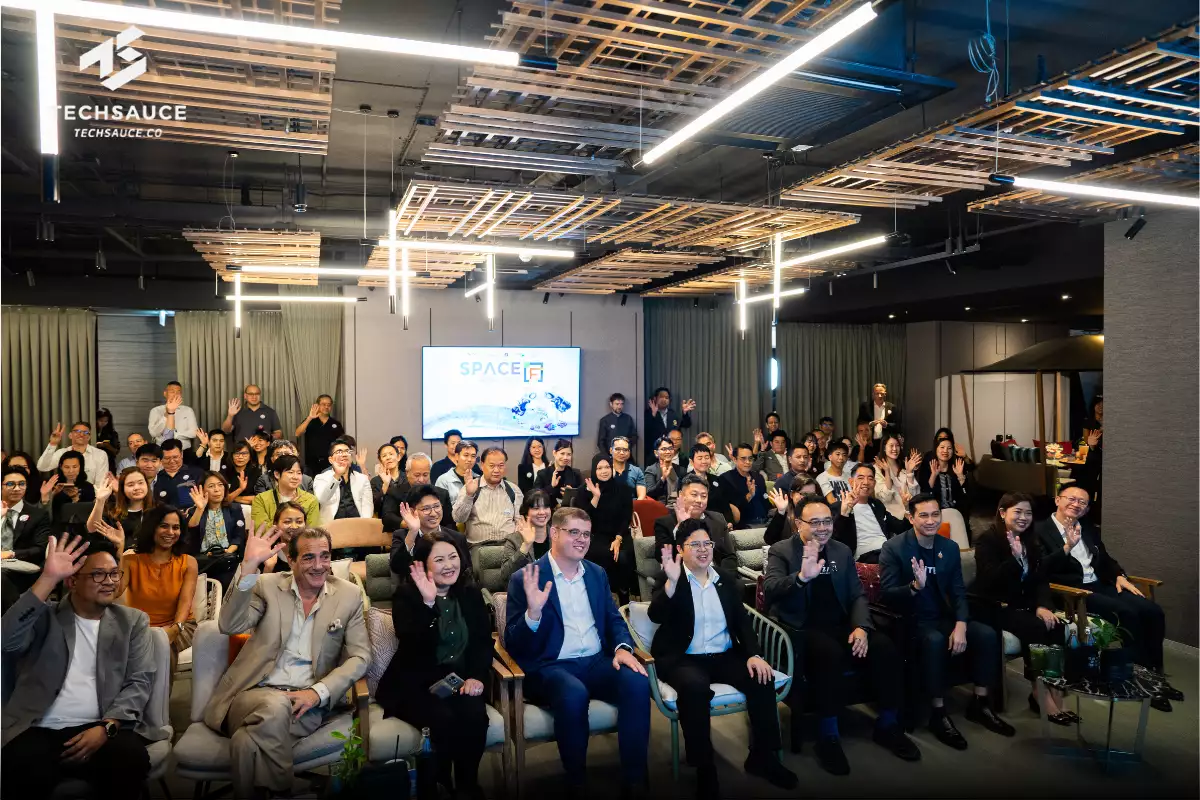
This forum served as a strategic thought starter for SPACE-F Batch 7, signaling a deliberate policy shift to inject global deep-tech into Thailand’s food sector. Bangkok was chosen not merely as a capital, but as a living testbed where vibrant culinary culture meets massive industrial infrastructure.
The goal is to act as a Catalyst to help founders bridge the “Valley of Death”
NIA’s Vision: Why ‘Groom, Grant, Growth’ is the New Economic Engine
The first voice on stage, Dr. Krithpaka Boonfueng (Executive Director, NIA), framed SPACE-F not as a CSR project, but as a national economic engine. Explaining the “4G Strategy” (Groom, Grant, Growth, Global), she highlighted the NIA’s pivot toward creating an “Eco-friendly Investment Environment” designed to de-risk deep tech for global VCs.
When we nurture a startup, we are nurturing them to grow globally. We aim for Thailand to be the hub of Southeast Asia, particularly in Food Technology,
- Dr. Krithpaka Boonfueng
By aligning government grants with corporate market access, the NIA aims to reposition Thailand in the eyes of investors—shifting its identity from a provider of raw materials to a creator of high-value intellectual property.
The Strategic Paradox: 9,000 Factories, Few Startups
Dr. Chris Aurand (Open Innovation Leader, Thai Union) grounded the conversation in industrial reality. He pointed out a glaring paradox: Thailand possesses over 9,000 food processors and a massive agricultural base, yet has historically produced few deep-tech startups. The industrial hardware was there, but the "connective tissue" between science and business was missing.
To bridge this gap, SPACE-F employs the “Triple Helix” model
. This structure ensures startups never operate in a vacuum:
- Academia (Mahidol University) validates deep science.
- Government (NIA) provides equity-free funding and "Smart Visas."
- Corporates (Thai Union, ThaiBev, Nestlé) provide the Sandbox—a real-world environment to test scalability and manufacturing viability.
“We are the Kitchen of the World... but why were there so few FoodTech startups? That is where we came together to develop that ecosystem,” said Dr. Aurand, citing alumni success stories like Seadling and UniFAHS as proof that the factories are ready for the innovators.
Keynote Session: Escaping the Local Trap
Narusan Dhanvarjor (CEO, InnoSpace Thailand) challenged the audience to abandon the “local first” mentality. Citing Israel as a model, he argued that a limited domestic population is an incentive to export, not a barrier.
“Don't think about just the 70 million population here. Look at the global market from Day One,” Narusan advised. He urged founders to redefine "Proof of Concept"—moving the goalpost from lab results to paying customers—and to view Thailand not as a final destination, but as a distribution gateway to the rest of Asia.
Keynote Session: The Investor Reality Check
Following Narusan, Robert Lomnitz (Director, Xpdite Capital Partners) delivered a financial reality check: the era of hype is over. Investors in 2026 demand "Scale Ready" over "Lab Ready."
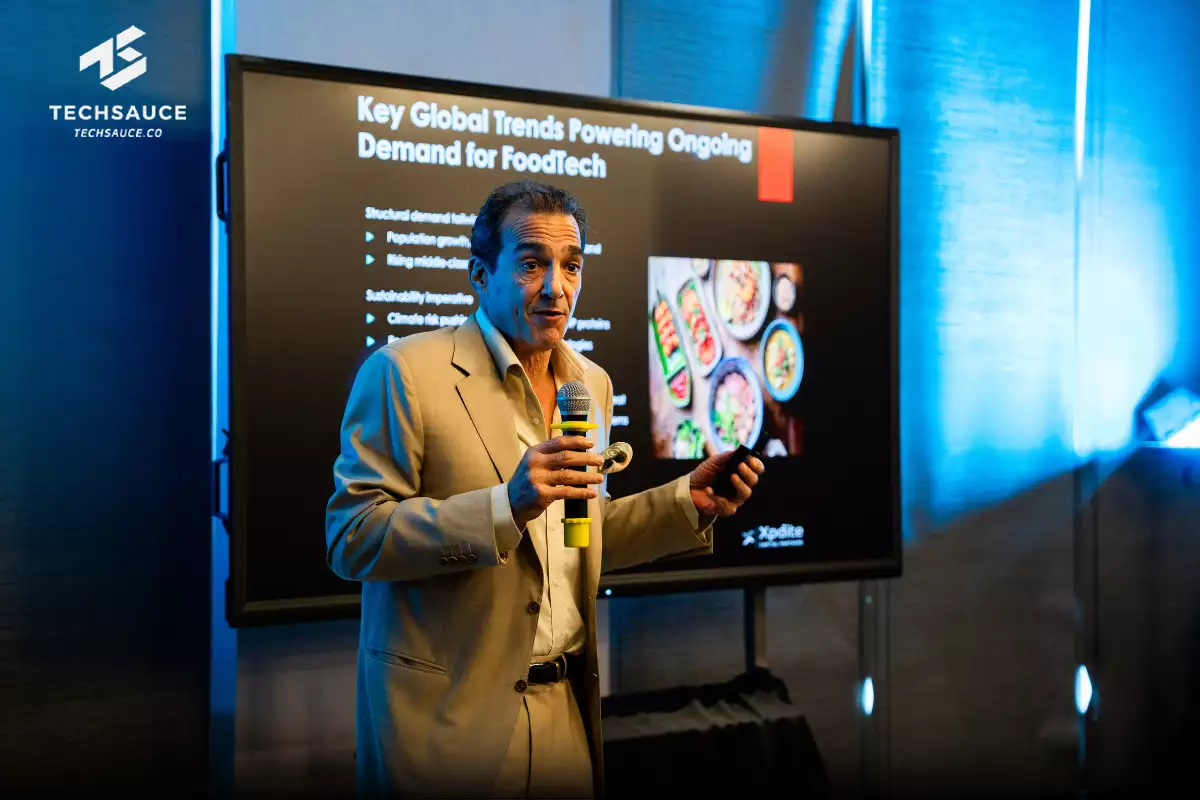
“VCs aren't interested in science. Their shareholders don't pay their kids' school fees in science awards,” Lomnitz stated bluntly. He warned founders to stop treating fundraising as a jackpot and instead use capital as a ladder—raising in stages only after proving commercial viability and unit economics.
Panel Discussion: The Corporate-Startup Handshake
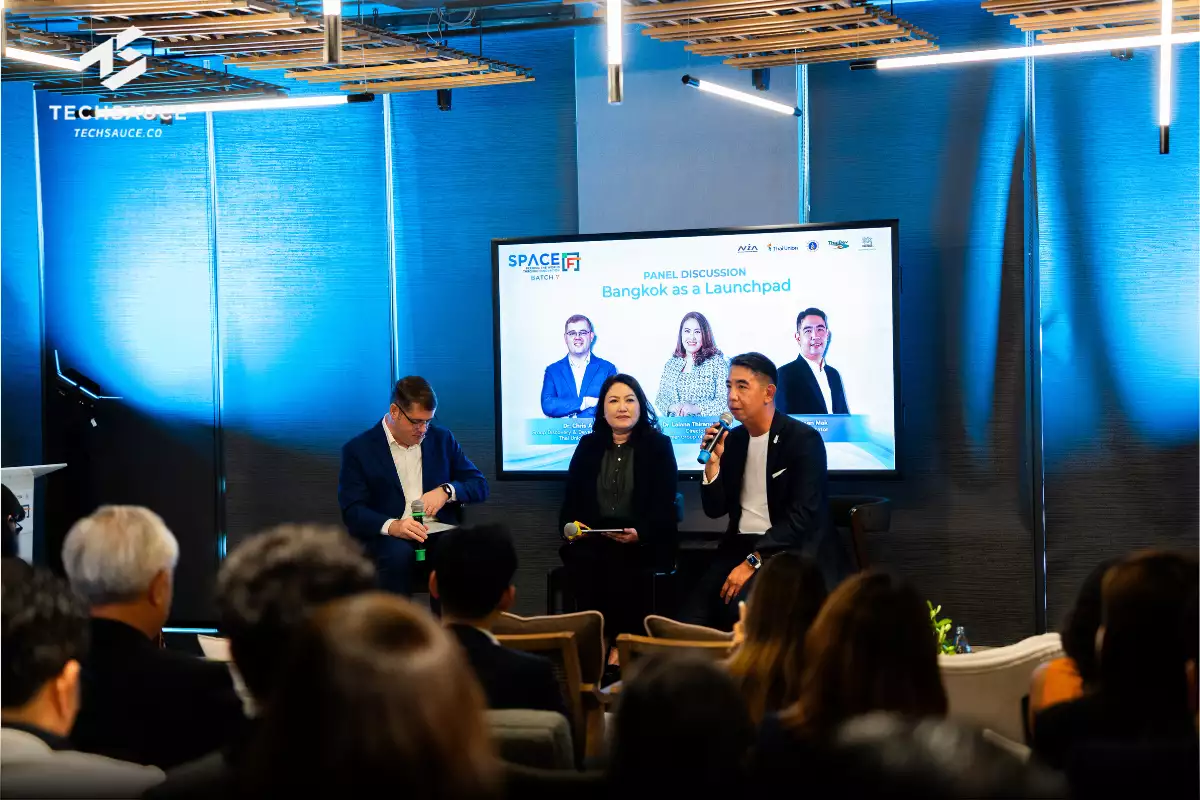
The dialogue expanded into a panel discussion moderated by Sean Mak of Innovate360, featuring Dr. Lalana Thiranusornkij of Premier Group and Dr. Chris Aurand. The session tackled a common friction point: How do agile startups survive working with massive conglomerates?
Dr. Lalana advised founders to master the delicate balance between flexibility and focus. While startups must adapt their technology to fit corporate applications (e.g., sustainable packaging for Premier’s Taro snacks), she warned against losing their core identity just to please a single client.
You have to set your goal and work towards it. It’s okay to adapt... but not to move your goalposts every time a customer asks,
- Lalana Thiranusornkij
The panel also addressed the "elephant in the room"—the fear of Intellectual Property (IP) theft. Dr. Chris Aurand was blunt, dismissing the idea that corporates join these programs to steal tech. “If we really wanted your tech, we have the money—we would just buy you. Why copy it and ruin our reputation?” he stated. The corporate goal, the panel concluded, is partnership and speed, not piracy.
Alumni Spotlight: Sustainable Growth Starts with ‘Resilience’
The event shifted from expert frameworks to real-world proof as two distinguished SPACE-F alumni took the stage. Their message to the incoming batch was clear: transforming an industry requires more than just technology—it demands resilience.
Dr. Kitiya Vongkamjan, Founder of UniFAHS, illustrated the journey of transforming from a lab scientist to a CEO exporting biotech solutions to Korea and the UAE. She credited the SPACE-F peer network—not just the funding—for helping her navigate the psychological toll of deep-tech entrepreneurship. Now recognized on the Forbes Asia 100 to Watch list, she stands as living proof that Thai deep-tech can compete on the global stage.
Another SPACE-F alum, Mahima Rajangam, Co-Founder of Yindii, shared a candid "war story" from her time in the program. She declared that the era of "growth at all costs" is dead.
“In this market, resilience is the new growth. The day we hit break-even was the happiest moment... because it meant freedom,” Mahima shared. She highlighted how the SPACE-F ecosystem facilitated a pivotal partnership with MX Cakes & Bakery (ThaiBev), allowing Yindii to survive the "Valley of Death" and scale its impact from 500 to over 500,000 meals saved.
From Stage Discussion to Tangible Next Steps
Moving from dialogue to concrete action, these concepts are being extended into the SPACE-F Batch 7 Application. This program sees the NIA, Thai Union, and Mahidol University—alongside global partners like Nestlé and ThaiBev—opening their doors to founders who are ready to move beyond the "Science Project" phase and build scalable businesses.
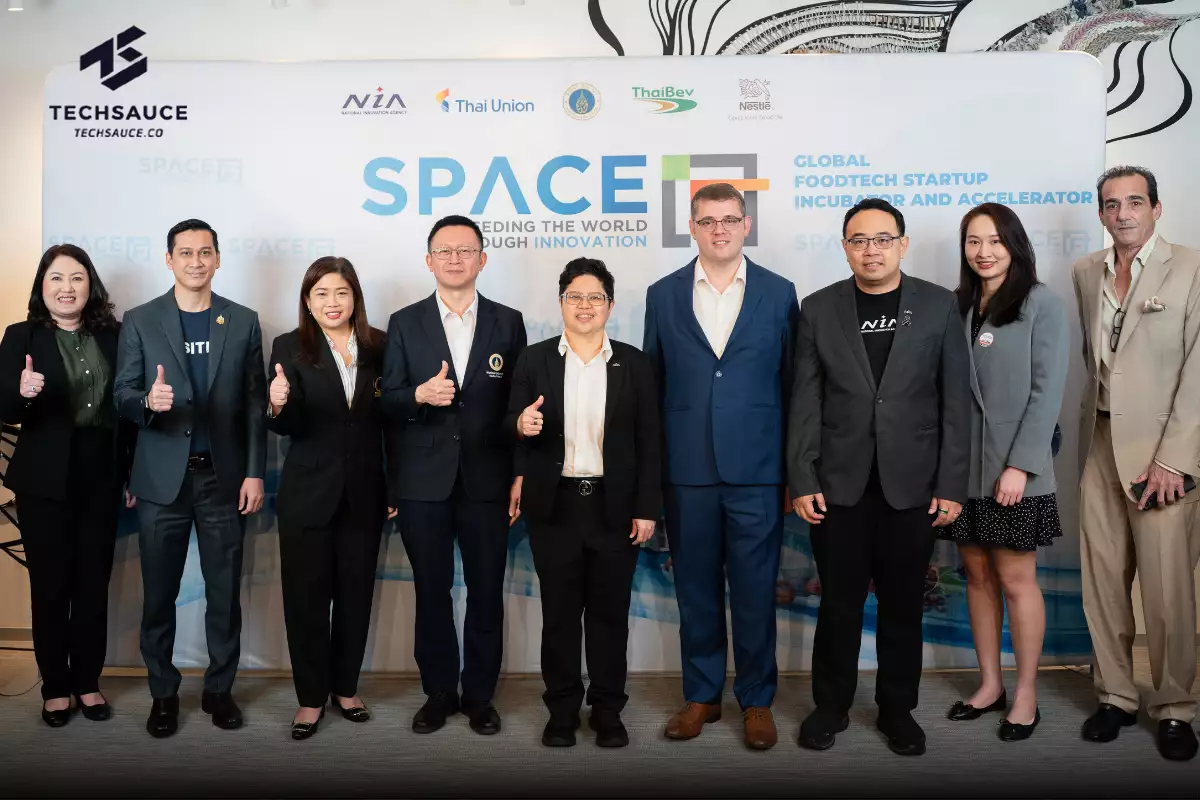
The program is uniquely structured to offer equity-free grants of up to ฿ 220,000 to support pilot projects, along with deep mentorship from "Base Mentors" (dedicated guides) and "Consulting Mentors" (specialists in Legal, IP, and Marketing). Furthermore, selected startups will have the chance to join a roadshow to Singapore for the Agri-Food Tech World Championship, expanding their network regionally.
The program is divided into two strategic tracks:
- Incubator Track: For early-stage founders with an MVP who need to validate their technology and find product-market fit.
- Accelerator Track: For growth-stage companies ready to scale internationally, secure Series A funding, and execute commercial partnerships.
The ecosystem structure is in place, and the corporate partners are aligned. Now, SPACE-F is looking for the founders ready to execute.
Applications are open until February 28, 2026. To apply or learn more, visit: https://www.space-f.co/
ลงทะเบียนเข้าสู่ระบบ เพื่ออ่านบทความฟรีไม่จำกัด

KBank Partners with Techsauce to Host "Empower The Future Economy"
KBank and Techsauce host "Empower The Future Economy," an affiliate event held during the IMF-World Bank Group Annual Meetings 2026, featuring Deputy PM Suphajee Suthumpun and lead...
 0
0

FROM LAB TO MARKET SPACE-F BATCH 7 KEY TAKEAWAYS AT TECHSAUCE GLOBAL SUMMIT 2026
สรุปไฮไลท์ SPACE-F ในงาน Techsauce Global Summit 2026 เผยทิศทาง FoodTech ไทย จาก Kitchen of the World สู่ศูนย์กลางนวัตกรรมอาหารระดับโลก...
0
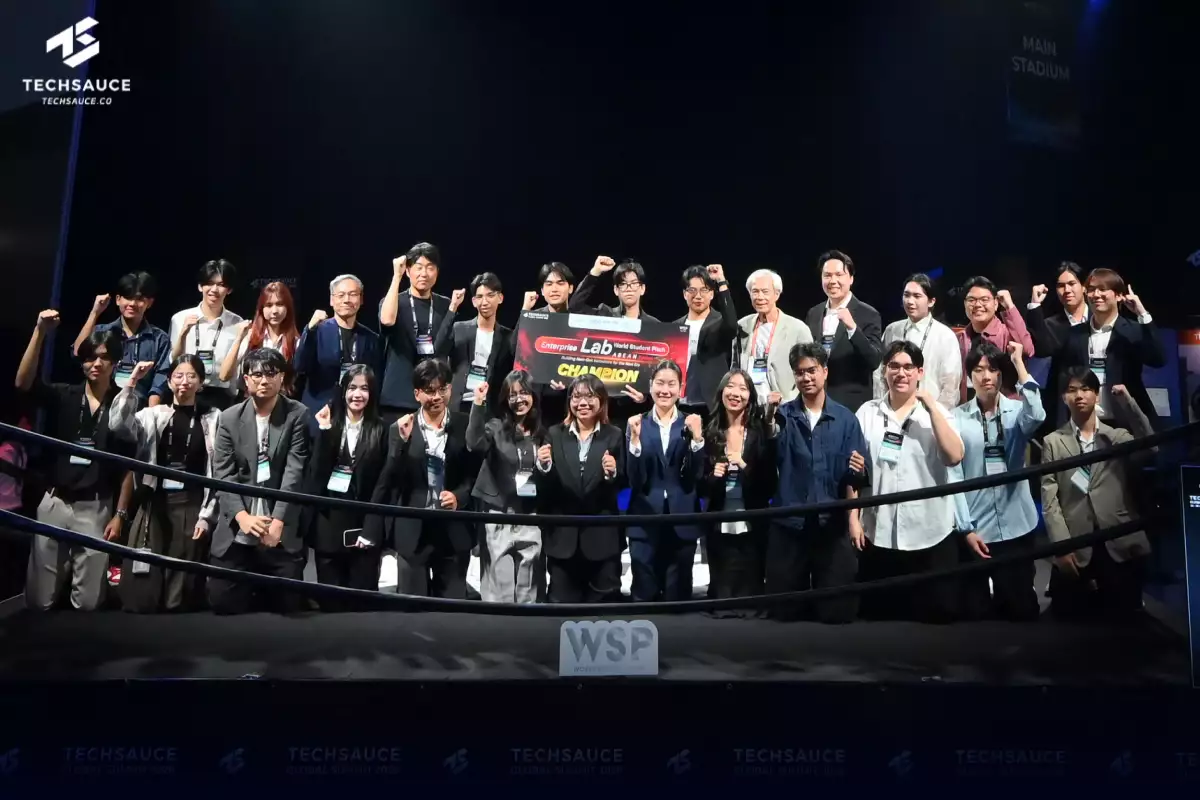
Student team Ctrl_A took the Grand Prize at Enterprise Lab: World Student Pitch ASEAN Edition 2026 with YARDS, an AI scrap steel grading system, beating eight other finalists at Te...
0