FROM LAB TO MARKET SPACE-F BATCH 7 KEY TAKEAWAYS AT TECHSAUCE GLOBAL SUMMIT 2026

At Techsauce Global Summit 2026, the FoodTech Summit by SPACE-F brought together policymakers, researchers, global food companies, investors and founders to examine one shared challenge: how can promising food innovation move beyond the laboratory and create measurable impact in the market?
The discussions ranged from Thailand’s national FoodTech direction and the rise of the Wellness Economy to consumer-led product development, startup investment, industrial scale-up and the technologies presented by SPACE-F Batch 7. Together, the sessions offered a practical view of what the future of food requires, and why collaboration is becoming as important as the technology itself.
What is SPACE-F?
SPACE-F is Thailand’s first global FoodTech startup incubator and accelerator. Founded through the collaboration of the National Innovation Agency (NIA), Thai Union Group and Mahidol University, with partners including Thai Beverage, Nestlé and Foodland Ventures, the equity-free programme connects startups with researchers, corporations, investors, mentors and industrial infrastructure.
Since its launch, SPACE-F has supported more than 100 startups from 18 countries. The programme is built around a practical objective: helping founders turn promising science and prototypes into products that can be tested, manufactured, regulated and commercialised in real markets.
What does FoodTech mean today?
FoodTech is the application of science, engineering, biotechnology and digital technology across the food system, from agriculture and ingredient development to manufacturing, safety, logistics, retail and consumer experience.
The sessions at Techsauce Global Summit 2026 showed why the sector requires more than a strong invention. Food is physical, highly regulated and deeply cultural. A solution must work in the laboratory, survive factory-scale production, meet safety and regulatory requirements, make economic sense and, ultimately, taste good enough for consumers to choose it again.
The 2026 theme: Wellness, resilience and the path to market
SPACE-F Batch 7 brought the programme’s long-standing mission, “Feeding the World Through Innovation,” into the context of the Wellness Economy. The central question was how Thailand can build on its strengths in food production, biodiversity, research and culinary culture to create higher-value innovations for health, sustainability and food security.
Across the programme, one message appeared repeatedly: the next generation of FoodTech will be judged by evidence of demand, viable unit economics, regulatory readiness and the ability to scale through partnerships. Innovation matters, but commercial execution determines whether it reaches consumers.
Key Takeaways from the Sessions
Thailand’s FoodTech Blueprint: From Kitchen of the World to Innovation Hub of Asia
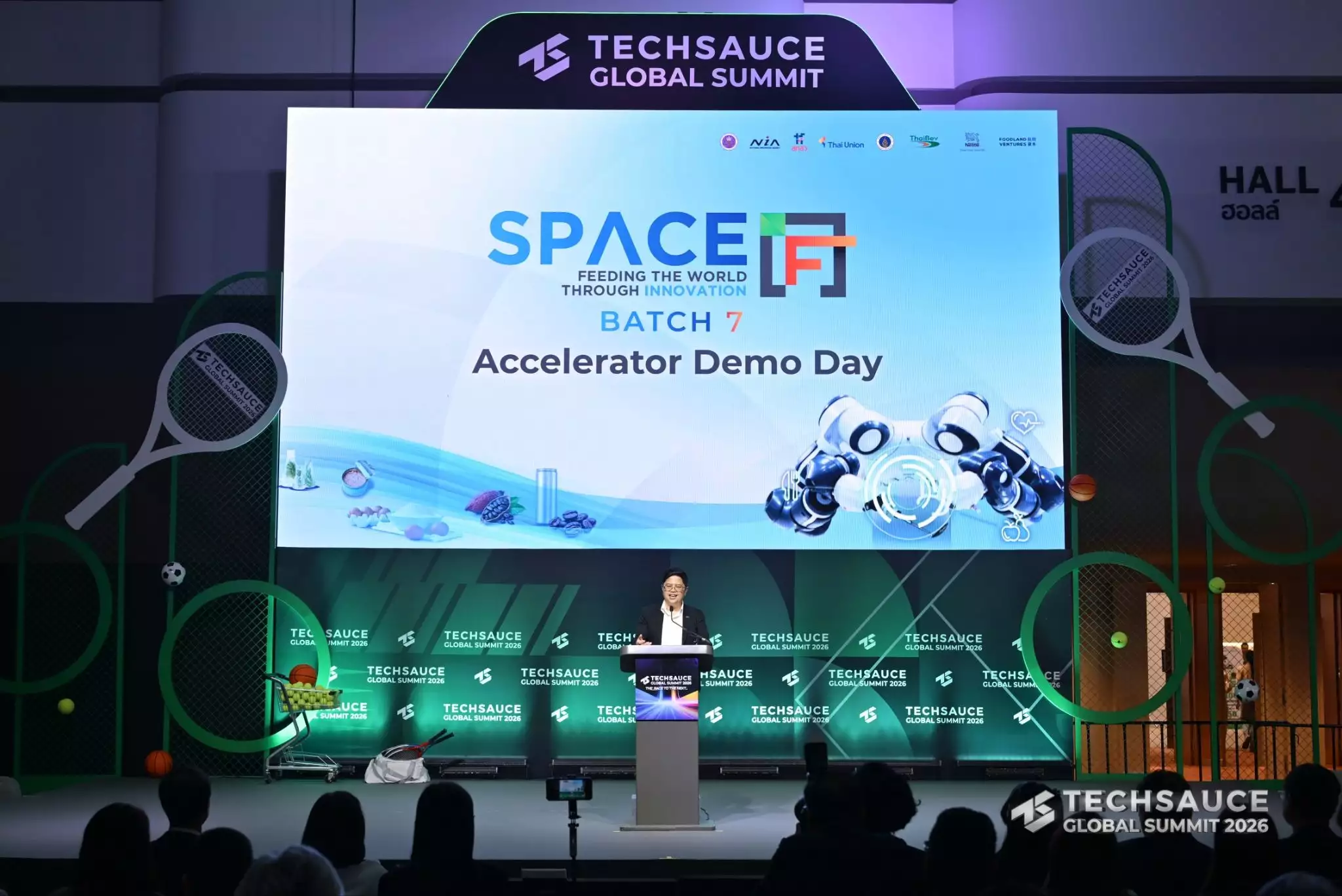
Dr. Krithpaka Boonfueng, Executive Director of NIA, positioned Thailand’s next opportunity as a shift from exporting raw materials and processed food to exporting higher-value solutions. SPACE-F provides a working model by bringing government, academia, corporations and investors into the same process, giving startups access to real customers, facilities and feedback. Batch 7 attracted 204 applications from 57 countries, reflecting Thailand’s growing role as a launchpad for global FoodTech innovation.
FoodTech as National Policy: The Wellness Economy and Thailand’s Next Economic Engine
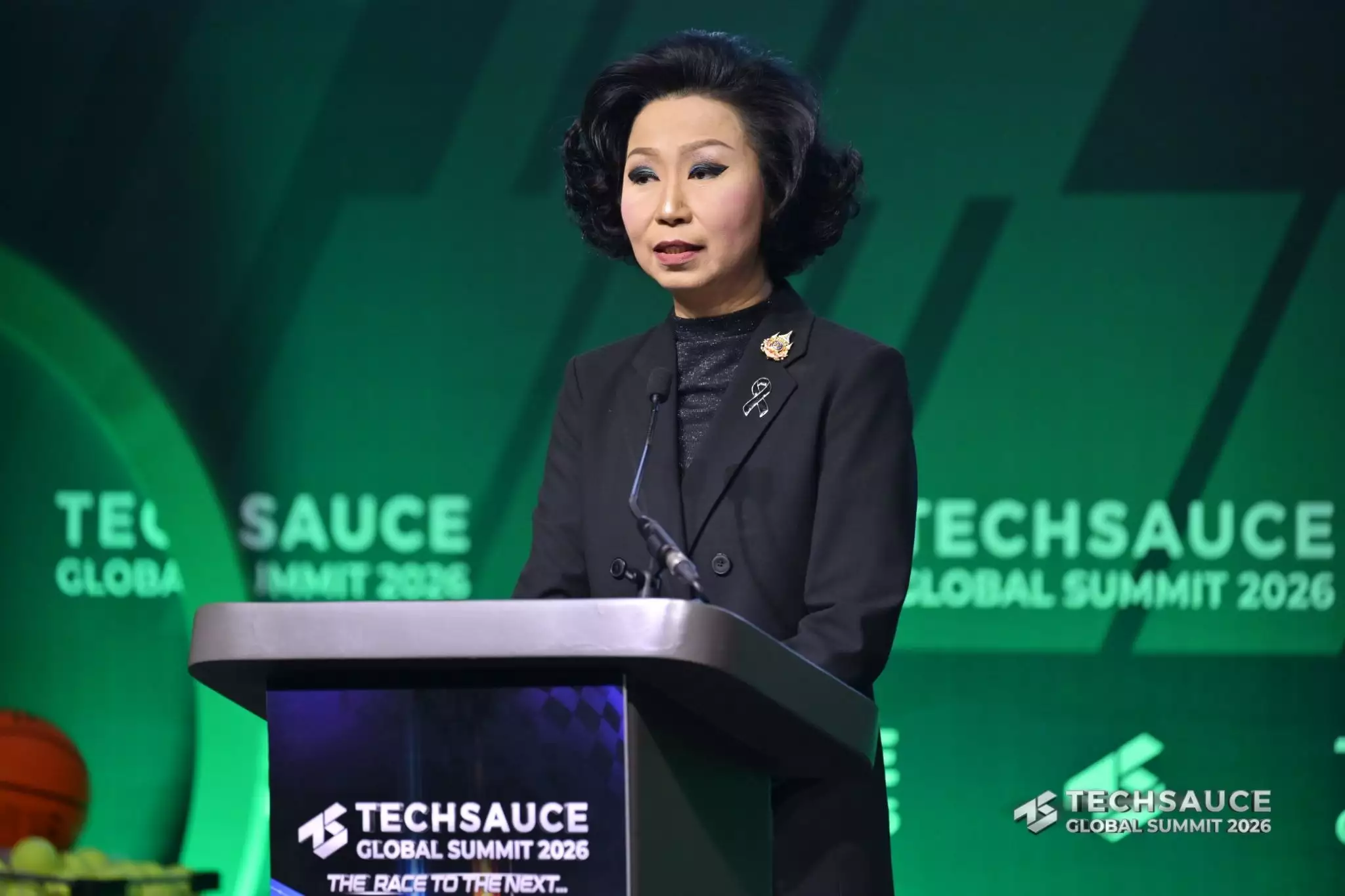
Dr. Sriyada Palimaphan, Advisor to the Minister of Higher Education, Science, Research and Innovation, connected FoodTech with three national priorities: better health, food security and economic growth. Thailand already has agricultural resources, biodiversity and a strong export base. The opportunity is to combine these assets with science, technology and entrepreneurial speed to move research out of the laboratory and into high-value products for health-conscious consumers.
Consumer-Centric Innovation to Impact: Startup Agility Meets FMCG Scale
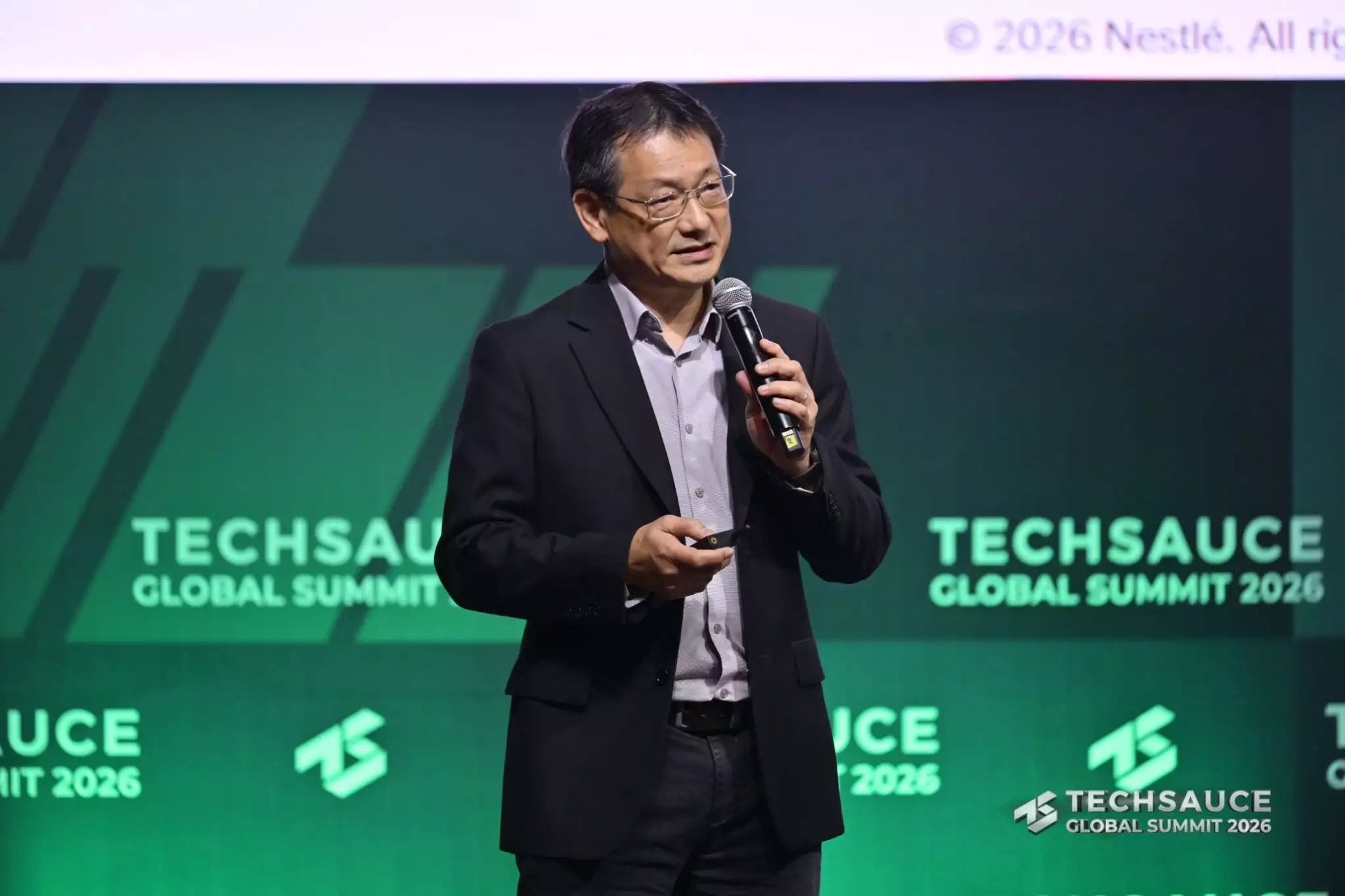
Dr. Allan Lim, Head of Open Innovation at Nestlé R&D Center Singapore, stressed that food innovation must begin with consumer needs rather than a technology searching for a use case. Taste remains the first test, followed by nutrition, sustainability, convenience and accessibility. Scaling then adds another layer of difficulty, including raw-material supply, quality systems, shelf life, regulation and production economics. Startups bring agility and differentiated technology, while established food companies can contribute infrastructure, market access and manufacturing experience.
Navigating the Next Wave of Food Innovation
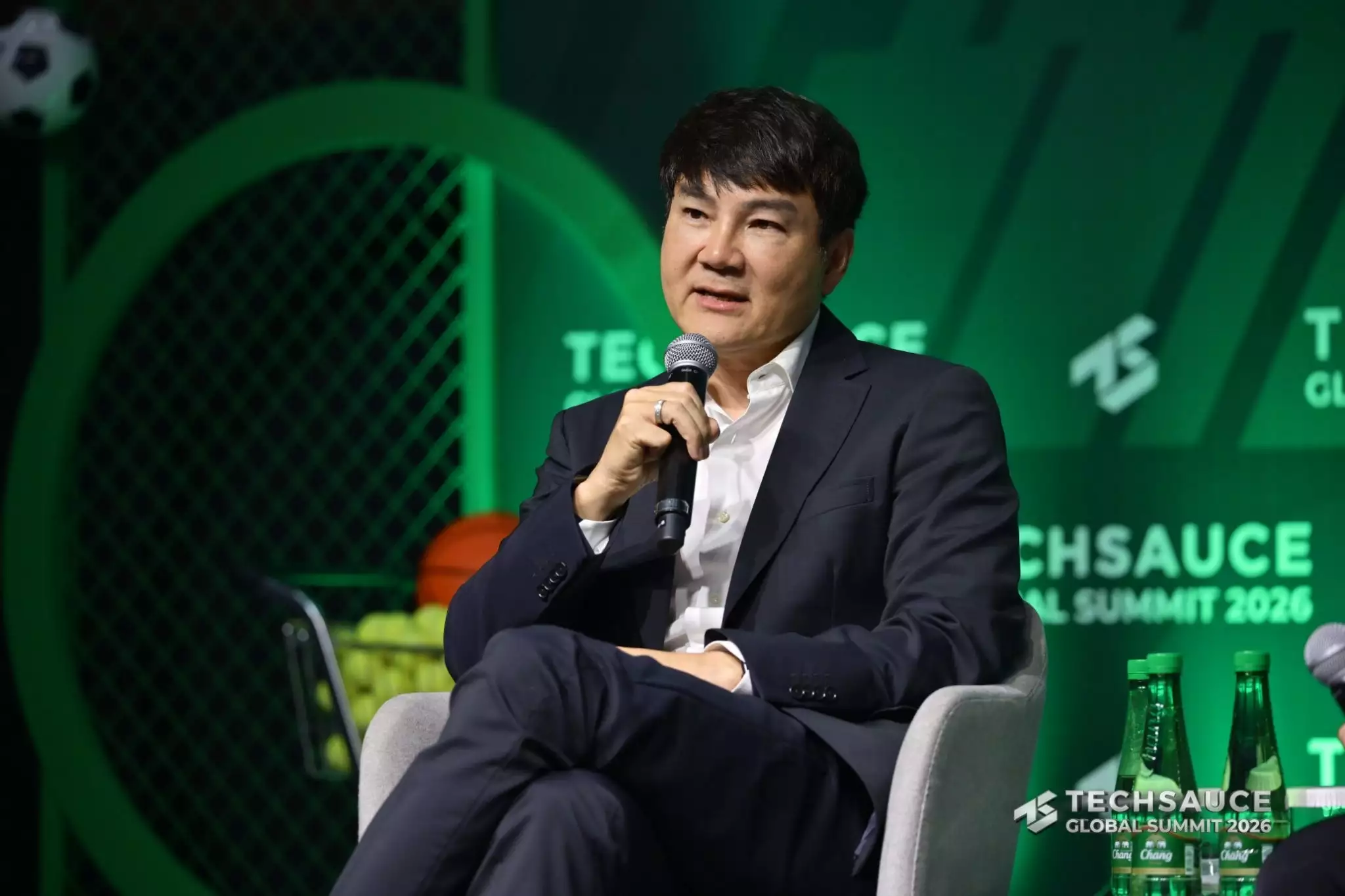
Dr. Tunyawat Kasemsuwan described a FoodTech investment market that has moved away from capital-intensive promises and towards disciplined commercial progress. Founders need to understand unit economics, generate early revenue where possible and consider modular paths to market. Partnerships with corporations, contract manufacturers and other players in the value chain can preserve capital and reduce scale-up risk. His core advice was clear: do not build everything alone, and approach partners with a precise understanding of the value the startup can create for them.
SPACE-F Batch 7 Accelerator Demo Day
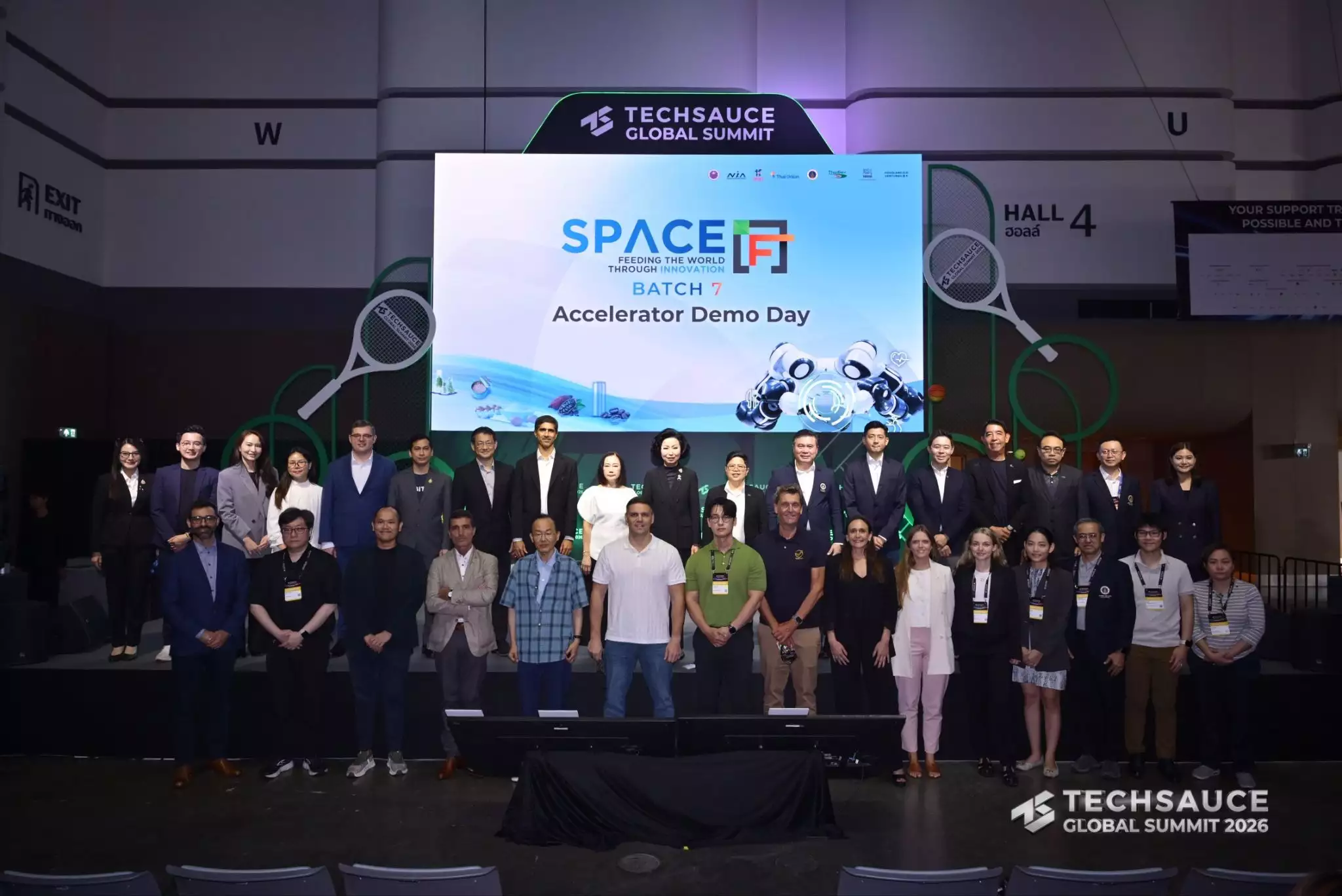
Nine Accelerator Track startups demonstrated how broad FoodTech has become:
- ComexSoft uses AI-powered retail intelligence to analyse products, pricing and market trends.
- PROTINOS develops high-protein noodles designed for preventive nutrition and muscle health.
- KINAVA converts organic waste into bioenergy and higher-value materials through hydrothermal carbonisation.
- BeNatureBioLab applies nano and microencapsulation to improve the taste, solubility and absorption of bioactive ingredients.
- Terra Bioindustries upcycles brewers’ spent grain into protein, fibre, malt extract and other food ingredients.
- Kresko RNAtech develops stable, ready-to-formulate bioactive RNA ingredients for wellness applications.
- SicPama connects restaurant ordering and customer relationship data to identify diners who influence repeat visits and group spending.
- NUCAPS uses protein-based microencapsulation to improve the stability and absorption of functional ingredients.
- AGRIFREEZE uses electromagnetic-field freezing technology to reduce food damage and preserve quality closer to fresh products.
The cohort showed that FoodTech now extends beyond new foods. It includes ingredient science, preventive nutrition, circular production, food preservation, market intelligence and digital consumer services. AGRIFREEZE received the Feeding the Future Award in the Accelerator Track, while PROTINOS won the People’s Choice Award.
From Proof of Concept to Market: What SPACE-F Partners Are Actually Building with Startups
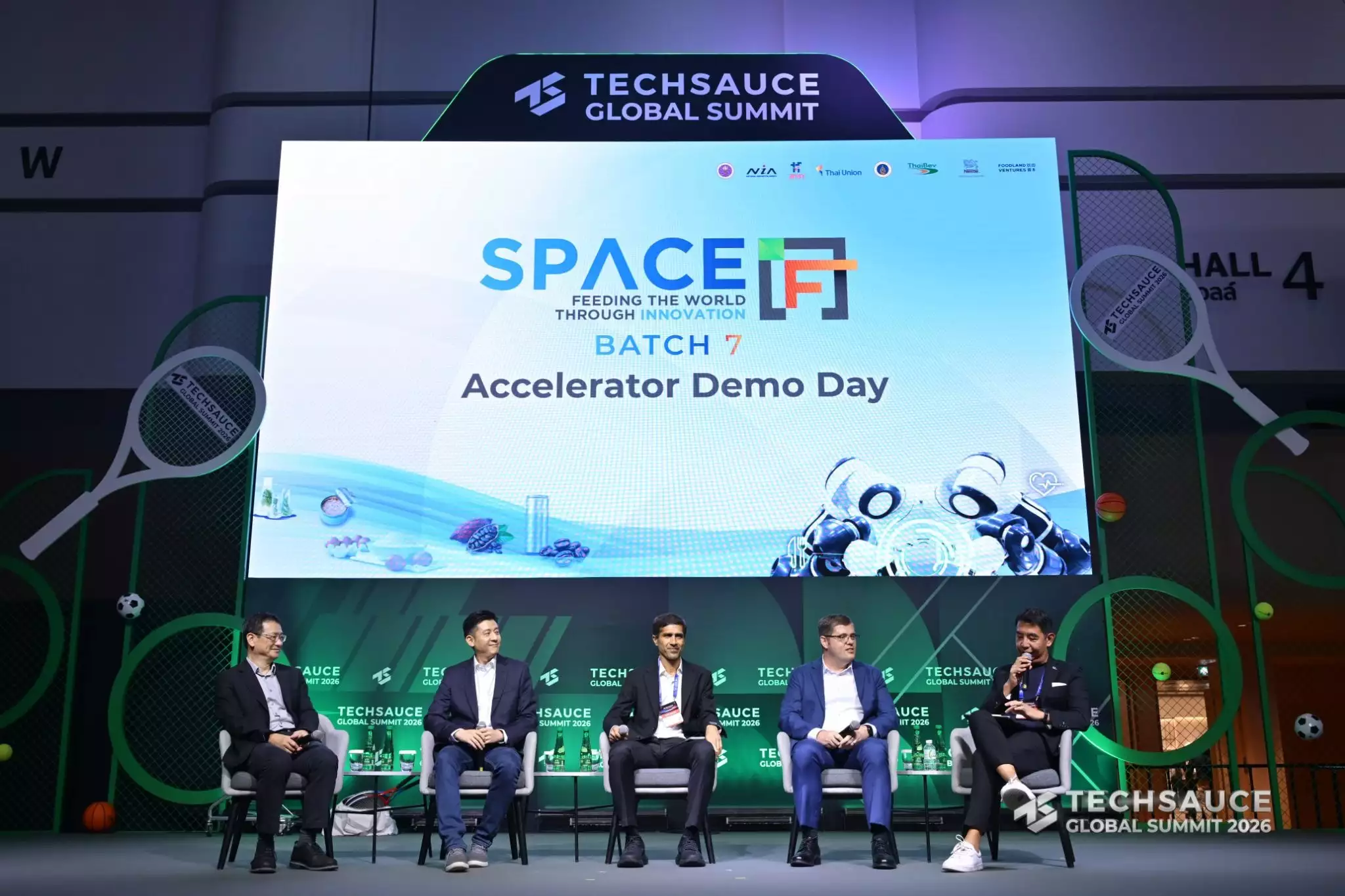
Chris Aurand, PhD, Rahul Colaco, Victor Chen and Dr. Allan Lim, moderated by Sean Mak, explained that one successful laboratory test is rarely enough. Commercialisation usually requires a series of proof-of-concept stages covering technical performance, product integration, quality, regulation, factory trials and consumer response.
The panel identified several conditions that improve the chance of success: a clear business need, an internal corporate champion, founders who listen and adapt, evidence of demand, realistic cost and volume assumptions, and a controlled sandbox where both sides can test and learn. Many promising technologies stall because of regulation, cost or scale rather than scientific failure. Strong collaboration must therefore include clear ownership, patience and a shared path to deployment.
Programme Recap and Awards Ceremony
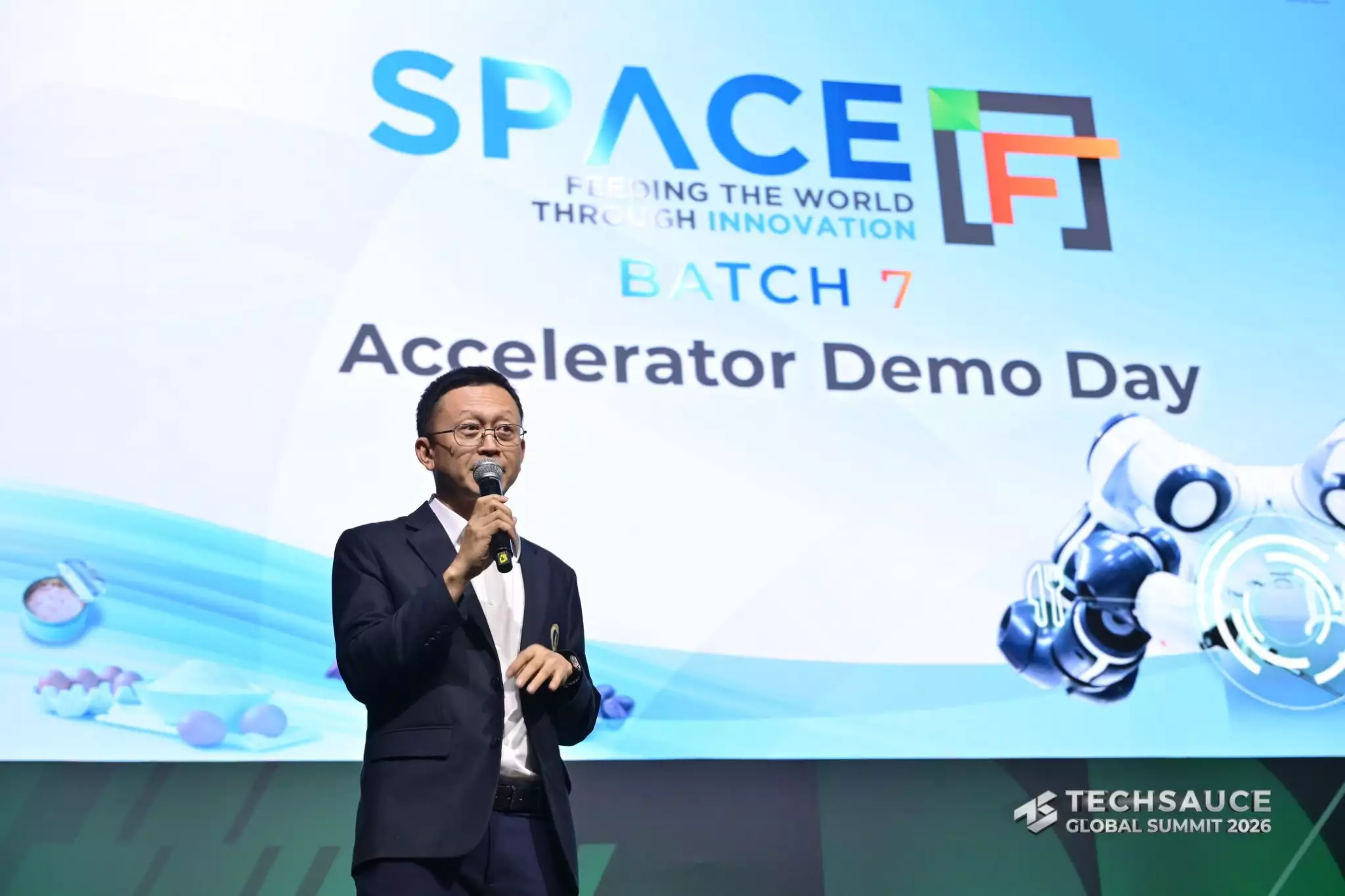 Assoc. Prof. Dr. Pasit Pakawatpanurut of Mahidol University closed the programme by describing the particular difficulty of scaling FoodTech. Software can be updated instantly, but food innovation must operate within biology, chemistry, thermodynamics, supply chains, regulation and human taste.
Over five months, Batch 7 founders tested more than their technologies. They examined unit economics, intellectual property, fundraising structures, Thai business culture and industrial production. Factory visits, business matching, proof-of-concept discussions and partner negotiations turned the accelerator into preparation for the conditions startups will face after Demo Day.
The Combined Takeaway
The FoodTech Summit by SPACE-F presented Thailand’s opportunity in practical terms. The country has the ingredients, production base, research capacity and culinary credibility to become a regional FoodTech hub. Capturing that opportunity depends on connecting those strengths to founders who can solve real problems and partners who can help them validate, manufacture and enter the market.
The next wave of FoodTech will not be defined by novelty alone. The strongest solutions will combine consumer relevance, scientific evidence, commercial discipline and collaboration. That is the role SPACE-F is building: a launchpad where innovation is tested against the realities of the food industry before it scales to the world.
Follow SPACE-F for programme updates, startup stories and future opportunities:
- Facebook: SPACE-F
- LinkedIn: SPACE-F
- Website: www.space-f.co
ลงทะเบียนเข้าสู่ระบบ เพื่ออ่านบทความฟรีไม่จำกัด

KBank and Techsauce hosted “EMPOWER THE FUTURE ECONOMY,” an affiliated program of the IMF–World Bank Group Annual Meetings 2026, with leaders from IFC, Standard Chartered Bank, Mic...
 0
0

KBank Partners with Techsauce to Host "Empower The Future Economy"
KBank and Techsauce host "Empower The Future Economy," an affiliate event held during the IMF-World Bank Group Annual Meetings 2026, featuring Deputy PM Suphajee Suthumpun and lead...
0
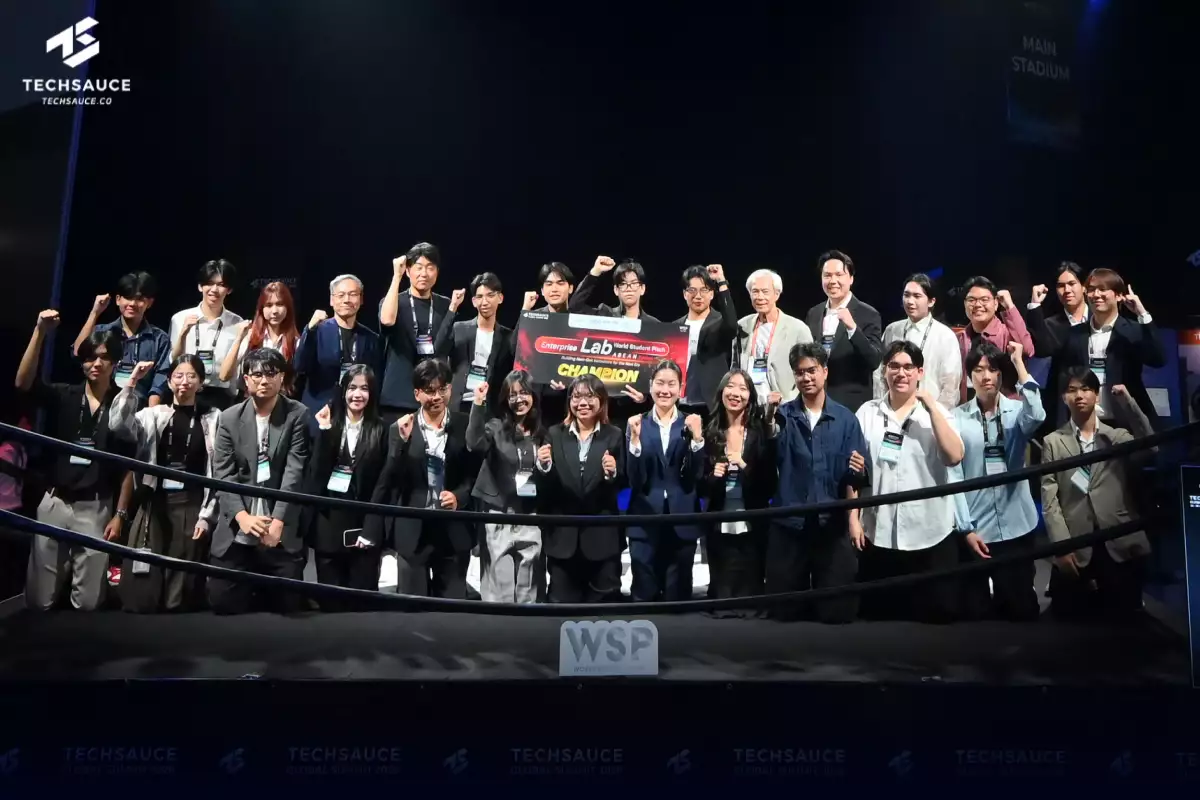
Student team Ctrl_A took the Grand Prize at Enterprise Lab: World Student Pitch ASEAN Edition 2026 with YARDS, an AI scrap steel grading system, beating eight other finalists at Te...
0