Key Takeaways from “AI Leap” with Jason Kwon, CSO of OpenAI
“Thailand ranks number one in using ChatGPT for translation.”
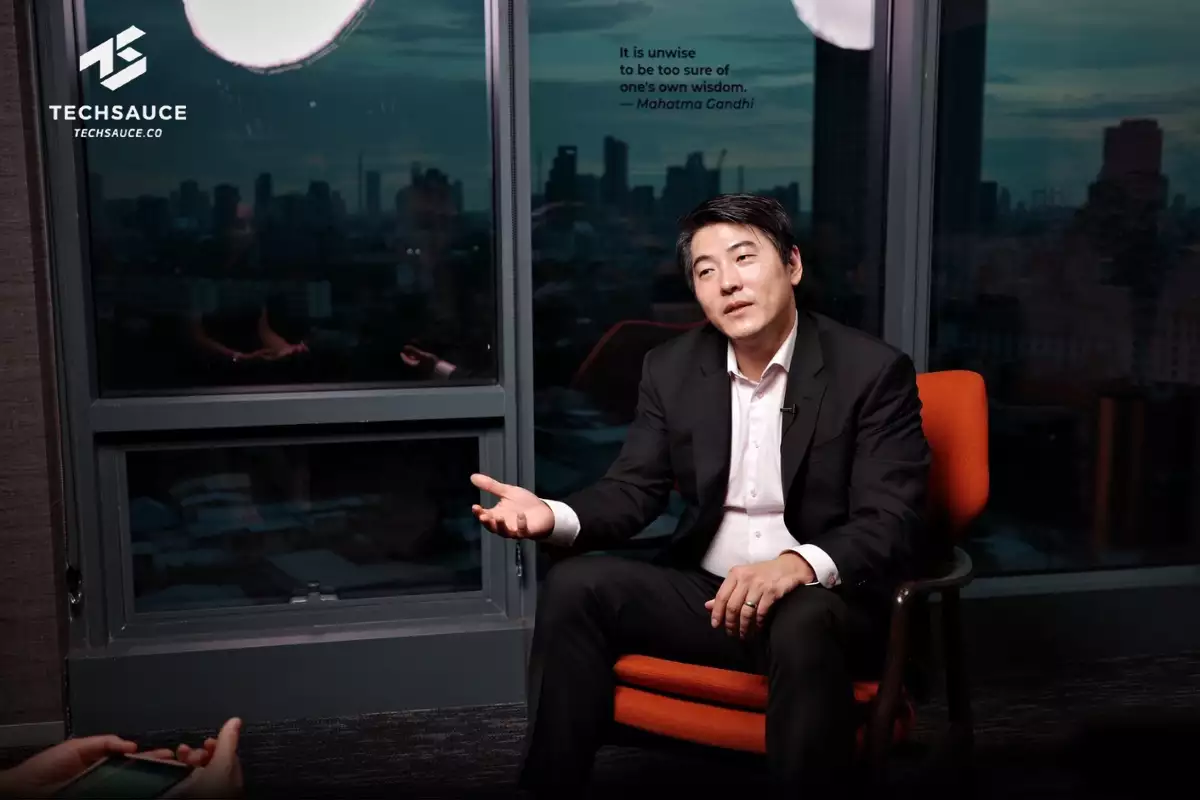
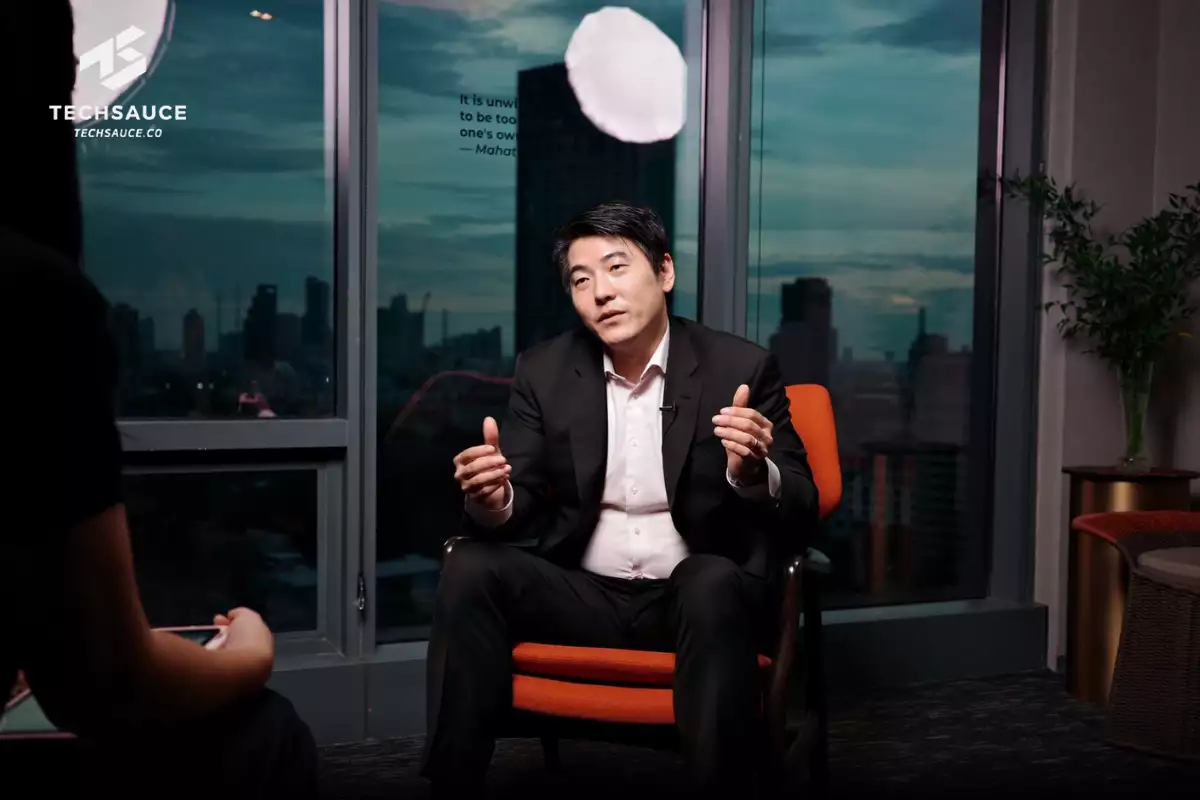
That was the remark of Jason Kwon, Chief Strategy Officer (CSO) of OpenAI, who visited Thailand for the first time at the invitation of Woody–Wuthithorn Milintachinda. Together with the House of Wisdom (H.O.W.), they hosted an exclusive session for H.O.W. members, with a deep-dive interview moderated by Krating–Ruengroj Poonpol. Techsauce compiled all the key insights directly from one of the leaders behind OpenAI.
Why Thailand’s “Optimism” Stands Out
Woody began with a simple question: “How many times have you been to Bangkok?” Jason smiled and replied, “Zero—this is my first time.” Yet in a short time, what he discovered was profound.
“What stands out and is truly tangible in Thailand is optimism,” Jason said. “And that is an invaluable factor.”
He recalled the early days of OpenAI: “When we started the company, many in the AI research community laughed at us. They thought scaling laws (increasing model size and data) were nonsense. But what made our team different from perhaps smarter researchers in other labs was the belief factor. We simply believed strongly this was the right direction.”
Jason connected this to Thailand’s potential: “The attitude here is different. Compared to countries with similar economic profiles, the difference can come down to optimism and belief. That’s the fuel that lets a nation seize opportunities from this technology.”
Krating added: “This isn’t new—it’s part of Thai DNA. Thais have always been fast adopters and fast learners.”
Jason confirmed with data: raw usage of OpenAI products in Asia grew 4x year over year, a staggering growth rate—with Thailand among the leaders.
In Thailand specifically, the largest group of ChatGPT users is aged 18–24, and the top use case is translation, followed by seeking advice and self-care—showing how AI is being applied directly to personal life.
AI as a Multiplier of Human Potential
Individual Level: From Specialist to “Superhuman”
Krating shared a real case: “One of my team members was a designer, but now he’s become a full-stack product manager. With ChatGPT, he analyzes user behavior data and does data science himself without waiting for the data team. It empowers talented people to become multi-skilled superhumans.”
Professional Level: Restoring True Value to Work
A powerful idea is using AI to handle repetitive, administrative tasks so professionals can focus on their essence. “We can use AI agents for tedious paperwork—to turn back doctors into doctors, nurses into nurses—so they can spend time with patients. Same with lawyers or hotel staff: returning them to the true heart of their profession,” said Krating.
Humans and AI: Collaboration, Not Replacement
On education, Jason suggested teachers shift from worrying about students using AI to cheat, to evaluating the prompting process—whether students write good prompts and iterate effectively—rather than just the final output. This reframes AI as a learning enhancer, not a shortcut.
Krating emphasized: “AI alone cannot change the world. It’s humans who use AI that change the world.” AI amplifies humanity—both good and bad—and it’s up to humans to use it for solving problems, like Thailand’s PM 2.5 air pollution crisis.
They also touched on Super Alignment—ensuring advanced AI systems’ goals remain aligned with humans. This requires global collaboration.
Creativity: Breaking Barriers Between Imagination and Reality
Jason recalled meeting artist communities in South Korea: “Many had creativity and spirit but lacked technical skills. AI became the bridge, turning impossible ideas into tangible art.”
Krating added: “Thailand is a creative powerhouse—we’ve won countless Cannes Lions awards. Thai ads are famously funny, dramatic, emotional. Imagine Thai creators using AI to easily produce high-quality short films, even creating a Netflix-like platform where users can click to generate personalized movies.”
He also shared KBTG’s bold policy: “By New Year, half of employees must work with AI, and the other half must understand AI. No one in the office will be AI-illiterate.” The impact is dramatic: in software development, productivity increased 10x—from writing 1,000 lines of code a day to 10,000.
But more profound than numbers is the shift in human roles. Jason stressed: “The real obstacle to AI adoption isn’t the technology—it’s redesigning entire workflows. People must shift from executors to solution architects.”
The Era of “Agentic AI”
Jason described the evolution:
- 2 years ago: AI was for summarizing articles.
- Last year: AI accelerated software coding.
- Now: AI is beginning to reason, enabling complex scientific experiments—like OpenAI’s work with Retro Biosciences on anti-aging.
- Near future: AI will integrate with digital systems to take actions for us.
“It will understand your goals through conversation, plan how to achieve them, and connect with systems to make them real online. That’s Agentic AI.”
He compared it to the internet: “30 years ago, the internet was noisy dial-up, confined to desktops. Today it’s in TVs, cars, watches—everywhere. AI will follow the same path. From a few apps today, intelligence will be embedded in everything, and you’ll converse with it naturally.”
Thailand’s AI Strategy
AI Sovereignty – Should Thailand Build Its Own AI?
On sovereignty, Jason was pragmatic: “No country does everything alone—not even the US. For example, in the US, Advanced AI requires importing HBM chips from South Korea and processors from TSMC in Taiwan. The key is identifying a nation’s strengths and focusing resources there, rather than building a full-stack AI system unnaturally.”
The AI-Native Startup Wave
Krating noted: Thailand’s agricultural sector has high employment but low productivity. Affordable AI tools can lower barriers, letting Thai developers create tailored solutions quickly—similarly in healthcare and services. This is the golden opportunity for AI-native startups to emerge and scale.
He added: “The smallest unit that can drive this is at the national level, not just individuals or companies. It requires governance, regulation, and safe data-sharing policies.”
OpenAI’s Core Mission
Jason reiterated OpenAI’s mission: ensuring AGI benefits all humanity—making models powerful, safe, and widely accessible.
“Partnerships with governments and organizations in ASEAN are vital to understanding diverse needs worldwide and ensuring AI’s benefits are distributed fairly. The ultimate goal is an AI future that amplifies human potential, not replaces it.”
The session closed with clarity: AI is not just a trend but an unstoppable wave of transformation. The real question isn’t “Will we be replaced?” but “How will we use this powerful tool to expand our potential?”
The AI Leap highlights that AI is not just another tool—it’s a fundamental shift requiring strategic adaptation at every level—from individual skills to organizational policies to national strategies—to ensure this leap leads to a brighter, sustainable future for all.
ลงทะเบียนเข้าสู่ระบบ เพื่ออ่านบทความฟรีไม่จำกัด

When AI Chooses for Your Customer: Accenture Song on the New Rules of CX
Accenture Song's Tuomas Peltoniemi on how AI agents are taking over customer decisions, and the five lessons brands need before the buyer stops being human....
 0
0

20 Years of Lessons from DeeMoney's CEO Technology Moves Information, but Trust Is What Moves Money
DeeMoney co-founder and CEO Aswin Phlaphongphanich unpacks the unspoken facts of global payments at Techsauce Global Summit 2026: there is no global transfer network, payment firms...
1
Some parts, I admit, were difficult challenges for me. But I have to thank the team for believing in me when others said it couldn’t be done....
0