In Conversation with Eric Tse, Heir to One of China's Leading Pharmaceutical Groups, on Lessons from SBP Group's 20-Year Path to Global Success
The Tse family member who pioneered and built a major pharmaceutical business in China is Tse Ping, an heir of the family's Chinese lineage. He founded Sino Biopharmaceutical (SBP Group) and CTTQ. What is particularly interesting is that the acronym CTTQ comes from CHIA TAI TIANQING PHARMACEUTICAL GROUP CO., LTD., placing the name "Chia Tai," a mark of the family's origins, on one of China's leading pharmaceutical companies.
In this article, Techsauce had the opportunity to speak with Eric Tse, the son of Tse Ping, who has fully taken over as Chairman of CTTQ and CEO of SBP Group. The conversation explores his vision for leading the company, the direction of China's pharmaceutical industry as it disrupts the global market, and, most importantly, how "Thailand" can play a role and capture opportunities within this equation.
The Company's More Than 30-Year Journey in China's Pharmaceutical Arena
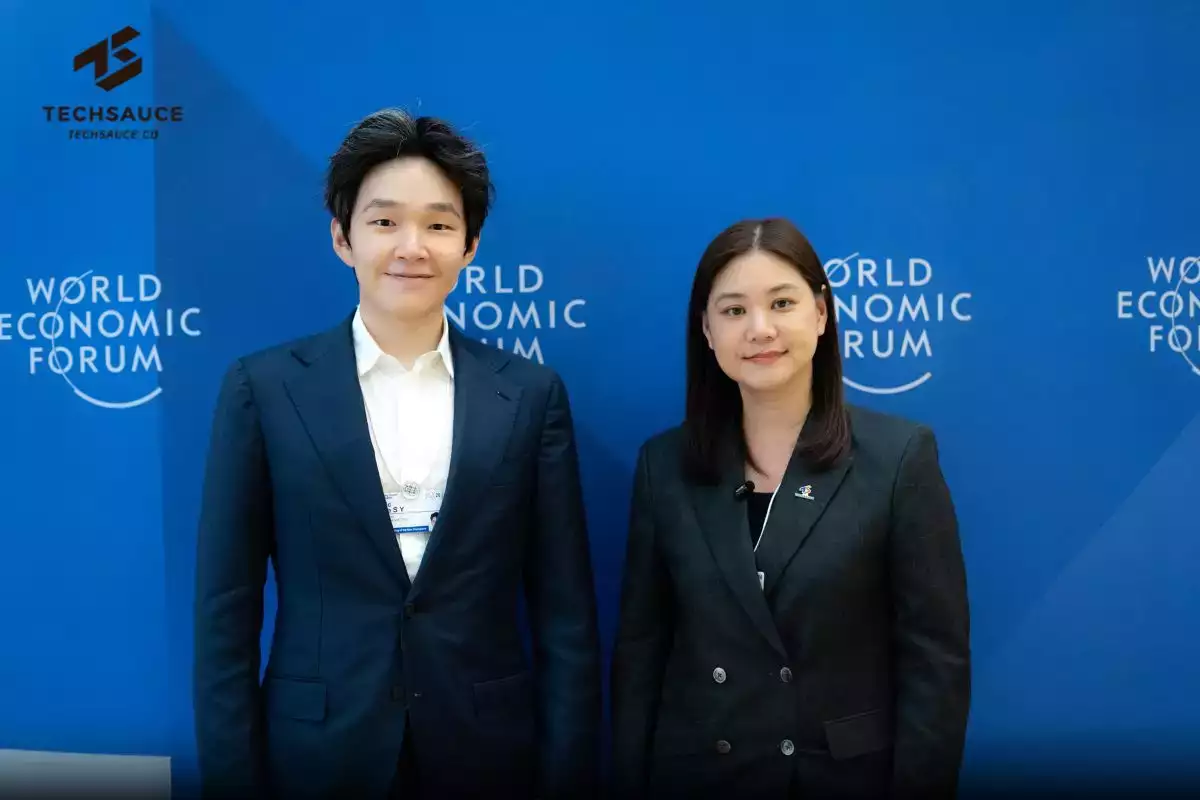
Eric Tse defines the company's identity as pioneer innovation, or being an innovation pioneer rather than a follower.
He began by explaining that the company's origins are deeply connected to Thailand. It is part of Charoen Pokphand Group, Thailand's largest conglomerate, whose name is recorded as the first foreign investor willing to cross the wall and invest in China as early as 1978. The pharmaceutical business then began in earnest in the 1990s. From a small starting point that few paid attention to, the company gradually accumulated knowledge and grew steadily until it became one of the leading players in China's pharmaceutical industry today.
But that was only the beginning. The next goal Eric is pushing the organization toward is to move beyond the image of being a domestic player and elevate its capabilities to become a full-fledged global player. The transition is from a company that grew in China into a Chinese innovative pharmaceutical company with a significant role on the international stage.
Before reaching that point, Eric took us back through the company's path in China's pharmaceutical arena, which covers treatments ranging from oncology, hepatitis, respiratory diseases, surgery, pain medication, cardiovascular diseases, and metabolism, to a new piece of the puzzle it is now moving into: immunology.
The real highlight of this conversation, however, is a business decision that outsiders might look at and wonder how the company dared to make it.
Originally, pharmaceutical companies had something like a gold mine that could be mined continuously: generic drugs. This business model generated money comfortably, came with low costs, delivered reliable profits, and did not require companies to shoulder the risk of pouring research budgets into work that could take more than a decade. Instead of holding on to this safe zone, Eric chose to walk away from that gold mine and put the company's full force behind self-developed innovative drugs. It is a game that is more expensive and riskier, but if successful, it can reshape the industry permanently.
Eric illustrated this organizational transformation with numbers that immediately reveal the scale of change.
- A transformed revenue mix: In 2019, only 10% of the company's sales came from innovative drugs. By the time of our conversation, that figure had surged to 50%.
- Fueling the future: The research and development (R&D) budget expanded from 2 billion yuan to 6 billion yuan per year.
- The future is in hand: More than 90% of the company's current drug development pipeline has already become innovative drugs.
What amazes him most, and what he is most proud of, is that amid this historic transformation, the company's total revenue did not stumble at all. It has continued to maintain double-digit growth every year, with revenue up about 50% compared with 2019.
US$130 Billion as the World Turns to Chinese Research
One of the questions we asked Eric was about the value of licensing deals from China, which surged past US$130 billion over the past year. What does this enormous figure signal about the global pharmaceutical industry?
For Eric, this is more than an exciting success figure. It is a "strategic turning point" that reflects the world's official recognition of the quality and speed of research coming from China.
He explained that, in the past, global multinational pharmaceutical companies may have seen China only as a low-cost production base. Today, that current has completely changed direction. Those companies have become the ones that need to accelerate in order to keep up with Chinese innovation, and many have chosen to reduce risk by quickly entering partnerships with pharmaceutical companies in China before they miss this important train.
What Eric emphasized firmly is that the success visible today did not happen overnight.
He sees it as the result of relentless investment accumulated over more than 20 years. Today is simply the period of harvesting the results of what was patiently sown. This is perhaps the most important lesson for every developing country that wants to elevate its own pharmaceutical and public health capabilities.
When AI Compresses 10 Years into 2 Years, Where Is the New Wall in Pharma?
When we brought up AI, most people might expect a striking answer about discovering new drugs. Eric Tse instead took us into a perspective that challenges familiar assumptions. He pointed out that AI today is not yet a large language model (LLM) that can immediately understand everything in the pharmaceutical universe. It is a precise tool, highly capable of solving specific problems. This is the point that completely changes the rules of competition.
Eric showed how AI has broken down the difficulty barrier in drug discovery, compressing a process that used to take a decade into just two years or less. When discovery is no longer as difficult or time-consuming as in the past, the real wall moves to clinical development, a battlefield that consumes both enormous capital and long timelines. This is the point that determines who will win in the market. At this stage, speed and quality are the core requirements, and Eric is confident that China has a stronger advantage than anyone else.
The 3 Layers of AI That Are Changing the Industry
To make the picture clearer, Eric divided AI's role into three layers that help accelerate organizational efficiency.
- Early Research Layer: Uses AI to deepen early-stage research, improve accuracy, and shorten the time needed to screen drug molecules.
- Clinical Development Layer: Uses AI to manage data and clinical trial processes, which are among the most complex and capital-intensive stages.
- Management Layer: The management layer already used across many industries, where AI reduces repetitive work, improves operational excellence, and turns organizational knowledge management into a valuable asset.
Before ending this point, Eric left a statement that reflects adaptation in the AI era:
AI will not replace humans, but people who know how to use AI will replace those who do not.
Recommendations for Thailand's Ambition to Become a Regional Medical Hub
When the conversation arrived at a key milestone, Thailand's ambition to become a medical hub and a regional center for clinical trials, Eric Tse proposed that the Thai and Chinese Ministries of Public Health work together to build a mutual recognition system, or a mechanism through which the two countries can mutually recognize clinical data.
Eric believes that if countries and regions along the Belt and Road Initiative collaborate to recognize one another's clinical trial data from Phase 1 to Phase 3, it would become a powerful business shortcut. Once a drug is approved by one member country, another country could then approve it for distribution immediately.
This is a major opportunity for Thai startups and pharmaceutical companies. It means that innovative drugs developed and approved in Thailand, even if they have not yet gone through the lengthy process of the US FDA, could use this system and Chinese recognition to scale immediately into China's massive market, before using it as a springboard to expand into Western markets in the future.
But this deal comes with important conditions from Eric:
- Strategic Selection: Thailand must choose hospitals and clinical trial centers wisely.
- Data Quality: The country must control the standards of data collection and patient sample groups to an international level, ensuring that the data quality is credible at the same standard.
If this ecosystem truly emerges, the bottleneck in treatment development will disappear. Innovative drugs will be pushed into the market at a much faster pace, not only in China. Thailand's public health system will also benefit directly through access to new treatments that answer the needs of patients with unmet medical needs, or diseases that still do not have definitive cures.
Source: Interview with Eric Tse, son of Tse Ping, who has taken over as Chairman of CTTQ and CEO of SBP Group.
ลงทะเบียนเข้าสู่ระบบ เพื่ออ่านบทความฟรีไม่จำกัด

The Future of Fintech in SEA: A Perspective from Shayan Hazir
The digital age is driving exponential growth across various industries, with Fintech emerging as a frontrunner, rivaling even AI. In Southeast Asia, where Singapore stands as a fi...
 0
0

Developing a business encounters a range of challenges and problems. What matters more is that how these companies overcome pitfalls and continue to grow and thrive. This time, Tec...
0

Thai Wah Driving Food Innovation in Thailand
The biggest challenge for food innovation is creating a culture that acts quickly to provide the best quality food for consumers and add value from farm to shelf. . Today we have...
0