
When AI Chooses for Your Customer: Accenture Song on the New Rules of CX

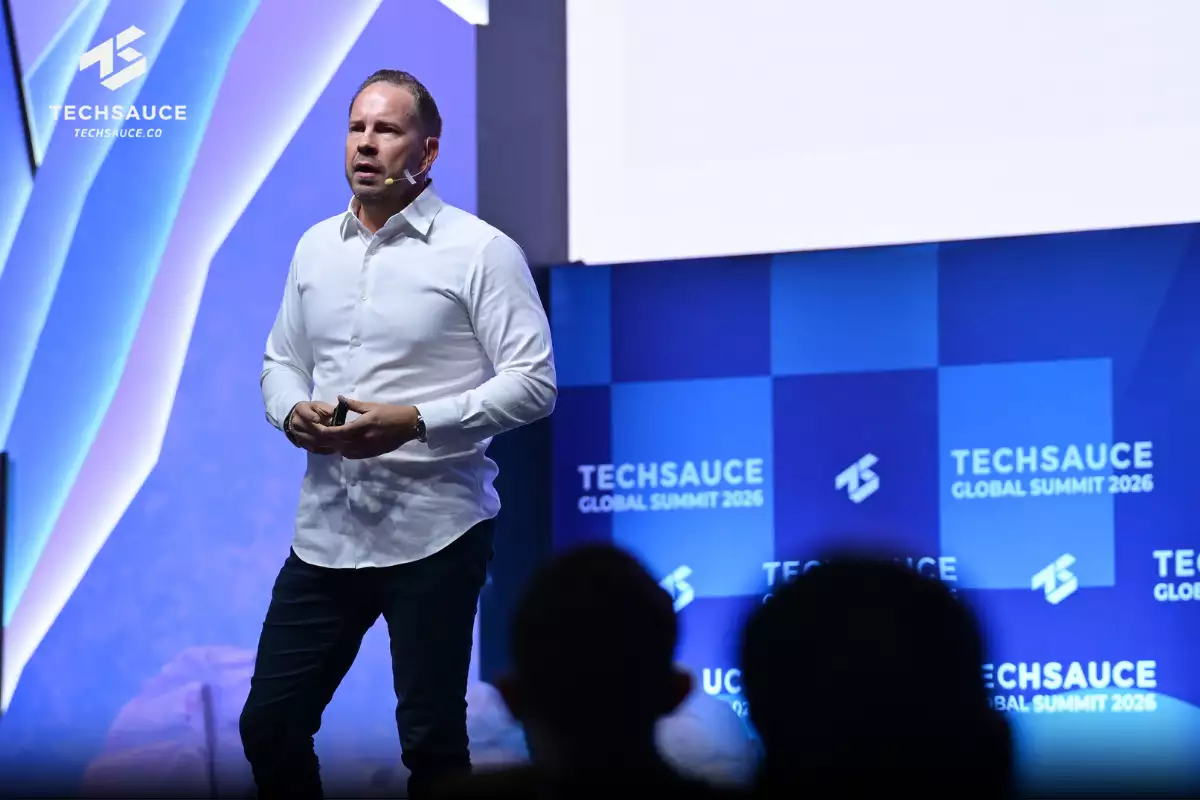
Picture an AI system watching the surf forecast in Bali. The moment conditions line up, it finds flights and accommodation, bundles everything into a single proposal and sends it to a group chat. Once the group agrees, the AI agent can handle the rest. This was the opening scenario for Owning the Experience: CX for the Agentic Era, a session led by Tuomas Peltoniemi, Managing Director, Design & Digital Products Lead, Accenture Song Southeast Asia, at Techsauce Global Summit 2026. It captured a fundamental shift: Customers are no longer assembling the whole experience themselves. They are starting to hand parts of it to AI agents that can weigh the options, decide and act on their behalf.
Control over the customer experience is changing hands. It belonged to the brand, then moved to consumers as they searched and built their own journeys, and it is moving again, this time to AI agents, software assistants that can decide and act for the person who owns them. Peltoniemi set out five lessons for brand owners from that shift, drawing on Accenture's Consumer Pulse Research, a survey of 25,590 consumers across 16 countries conducted between 7 and 22 January 2026.

Lesson 1: The power to design the experience is moving to AI agents
None of this is unprecedented. Every era of commerce over the past two or three decades has changed the answer to who owns the customer. In the industrial era, companies decided what to sell and how to sell it, and customers picked from what was in front of them. The web put buyers in charge of assembling their own experience, at the cost of a dozen open tabs and manual research at nearly every step.
Consumers are now less willing to pay that cost in time. Many are searching less on Google and asking large language models (LLMs) such as ChatGPT or Claude to recommend products and services instead. That makes AI agents significant new intermediaries between consumers and brands, and increasingly the layer where the experience is assembled. The research suggests the shift has gone further than many brands assume. Some 74% of respondents said they would trust a personal AI agent more than their best friend to make a purchase for them, a figure Peltoniemi described on stage as strikingly high. Executives are reading it the same way, with 70% expecting AI agents to take on direct decision making in marketing and sales within three years.

Lesson 2: Customers do not delegate to AI equally
Break the research down by level of delegation, and the picture sharpens. Some 85% of respondents are open to deciding what to buy together with AI, and 74% are open to letting an AI agent carry out specific tasks such as negotiating a deal or resolving a complaint, while 9% are already willing to hand over the decision and the payment for an agent to complete on its own.
Headline figures, though, are difficult to act on without knowing where that willingness applies. Accenture built a tool for exactly that, the Delegation Dial, which maps how far consumers are prepared to hand authority to AI. At one end sit emotional, high-value categories such as skincare, beauty and travel, where people want help thinking it through but do not want the decision made for them. At the other end sit subscriptions and the weekly household shopping, repetitive enough that many have already let an AI agent run the purchase from end to end.
A millennial respondent in Hong Kong put it plainly.
'It's fine if an AI agent handles my plane tickets, but when it comes to choosing a hotel room, I want to decide for myself. The little details matter, the view, the position of the room, the feel of the room.'
More significantly still, the dial is not a fixed setting for a type of customer. It moves within one person from moment to moment. Peltoniemi took a first-time home buyer as an example. Choosing a neighborhood carries too much emotion to delegate, and few people would let an agent make an offer on a house, yet working out what is affordable and arranging loan protection are already tasks many would happily pass to an agent. For brands, the job is therefore not simply to find where their category sits on the dial, but to design experiences that hold up as the dial moves across the journey.
Lesson 3: Organizations need to design the customer journey, not the channel
When decisions are spread across so many points, organizing the work channel by channel stops being enough. Plenty of organizations still shape both the experience and the team structure around channels. Peltoniemi described a client that still runs separate teams for its mobile app and its website, even though what actually needs an owner is the journey from end to end.
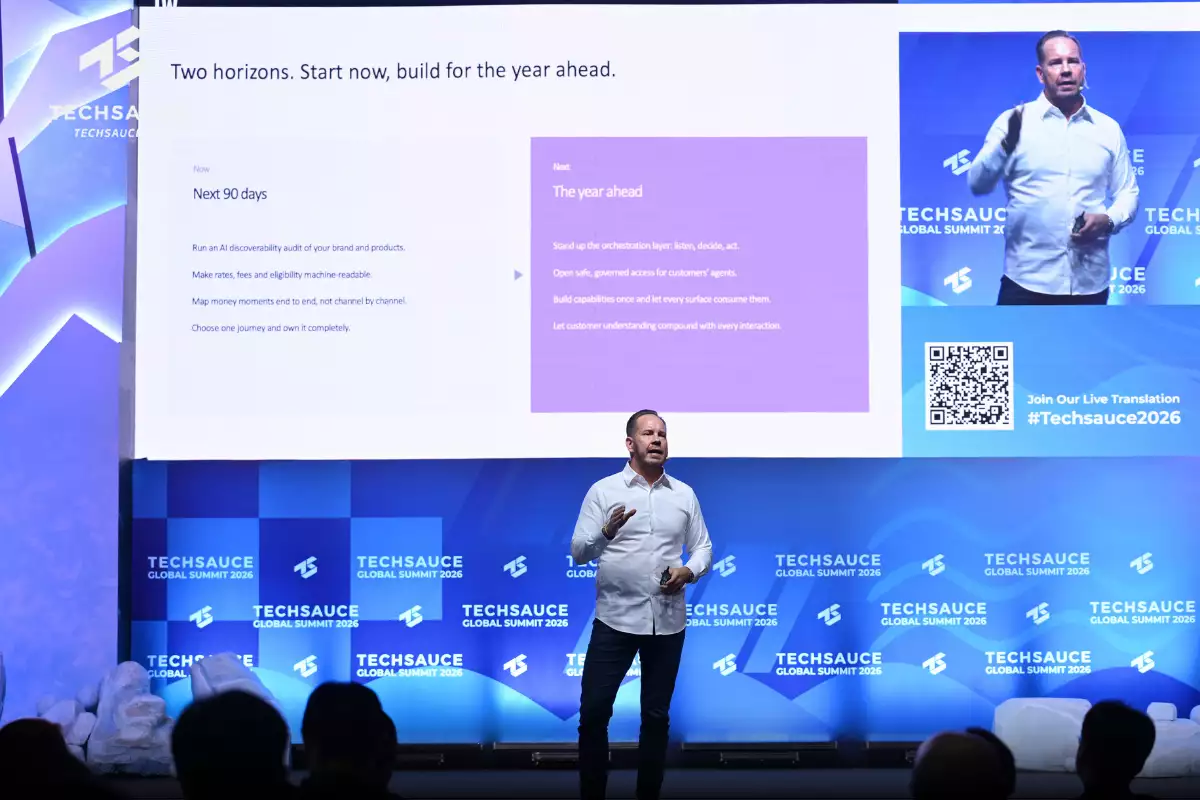
Three shifts are already underway. The first is from thinking in channels to being present wherever a customer, or a customer's AI agent, chooses to make contact. The second is from building services channel by channel to what Accenture calls orchestrated intelligence, a single layer that listens, decides and connects customers to the services behind it. The third is from systems wired along fixed paths to composable capabilities, built once and made available to every channel.
What links all three is a simple principle: intelligence cannot stay locked inside a channel. An agent that makes decisions without visibility across the enterprise will produce weaker answers than it otherwise could. The goal is a customer who can come in through any door and still get a continuous experience from an agent working with the same context.
Peltoniemi illustrated what that makes possible with a banking example. If the agents behind the scenes can see the whole picture, from salary cycles to credit scores to the products a customer already holds, the bank may be able to tell a customer and their partner, in their own chat, that they are ready to buy a first home before any application is filed. The bank wins the customer without waiting, and the customer gets an answer without filling in a form. Once the loan is approved, everything that follows, from insurance to transfers and deposits, can sit in one place.
The services beyond the bank's own products are more interesting still. Open those services to agents from other companies, and the entire move-in day, from water and electricity to internet and movers, might be arranged in a single conversation with a personal AI agent, rather than provider by provider as it is today.
That is why, in Peltoniemi's view, the question he hears most often from enterprise clients is the wrong one from the start: How do we add AI to our channels? The better question is how to expose the organization's full set of capabilities for AI to use, because the task is not to bolt AI onto one channel at a time but to build a single AI layer that reaches across the enterprise.
In practice, he advises against trying to fix everything at once. Pick one customer journey and get it right; for a bank, that might be home buying. Laying the groundwork for the year ahead means standing up an orchestration layer that brings the brand's services and its partners' services together, and opening safe, well-governed access to customers' own AI agents, as Marriott has done by letting customers connect a personal agent that books rooms according to their preferences.
Lesson 4: Brands need to win both human hearts and machine evaluation
Once an organization's capabilities are legible to AI, the obvious question is what a brand still stands for. Peltoniemi's answer is that brands now have to serve human customers and the AI agents acting for them. The way through is not to choose a side, but to win the customer's heart and pass the AI agent's evaluation at the same time. These are two briefs, running at once.
The first brief is familiar ground for brand builders: emotional resonance, identity, self-expression, and the joy or connection that leads someone to choose one brand over another. It comes down to identifying the moments customers refuse to delegate to anyone, human or agent, and winning those moments.
The second brief is much newer. It is computational legibility, or how well machines can read and interpret what a brand publishes. The basic question is whether an agent can read a brand's website at all. Peltoniemi cited Oreo as an example, noting that its assessment found only 10% of agents could read the relevant information on its website. If a brand of that scale runs into the problem, he argued, many others are likely to face the same challenge.
Failing that test means dropping off the list of recommendations. A brand with no structured product data, and with certifications sitting on its site as design assets that cannot be verified, will not surface in the answers ChatGPT or Claude give consumers who now rely on them heavily. Two more factors carry as much weight: transparent pricing and a track record of fulfillment. Agents are already assessing how reliably a company delivers, which gives customer reviews real influence. Peltoniemi pointed to the partnership between OpenAI and Reddit, under which OpenAI accesses Reddit's Data API to help its tools understand and surface structured, real-time Reddit content. For brands, the practical consequence is that what customers say in public can be set against what a brand claims on its own website.
Two things can start immediately. The first is an AI discoverability audit, to establish whether agents can find the brand at all, given how many brands still block AI from collecting information on their own sites. The second is making fees, rates and eligibility criteria machine readable through a product schema.
Even so, going all in on one side is not the answer. A brand optimized for agents but empty of meaning for people will still lose wherever human judgment decides, and a brand that wins hearts but stays invisible to agents will not reach the shortlist in the first place.
Lesson 5: Future loyalty will rest on evidence and relevance
Because agents judge on evidence rather than feeling, the shift reaches the asset that brands have spent the longest building: loyalty. Peltoniemi used himself as the example. He has been buying Nike sneakers for 20 years, but if his AI agent concluded that another brand suited him better, he suspects he would take its advice. Loyalty becomes conditional, and AI now mediates the condition.
Figures from the same research back the observation. Among behaviorally loyal customers, the ones who always pick the same brand, 37% would accept an agent's recommendation and switch to a brand that fits them better. Promises a brand cannot keep are one reason an agent points elsewhere. That leaves two things to get right: keeping information consistent everywhere the brand appears, and showing up at the moments the brand genuinely fits, while being willing to step aside when it does not.
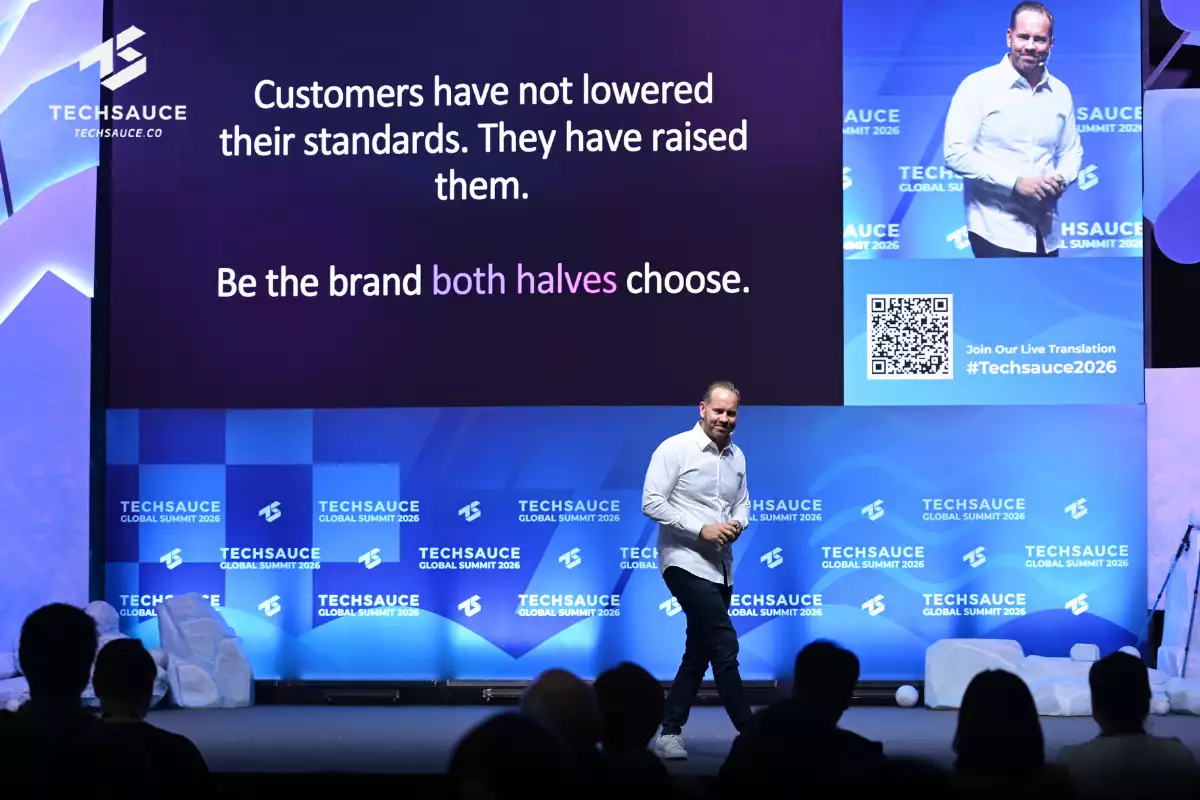
The central message from the session is that AI agents are not lowering customer expectations. They are raising the standard, because these systems can compare options, check claims and weigh outcomes across far more data than a person can, and far faster.
Brands therefore have to do two things at once: build the meaning that makes people want to choose them, and build the data and services that let AI agents discover, understand and connect to them safely.
In the era of agentic CX, the brands with the greatest advantage may not be the loudest. They will be the ones that are relevant, credible and ready to be chosen, by customers and by the AI agents acting on their behalf.
Source: Owning the Experience: CX for the Agentic Era, Techsauce Global Summit 2026, and Consumer Pulse Research by Accenture
ลงทะเบียนเข้าสู่ระบบ เพื่ออ่านบทความฟรีไม่จำกัด



20 Years of Lessons from DeeMoney's CEO Technology Moves Information, but Trust Is What Moves Money
DeeMoney co-founder and CEO Aswin Phlaphongphanich unpacks the unspoken facts of global payments at Techsauce Global Summit 2026: there is no global transfer network, payment firms...
 1
1
Some parts, I admit, were difficult challenges for me. But I have to thank the team for believing in me when others said it couldn’t be done....
0

When Finance Must Shift from Recovery to Driving the Future
From the session “Olympics of Finance: Synergy for the New Frontier of Growth” at Techsauce Global Summit 2026, held on August 26, 2026, at the Main Stadium....
0