Team Thailand Economic Strategy: Dr. Ekniti on AI and Davos 2026
The World Economic Forum 2026 stage heated up with discussions on superpower realignments and the full-scale transition to the AI era. For Thailand, this year marks a significant milestone. Techsauce sat down with Dr. Ekniti Nitithanprapas to discuss the new Team Thailand economic strategy; a coalition of public and private leaders designed to ensure businesses survive in an era of shaky global geopolitics. We explore the background of the mission to place Thailand in the global spotlight and the tactics needed for Thai businesses to thrive.
Techsauce sat down with Dr. Ekniti Nitithanprapas, a key leader of Thailand's economic team, to discuss the background of the mission to place Thailand in the global spotlight and the strategies that will ensure Thai businesses survive in an era of shaky global geopolitics.
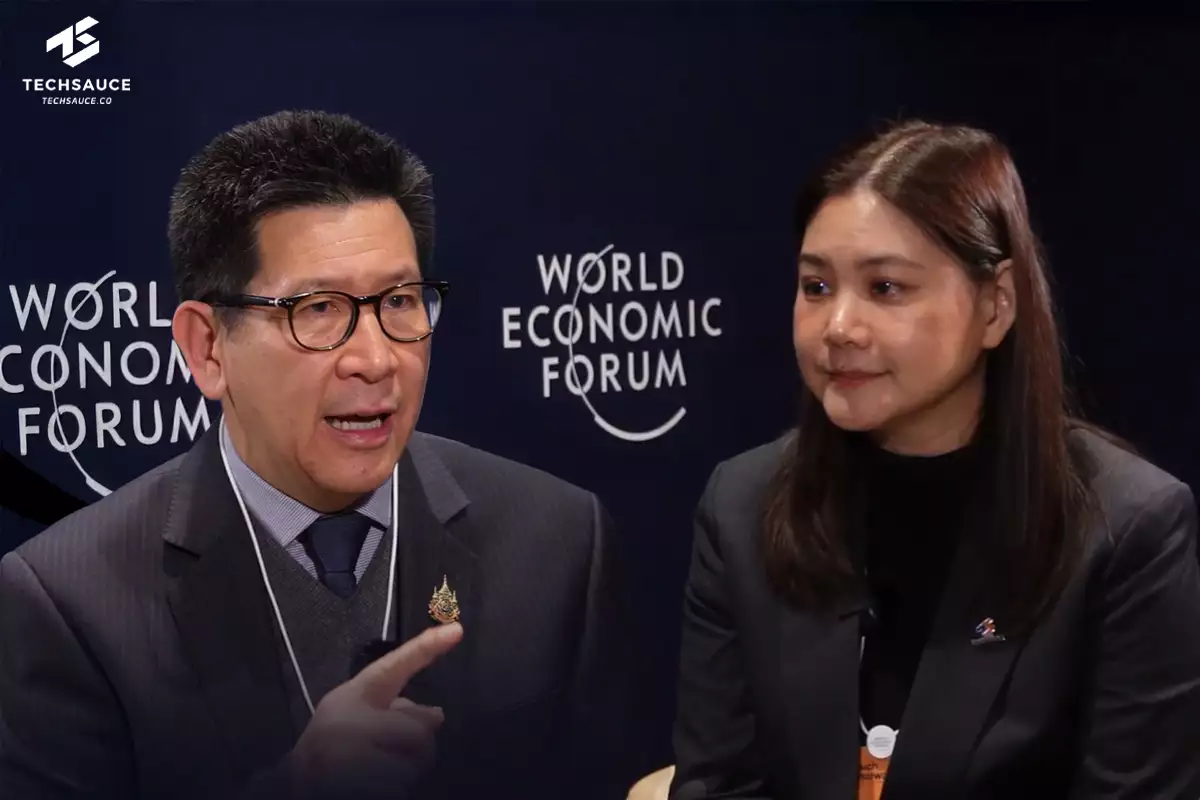
Mission "Team Thailand": Placing Thailand in the Global Spotlight
Dr. Ekniti began by explaining the "Team Thailand" concept, which is a rarity on such a level. This visit wasn't merely about attending meetings; it was about clearly positioning the country.
"We held planning meetings beforehand to ensure everyone spoke with 'One Message,' communicating Thailand's image in a unified direction. This carries immense power on a global stage where world leaders and top business figures gather."
The mission focused on three key goals:
- Spotlight on Thailand: Returning Thailand to the radar of global leaders.
- Showcasing Potential: Declaring readiness to host the IMF and World Bank meetings this October, where financial leaders from 190 countries will converge on Thailand.
- ASEAN Vision: Demonstrating vision as a regional leader amidst a turbulent world driven by the return of "America First" policies.
When Neutrality is an Advantage in a Polarized World
One of the most interesting takeaways from the interview was the perspective of foreign investors toward Thailand. Dr. Ekniti revealed that amidst Trade Wars and US-China tensions, Thailand's neutrality has become its most powerful asset.
The best evidence of investor confidence in this neutrality is the number of investment applications to the Board of Investment (BOI), which surged by 93% over the past year.
This phenomenon didn't happen solely because of tax incentives, but because Thailand has proven itself a true "Safe Haven" for strategic industries, particularly in Smart Electronics and Printed Circuit Boards (PCB), which are the heart of modern technology.
Dr. Ekniti revealed that major global corporations are currently planning investments in Thailand, focusing on Bio-based Solutions (upgrading raw materials like sugarcane into high-value products) and the Wellness and Longevity sectors, which are Thailand's traditional strengths.
These interests reflect that investors view Thailand as a distinctively neutral space in a deeply polarized world, using it as a critical Springboard to distribute investment across the ASEAN region. Today, ASEAN's strength lies in the complementary nature of its members, such as Malaysia’s expertise in semiconductors or Vietnam’s strength in IC design. ASEAN unity is, therefore, a key advantage that Thailand must seize.
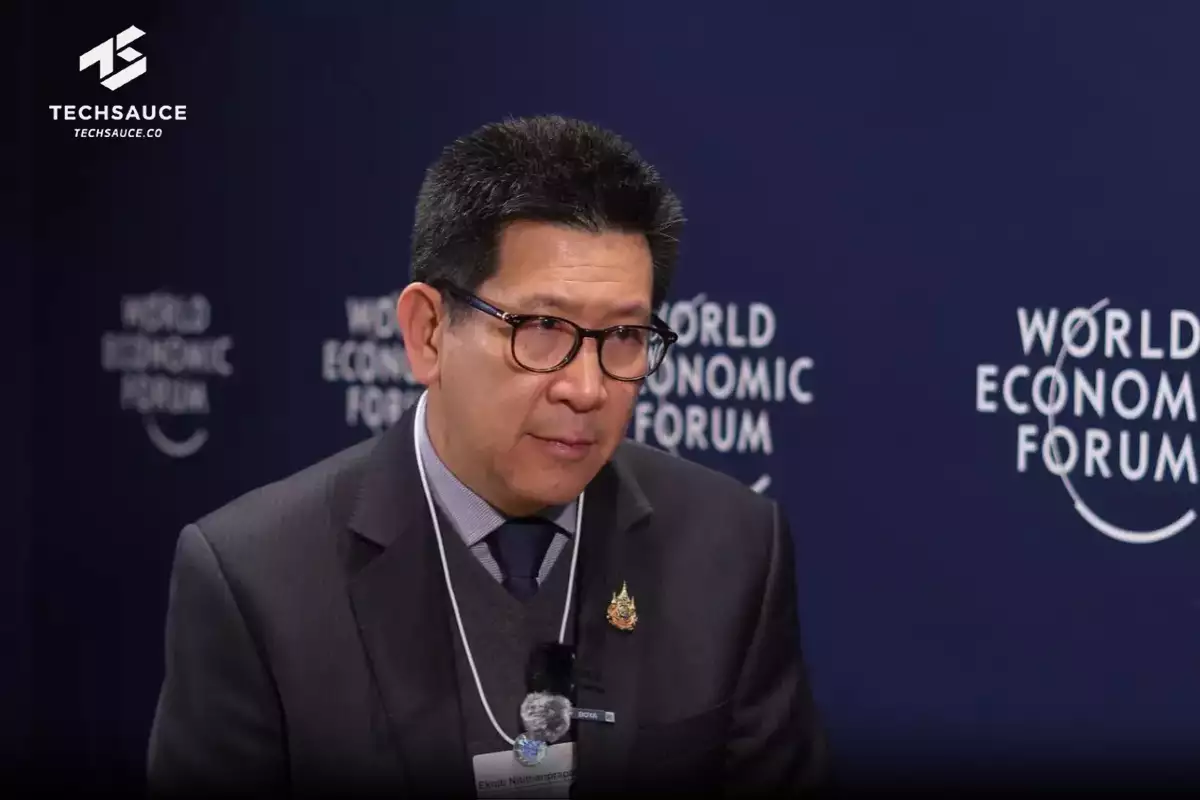
SkillBridge: Building a Bridge Between Human Skills and the AI World
Amidst foreign investors' questions regarding Thailand's frequent political transitions, Dr. Ekniti built confidence by pointing out that the Thai business sector remains resilient and moves forward regardless of the political context, with agencies like the BOI working uninterrupted.
However, in discussions with global tech companies, Dr. Ekniti did not just discuss politics; he acknowledged and aimed to fix the country's critical weakness: Labor Skills. This led to proactive negotiations asking these investors to participate in elevating the potential of Thai people, ensuring that high-tech investments don't just result in production bases, but in genuine knowledge transfer to the Thai workforce.
The core solution to the human resource issue is the SkillBridge project, inspired by Singapore’s SkillsFuture model. This project acts as a bridge connecting Thai labor skills with the demands of the modern job market.
Dr. Ekniti has engaged entrepreneurs investing through BOI measures to directly specify the skills they need. Thais are then given the opportunity to learn via digital platforms and AI technology, ensuring that learning leads to quality employment.
Furthermore, Dr. Ekniti sees a different kind of opportunity for Thailand as it rapidly becomes an aging society with a low birth rate.
"In other countries, they might fear people losing jobs. But in Thailand, we lack people. AI will come in as a crucial assistant to increase efficiency for a shrinking workforce and help care for the elderly through the Wellness industry, which we specialize in."
Risk Management in the Geopolitical Era: When Geopolitics Affects Our Livelihoods
For modern businesses, entrepreneurs, and SMEs, focusing solely on cash flow or traditional financial management is no longer enough. Geopolitics must be incorporated as part of the core survival strategy. Dr. Ekniti pointed out that the fluctuation of global powers—especially the direction of superpowers like the US—drastically affects global markets and is acting as a catalyst for major change.
Thai entrepreneurs who previously relied on a single main market must urgently diversify risks and look for opportunities in new markets, particularly in a strengthening ASEAN. They must also accelerate the use of Free Trade Agreements (FTAs), such as the Thai-EU FTA, to create diverse options and reduce the impact of unpredictable superpower policies.
Amidst this geopolitical crisis, the key for SMEs to overcome obstacles is the urgent adoption of Artificial Intelligence (AI).
Dr. Ekniti emphasized that AI is not a distant concept, but a tool to significantly reduce costs and increase production efficiency. Entrepreneurs must shift their mindset from traditional business to "arming" themselves with technology to create agility and speed in adapting to a world that changes every second. Leveraging AI will help SMEs analyze data, find new markets, and create a competitive advantage when old cost structures can no longer compete on the world stage.
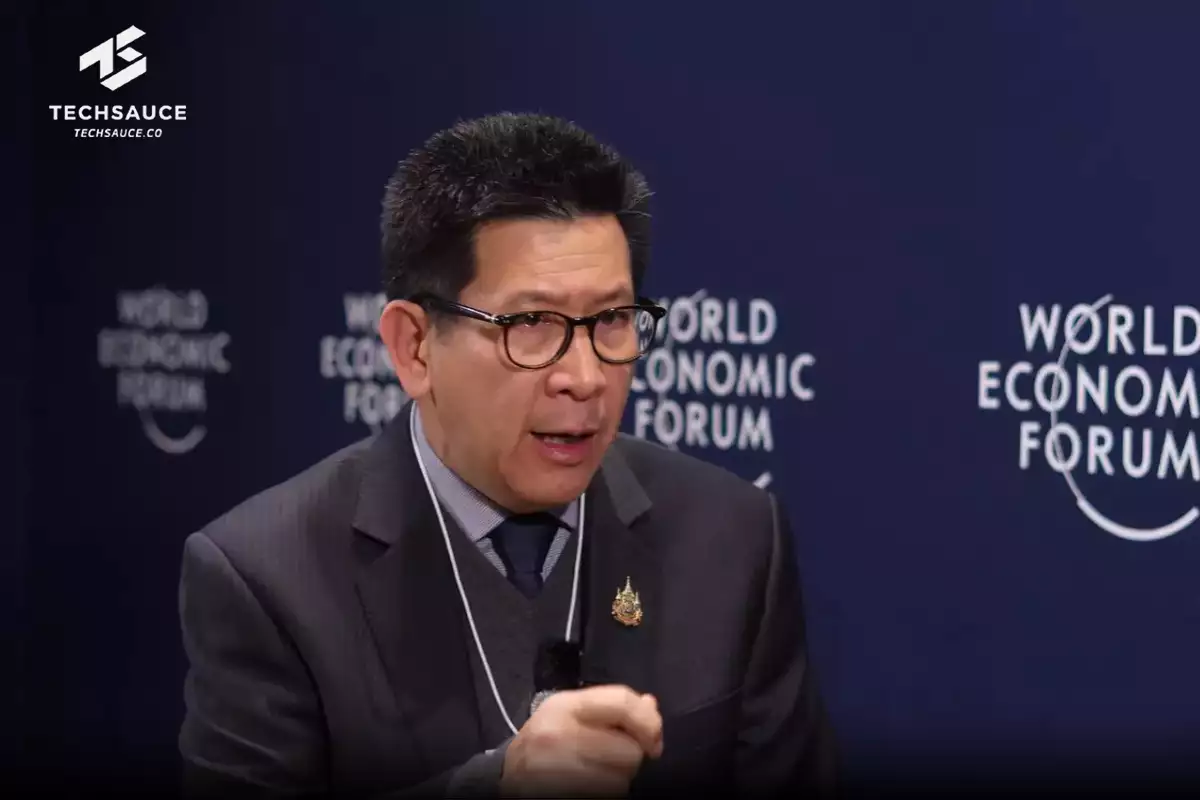
In the final wrap-up of the interview, Dr. Ekniti left a vital message for all Thai entrepreneurs:
Skills are the best shield in a world of high uncertainty.
This is especially true regarding opening one's mind to accepting and adapting AI as a tool to boost efficiency.
This technology allows a single person to produce output equivalent to many people in the past, solving labor shortages and helping businesses expand from domestic to international markets more easily. Promoting community products via global platforms using digital skills will be the power that drives the grassroots economy to grow alongside global trends. Rapid adaptation and constantly replenishing one's intellectual arsenal are the paths to survival and success for Thai businesses on the sustainable world stage.
ลงทะเบียนเข้าสู่ระบบ เพื่ออ่านบทความฟรีไม่จำกัด

Following the Enterprise Lab World Student Pitch ASEAN Edition at Techsauce Global Summit 2026, Techsauce spoke with Tirayu Songvetkasem, Chief Digital Officer of CP AXTRA. As an E...
 0
0

When AI Chooses for Your Customer: Accenture Song on the New Rules of CX
Accenture Song's Tuomas Peltoniemi on how AI agents are taking over customer decisions, and the five lessons brands need before the buyer stops being human....
0

20 Years of Lessons from DeeMoney's CEO Technology Moves Information, but Trust Is What Moves Money
DeeMoney co-founder and CEO Aswin Phlaphongphanich unpacks the unspoken facts of global payments at Techsauce Global Summit 2026: there is no global transfer network, payment firms...
1