
Ajay Banga Says Aid Can Ease Poverty but Jobs Give People a Future
Poverty is both a state of being and a state of mind, World Bank Group President Ajay Banga told a Civil Society Townhall at the IMF-World Bank Annual Meetings in Bangkok, citing a friend. A handout can fix the first, he said. The second needs the hope, opportunity and dignity that come with being a productive part of society.

Banga listed clean air, clean water, health care, skilling and the right kind of education as essential foundations. But when people reach working age, they also need the chance to earn, contribute and see a future for themselves.
The World Bank is putting jobs at the centre of its development agenda because the demographic pressure is enormous. Young people in developing economies need work at a time when public finances are constrained, debt is high, aid budgets are under pressure and energy and fertiliser costs have risen.
Three pools of capital, with different jobs to do
Banga described three sources of finance for job creation. Public and concessional money can build the foundations: schools, hospitals, electricity, water and good governance. Philanthropic capital can test new ideas that are still too risky for commercial funding. Private capital can scale approaches that have proved effective, building businesses and employment.
Governments, in this model, create the enabling environment and set the rules. The private sector creates the jobs. Banga put the private sector's share at about 90% of jobs globally, from microbusinesses to large companies.
The World Bank has increased its mobilisation of private investment to US$112 billion in the past year, three times the level of four years earlier. More than half was directed to sectors with significant job-creation potential.
The distribution remains uneven. Private money tends to go where risk is lower. Investment has increased in Africa, Bangladesh, Angola, Argentina, India and Gabon, but the poorest economies have seen little movement. These are often the places where job creation is most urgently needed.
Jobs require power, health and access to opportunity
Banga's argument is that job creation begins before a job exists. People need infrastructure, health, education and skills. The World Bank highlighted several programmes intended to build those conditions.
Through Mission 300, run with the African Development Bank, the Bank aims to connect 300 million people in Africa to electricity. It says 59 million people have been connected so far. It also reported that more than 600 million people have gained better access to health services close to home, against a target of 1.5 billion by 2030. AgriConnect has reached 26 million farmers, while 17 million women and women-owned businesses have gained access to finance and services, and 74 million women now have broadband access.
The institution is also trying to move faster. It says average project preparation time has fallen from 19 months to nine months. The number of performance indicators has been cut from 153 to 22, with greater focus on whether projects improve people's lives. About half of public sector financing is now tied to results, up from roughly a third.
Is mental health part of infrastructure?
The townhall also pushed the conversation beyond finance. One participant asked whether mental wellness and resilience should be treated as part of critical infrastructure, so that they can receive appropriate funding.
Anna Bjerde responded that mental health is already part of the World Bank's health work, particularly in conflict-affected settings where children face prolonged trauma. Paschal Donohoe added that the Bank's education programmes in schools can also help build resilience early in life.
In his opening remarks, Banga set out a test: what did we change, who did we reach, and did it create greater opportunity? The ultimate test, he said, is impact, because if people's lives are not changed for the better, none of it matters.
ลงทะเบียนเข้าสู่ระบบ เพื่ออ่านบทความฟรีไม่จำกัด

It is really about the intersection of opportunity and risk. How do you invest at the right time while also managing the risk that some assets may lose value in the future?"...
 0
0

WEF 2026: Suphajee Suthumpun Reveals New Thailand Global Trade Strategy
Minister Suphajee outlines Thailand's vision at WEF 2026, shifting from a tourism hub to a global strategic trade point. Discover the new focus on supply chain integration, digital...
0
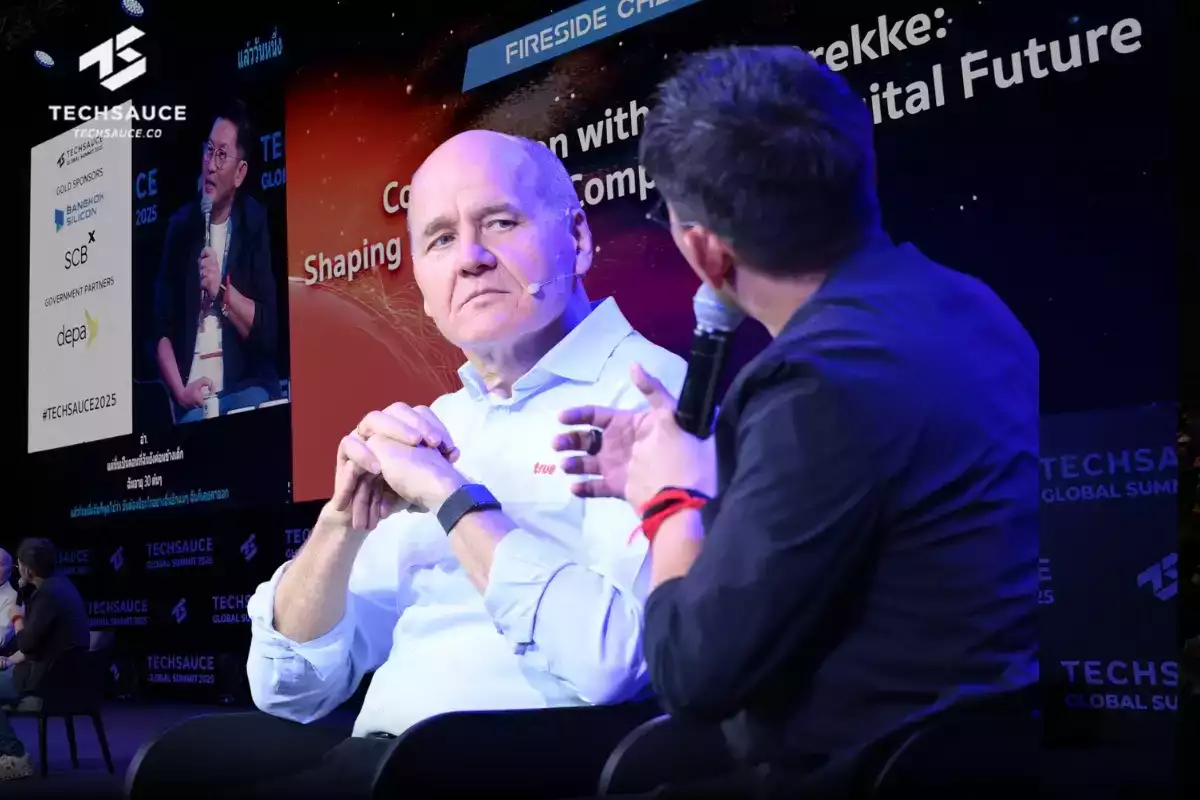
Conversation with Sigve Brekke: Shaping Thailand’s Competitive Digital Future
Discover Sigve Brekke’s unconventional leadership philosophy shared at Techsauce Global Summit 2025 from ice baths and emotional engagement to the “Tight-Loose-Tight” management st...
0